Pest guide
Wasps: signs, treatment and prevention
Recognising wasps and nest activity.
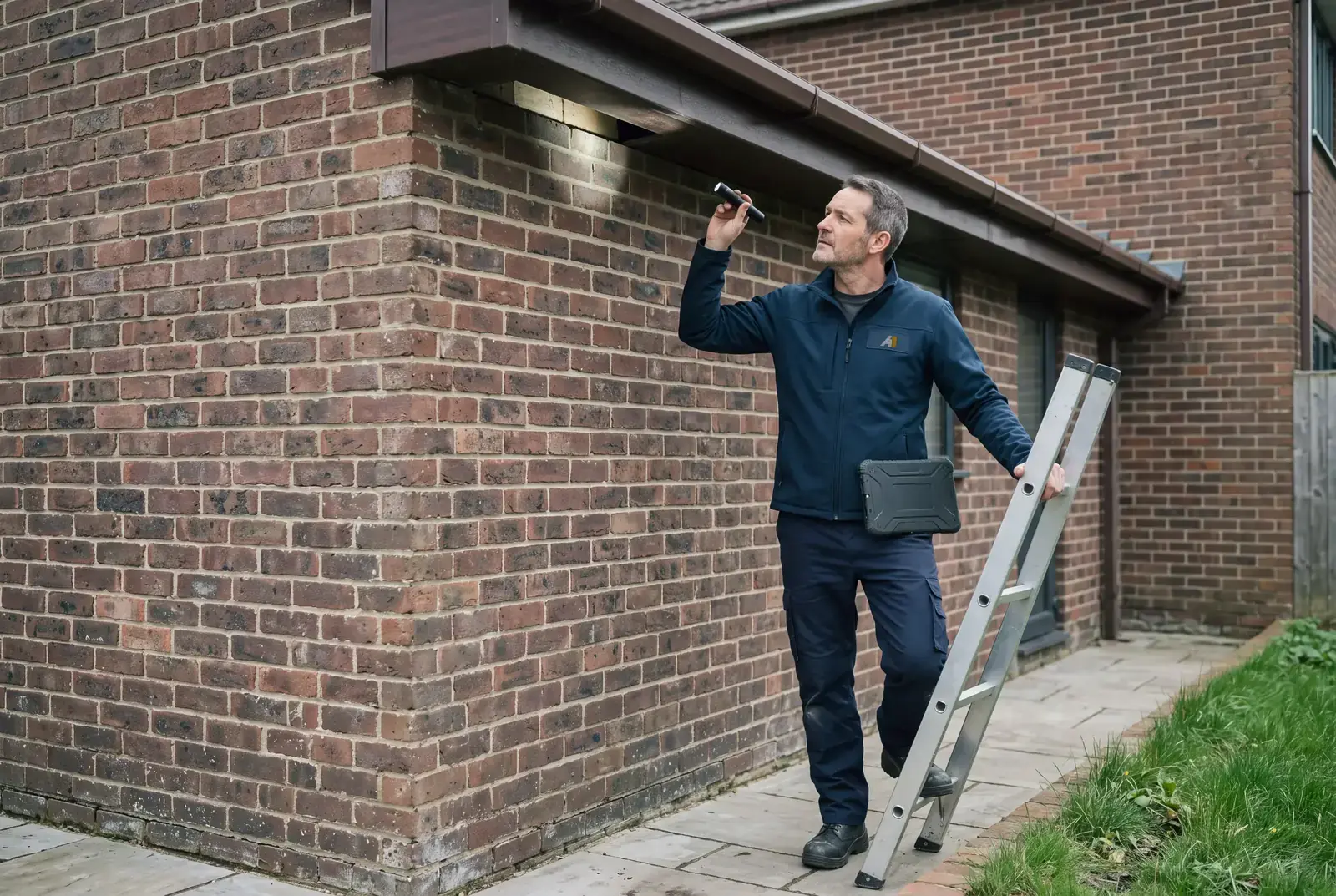
A wasp nest shows itself through a steady stream of wasps flying in and out of one spot: a gap under the eaves, an air brick, a shed roof or a hole in the ground. A1 Pest Control treats the nest at the entrance with an insecticide spray, and the colony dies within 24 to 48 hours in most cases.
What signs should I look for?
Watch the area for ten minutes on a warm afternoon. A nest has a single busy entrance, with wasps flying straight in and straight out.
- A flight path: wasps going in and out of the same gap in a roof, soffit, wall, air brick, shed, bird box or the ground.
- A papery nest: a grey or beige ball made of chewed wood, from golf-ball size in spring to football size or bigger by late summer, in lofts, sheds, hedges and eaves.
- Chewing or rustling: a faint crackling inside a wall or ceiling where a nest is growing.
- Wasps indoors: several wasps a day in one room, often near the loft hatch or a window under the eaves.
- Scraped wood: pale scratch marks on fences, sheds and garden furniture, where wasps collect wood fibre to build with.
Wasp, bee or hornet?
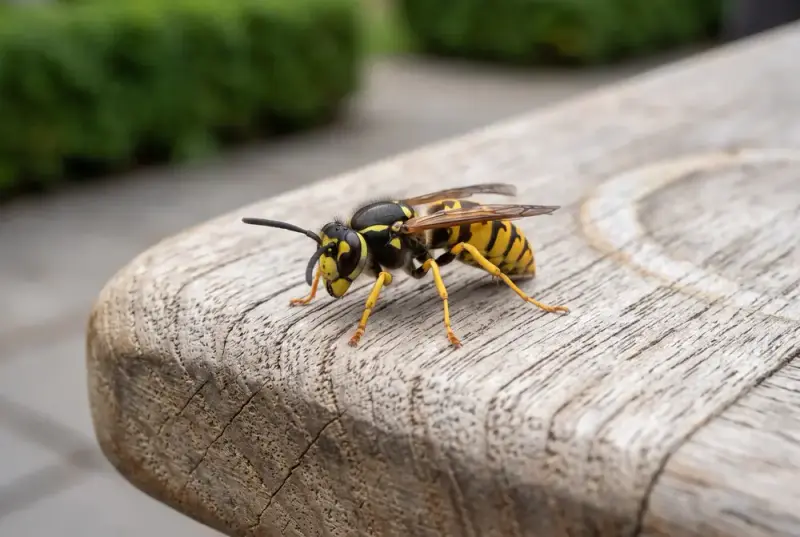
- Wasps: bright yellow and black, smooth and narrow-waisted. The common wasp and the German wasp are the two you are most likely to see.
- European hornets: much bigger than a wasp, chestnut-brown and yellow. They nest in hollow trees, lofts and sheds and are treated in the same way as wasps.
- Yellow-legged hornets (Asian hornets): dark, with a single orange band near the tail and yellow-tipped legs. They are an invasive species. Do not approach the nest. Report it on the Asian Hornet Watch app or through the GB Non-Native Species Secretariat, and the National Bee Unit will deal with confirmed nests.
- Bees: rounder and hairier. Bees are not treated like wasps. A honey bee swarm can often be collected by a local beekeeper through the British Beekeepers Association. A bumblebee nest lasts two to six months and dies off on its own, and the Bumblebee Conservation Trust advises leaving it alone where you can.
Why are they a problem?
A wasp nest grows fast. A queen starts it alone in spring, and by late summer it can hold thousands of wasps. A nest by a door, a play area or a window you open is a sting risk for everyone who uses that space.
Stings and allergic reactions
Wasps defend their nest as a group, so knocking or blocking a nest can bring out many wasps at once. For most people a sting is painful and swollen for a day or two. For some it causes anaphylaxis. Call 999 if someone has swelling of the lips, mouth or throat, struggles to breathe or swallow, or feels faint after a sting. The NHS explains what to do after a sting.
Late summer is the worst time
In late summer and early autumn the nest stops raising workers and produces new queens and males. Foraging wasps turn to sugary food and drink, and they are at their most aggressive as the colony declines. That is when most stings happen at picnics, barbecues and in pub gardens.
Food areas
Wasps feed their young on insects, meat and fish, and forage in bins and on carrion, so they can pick up harmful bacteria along the way. A nest near a kitchen, a bakery or a food production area should be treated without delay.
How do we get rid of them?
- Identify and locate. The technician confirms it is wasps (not bees or a yellow-legged hornet) and finds the nest entrance, which is not always where the wasps are most visible.
- Treat the entrance. Wearing protective clothing, the technician sprays insecticide into the entrance, or straight onto the nest if it can be reached. Treating later in the day catches more of the colony at home.
- Let the wasps carry it in. Returning wasps carry the insecticide through the nest. Expect activity at the entrance for a few hours, then the colony dies within 24 to 48 hours.
- Keep clear and leave the hole open. Stay away from the entrance for the rest of the day and do not block it. A blocked entrance can push wasps to chew their way into the house instead.
- Removal if needed. Wasps do not reuse an old nest, so a treated nest in a loft or wall can stay where it is. If you want it taken out once it is dead, ask whoever treats the nest whether removal is included in the price.
Homes and business premises
For homes
Most home nests are in lofts, eaves, sheds, hedges and bird boxes. Keep children and pets away from the entrance, do not spray it with a shop-bought can, and call us with the location. We treat the nest, tell you how long to keep clear, and give you a fixed price before any work starts.
For businesses
A nest near an entrance, a beer garden, a playground or a food area needs treating without delay. We treat one-off nests on business premises, and for sites that see wasps every summer we run a seasonal programme with nest checks and records. See wasp treatment for businesses and commercial pest control.
How do I stop them coming back?
You cannot stop queens looking for a nest site, but you can make your property a poor choice and catch a nest while it is small.
- Check sheds, eaves, garages and bird boxes in April and May, when a new nest is still the size of a golf ball.
- Fill gaps in soffits, fascias and roof tiles, and fit fine mesh over air bricks and vents.
- Keep bin lids shut and rinse recycling, drinks cans and bottles first.
- Pick up fallen fruit in late summer.
- Cover food and drinks outside, and clear plates from the table straight after eating.
- Leave nests alone. Swatting at the entrance or blocking it sets off the colony.
How much does treatment cost?
Treating one wasp nest with a spray costs £170. A revisit costs £60, and removing the dead nest costs £60 more. If there is more than one nest, the technician quotes the price. Weekend visits cost £60 extra.
Your questions, answered.
How long after treatment will the wasps be gone?
You will see wasps at the entrance for a few hours after treatment, because returning foragers fly in and pick up the insecticide. In most cases the colony dies within 24 to 48 hours. Keep away from the entrance for the rest of the day and do not block the hole. If you still see steady activity after two days, call us.
Do you remove the nest?
Not always. Wasps never reuse an old nest, so a treated nest in a loft, wall or roof can stay where it is without causing problems. If the nest is somewhere you use, such as a shed or a play area, it can come out once the colony is dead.
Can I treat a wasp nest myself?
Shops sell wasp nest sprays and powders, and some people treat small, easy-to-reach nests themselves. The risk is that the colony defends the nest as a group, and a nest in a roof void or wall cavity is hard to reach without a ladder and protective clothing. If anyone in the home has had a serious reaction to a sting before, leave it to a professional.
Do you treat bees?
Bees are not treated like wasps. A honey bee swarm can often be collected by a local beekeeper through the British Beekeepers Association swarm service. If you are not sure what you have, send us a photo.
Is it a hornet?
European hornets are much bigger than wasps and chestnut-brown and yellow, and we treat their nests in the same way as wasp nests. A dark hornet with a single orange band and yellow-tipped legs could be a yellow-legged (Asian) hornet. Do not approach it. Take a photo if it is safe to and report it on the Asian Hornet Watch app.
Will the wasps come back next year?
The same nest will not be used again, because new queens leave in autumn, hibernate and build new nests in spring. A good nest site can attract a new queen, though, sometimes right next to the old nest. Filling gaps in the eaves and checking sheds and lofts in April and May lets you catch a new nest while it is small.
Wasp nest removal near you
Tell us what's happening.
Share your postcode and the signs you have noticed.