Pest guide
Biscuit and tobacco beetles: signs, treatment and prevention
Small brown beetles in cupboards and dried food.
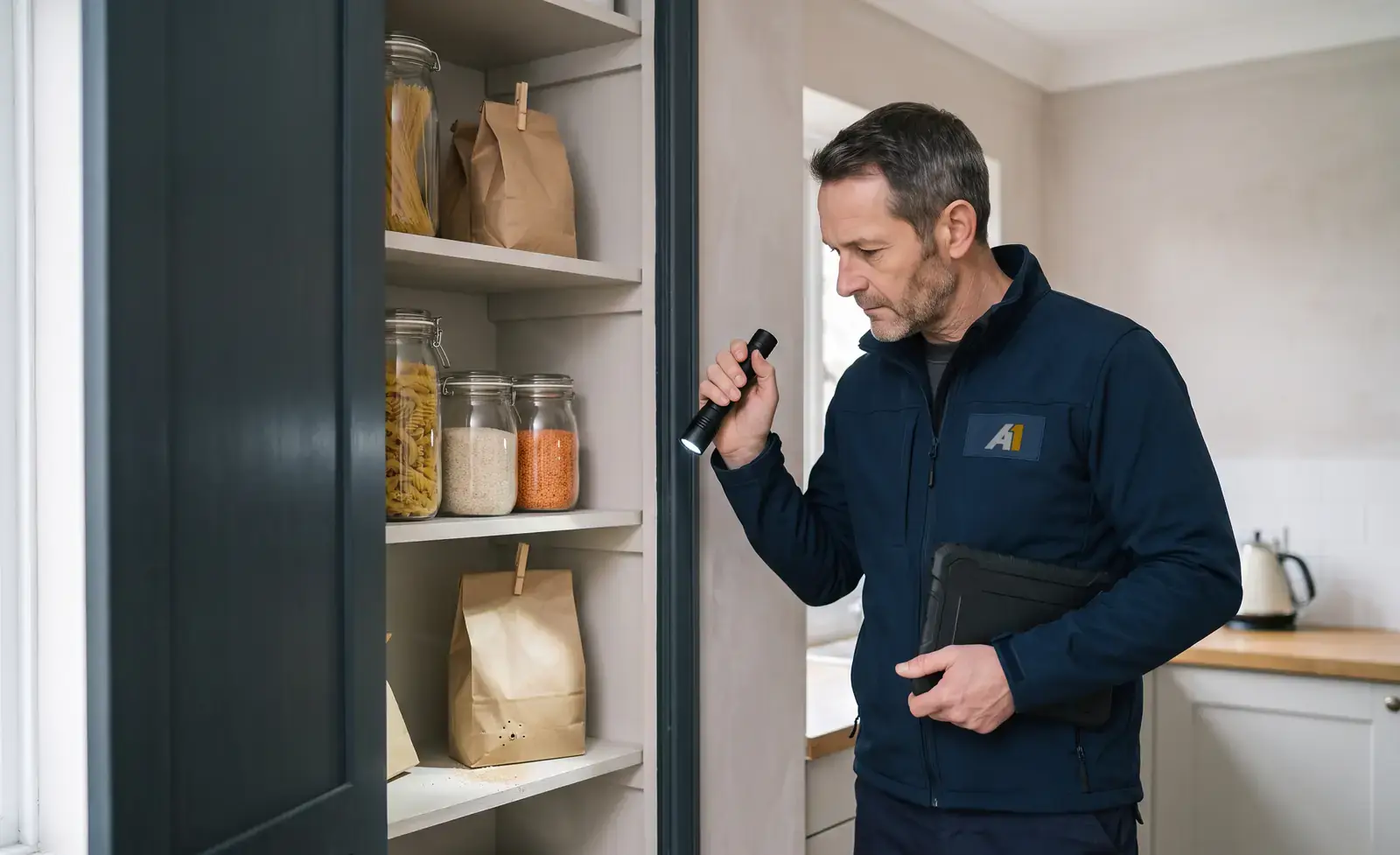
Biscuit beetles and tobacco beetles are tiny reddish brown beetles, 2 to 4 mm long, that breed in dried food such as flour, spices, cereals and pet food. Finding the adults usually means larvae are feeding nearby, often in an old packet at the back of a cupboard. A1 Pest Control treats both in homes and businesses.
What signs should I look for?
You will see the adult beetles first. By then the larvae have often been feeding for weeks.
- Small brown beetles: oval or rounded beetles, 2 to 4 mm long, on worktops, shelves and window sills. They fly when it is warm and are drawn to lights.
- Holes in packets: small round exit holes in food packets. Biscuit beetles have been reported boring through foil, and through a whole shelf of books.
- Dust in food: fine powder, called frass, in and around flour, spices and cereals.
- Beetles near vents or fireplaces: a sign they may be coming from an old bird or wasp nest in the loft.
- Damage to other dried things: pet food, papier mâché and books can all be attacked.
Biscuit beetle or tobacco beetle?
The biscuit beetle, also called the bread or drugstore beetle, is one of the commonest pests of stored food in UK homes and stores, according to the Natural History Museum. It has fine grooves along its wing cases and three flattened segments at the tip of each antenna. The tobacco beetle, or cigarette beetle, is rounder, with smooth wing cases and saw-toothed antennae. It needs warmer conditions and turns up more in heated stores and factories.
Is it woodworm?
Biscuit beetles belong to the same family as the woodworm beetle and leave similar small exit holes, but they do not eat wood. Woodworm beetles are slightly larger and darker, and their antennae are shorter than their legs. A biscuit beetle's antennae and legs are about the same length.
Why are they a problem?
Biscuit and tobacco beetles are not a significant health risk, BPCA says, and the Natural History Museum says biscuit beetles are not harmful to health. The cost is in the food you throw away and the damage they do to anything dried and stored.
They get into packets
Biscuit beetles feed on flour, biscuits, cake mixes, cereals, spices, soup powders and dried medicines. Tobacco beetles favour spices such as paprika, cumin and ginger, as well as nuts, dates, cereals, tea and tobacco. Because they can bore through packaging, beetles from one packet can get into others on the same shelf.
Warm kitchens speed them up
Below about 15°C a biscuit beetle has one generation a year. Above 23°C it can have five or more, so a warm kitchen or heated store lets the numbers build quickly.
Food businesses must control them
Food hygiene law requires food businesses to have adequate procedures to control pests. Food Standards Agency guidance tells caterers to reject deliveries showing insects such as beetles, to throw away food that pests have touched, and to call a pest control contractor if they see signs. Using a contractor does not take the legal responsibility away from the business.
How do we get rid of them?
A typical professional treatment for stored food beetles follows these steps.
- Find the source. The technician checks every cupboard and every packet of dried food, spices and pet food for beetles, larvae, frass and holes. Beetles near vents or fireplaces mean a loft check for old bird or wasp nests.
- Remove infested food. Anything with beetles, larvae or holes goes into a bag and out to the bin.
- Clean. Emptying, vacuuming and cleaning the cupboards leaves the larvae no spilt food to feed on.
- Treat. Once the cupboards are empty and dry, the technician can apply an insecticide for crawling insects to skirting boards, floors and the cracks where larvae shelter.
- Monitor. Pheromone traps catch adult biscuit beetles and show where the infestation is centred. Food businesses keep traps in place to show whether and when treatment is needed.
Homes and business premises
For homes
Home infestations often start in old dried food: a bag of flour, a spice jar or a box of pet food that has sat at the back of a cupboard. If you find beetles, check every packet, bin the infested ones outside and clean the shelves. Call us if the beetles keep coming back after that, or if they turn up in rooms away from the kitchen, which can point to a nest in the loft.
For businesses
For restaurants, cafés, food shops, warehouses and museums, a stored food beetle in stock can mean waste, recalls and enforcement action. BPCA recommends a contract with trap-based monitoring that shows if and when treatment is needed. Rotating stock, keeping it off the floor and clearing spilt product all help. See food premises and commercial pest control.
How do I stop them coming back?
- Store flour, cereals, spices and pet food in airtight containers.
- Use up old dried food and spices, and check the backs of cupboards a few times a year.
- Wipe up spilt flour and crumbs inside cupboards.
- Check new packets for small holes before you put them away.
- Have old bird and wasp nests removed from the loft once they are no longer in use.
How much does treatment cost?
Biscuit and tobacco beetle treatment, by the size of the property:
- Spray treatment: £195 for 1 bedroom, £245 for 2, £295 for 3, £345 for 4 to 5
- Steam and spray treatment: £245 for 1 bedroom, £295 for 2, £345 for 3, £395 for 4 to 5
A spray revisit costs £110, £155, £200 or £245, and a steam and spray revisit £160, £205, £255 or £305, by the same sizes. Weekend visits cost £60 extra.
Your questions, answered.
Why do biscuit beetles mean throwing food away?
The problem is waste: anything the beetles or larvae have been in should be thrown away, and they can spread along a shelf by boring into other packets.
Where do biscuit beetles come from?
Most come from old dried food left at the back of a cupboard, such as flour, spices, cereals or pet food. Some come from old bird or wasp nests in the loft, which is likely if you find them near air vents or fireplaces.
Are biscuit beetles woodworm?
No. Biscuit beetles belong to the same family as the woodworm beetle and leave similar small exit holes, but they do not eat wood. Woodworm beetles are slightly larger and darker, with antennae shorter than their legs. Holes in dried food, packets or books point to a stored food beetle.
Can biscuit beetles get into sealed packets?
Yes. The larvae and adults bore into packaging, and biscuit beetles have been reported going through foil and leather, and even through a shelf of books. Once you have had beetles, keep flour, cereals, spices and pet food in airtight containers and check new packets for small holes.
What is the difference between a biscuit beetle and a tobacco beetle?
Both are small reddish brown beetles, 2 to 4 mm long, that live in dried food. The biscuit beetle has fine grooves along its wing cases and three flattened segments at the tip of each antenna. The tobacco beetle is rounder, with smooth wing cases and saw-toothed antennae, and it needs warmer conditions to thrive.
How do I get rid of biscuit beetles?
Check every packet of dried food, spices and pet food, and bin anything with beetles, larvae, dust or holes outside. Vacuum and clean the cupboards, then store food in airtight containers. If beetles keep appearing, or turn up away from the kitchen, a professional can find the source and treat the cracks where larvae hide.
Tell us what's happening.
Share your postcode and the signs you have noticed.