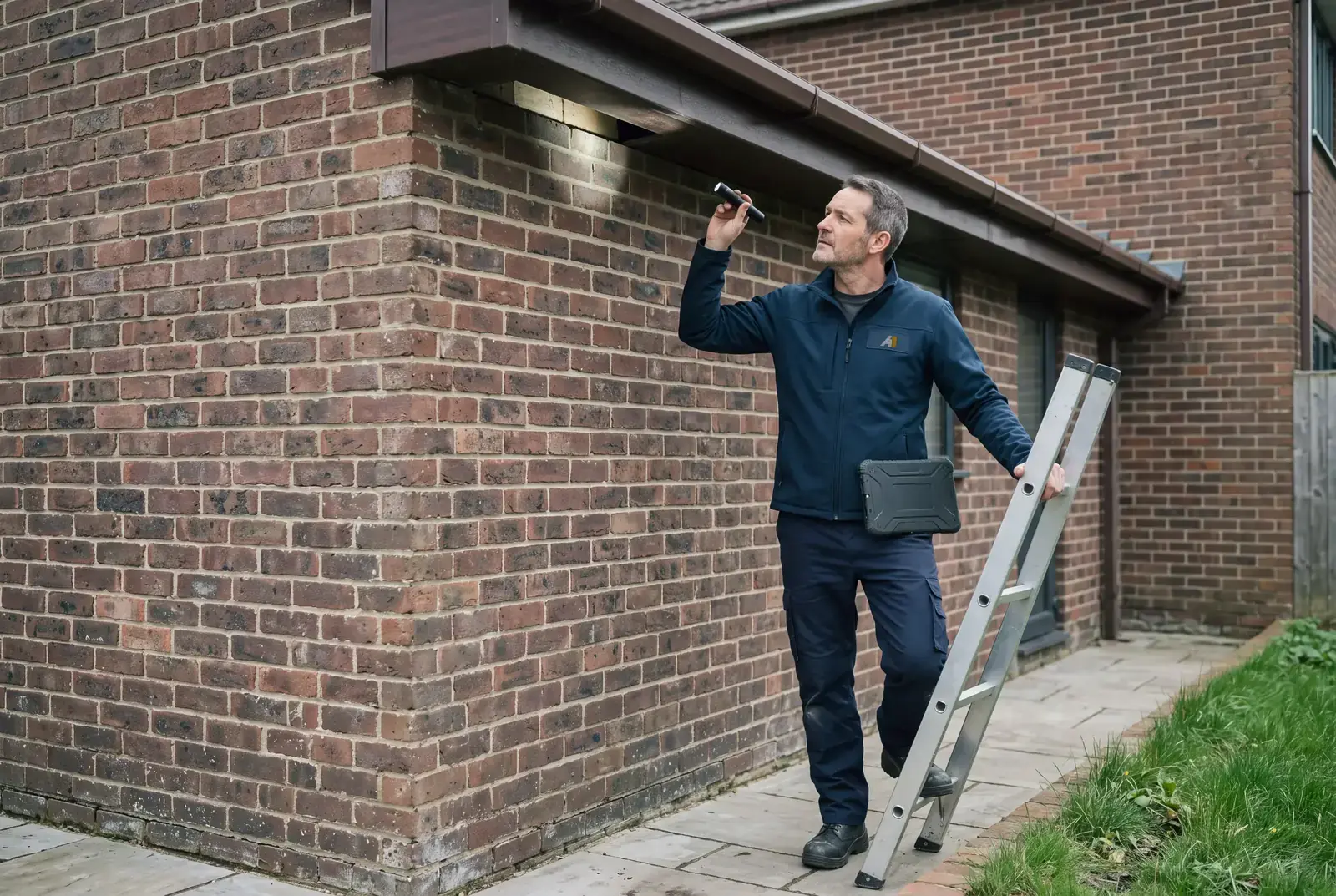
Wasp removal in Nottingham
Nottingham’s hornets show up late in the year. The NBN Atlas lists eight European hornet sightings within 5 km of the city from 2015 to 2023, and five of the eight were logged in October. Colwick Park and Highfields Park are among the places named. Pubs and bars make up 241 of the city’s premises on the food hygiene register. A1 kills the colony with an insecticide spray into the nest, then removes the dead nest on a second visit if that is wanted. Weekend visits cost £60 extra. A1 Pest Control’s team covers Nottingham homes, shops, cafes and offices. Phone 0800 059 0135 from any NG postcode and describe the hole or gap the insects use.
About Wasps
A wasp nest shows itself through a steady stream of wasps flying in and out of one spot: a gap under the eaves, an air brick, a shed roof or a hole in the ground. A1 Pest Control treats the nest at the entrance with an insecticide spray, and the colony dies within 24 to 48 hours in most cases.
Read the full Wasps guideLocal notes for Nottingham
The council’s pest control page (read 2 November 2026) says bees are not treated and the council offers no service to businesses. Landlords, says its advice page, should use a certified pest control company for insect pests.
Semis are the most common home in Nottingham, at 33.3 per cent of households, with terraces at 27.4 per cent, flats at 18.4 per cent and detached houses at 15.6 per cent (TS044). In any of them a nest can go unseen until wasps fly back and forth through one gap.
Four to seven storeys of red brick warehouse line the Lace Market, and tall roofs like those give a queen wall cavities and roof voids to start in. Wollaton Park, the Arboretum and the Trent valley bring trees and hedges into the city.
A treatment, step by step, is on our wasp removal page, and pest control in Nottingham lists rats, mice, cockroaches and more.
Local risk in Nottingham
Small numbers, spread out
Common wasps have 11 records within 5 km, one or two a year from 2013 to 2021. German wasps have six, one from 1930 and the rest from 2013 to 2018. The figures are sightings; they do not count nests.
Parks and suburbs
Holme Pierrepont, Arnold, West Bridgford and Basford appear in the labels besides the two parks.
Food premises
Nottingham City has 3,069 premises on the food hygiene register, among them 600 restaurants and cafes and 107 mobile caterers.
The end of the season
The National Bee Unit says wasp nests raise new queens and drones in late summer or autumn and that numbers fall from late September, so a colony still active in October is near the end of its year.
- Tell us whether insects are still flying in and out; an empty nest needs no spray.
- Keep cafe tables and bins a few metres from any nest entrance.
- Photograph the insect from a distance if you think it is a hornet.
Price and visit times
Starting from £170
We visit the next day as standard, and often the same day. Evening and weekend visits are available on request, and a weekend visit costs £60 extra.
Request a callCustomer reviews in Nottingham
Google rating: 5.0 from 6 reviews.
Your questions, answered.
Do you cover Nottingham for wasp nest removal?
Yes. A1 Pest Control looks after homes and businesses in Nottingham. Give us your full NG postcode, the type of premises and where the nest is, and we will say on the call whether we can take the job.
Does Nottingham City Council treat bees or work for businesses?
The council does not treat bees, and its page says it provides no service at businesses.
Does the council treat wasps at shops, cafés and offices?
No. The council’s page says it provides no service at businesses. A business with a nest near a door, a bin store or a beer garden needs a private contractor. Tell us the type of premises and where staff, customers or deliveries pass the nest, and call 0800 059 0135.
How big does a wasp nest get?
Wikipedia says a common wasp colony usually has more than 3,000 workers, and its larvae number 3,000 to 8,000. The queen lays about 200 to 300 eggs a day for 24 days. A nest grows through summer, so describe its position early and we can advise.