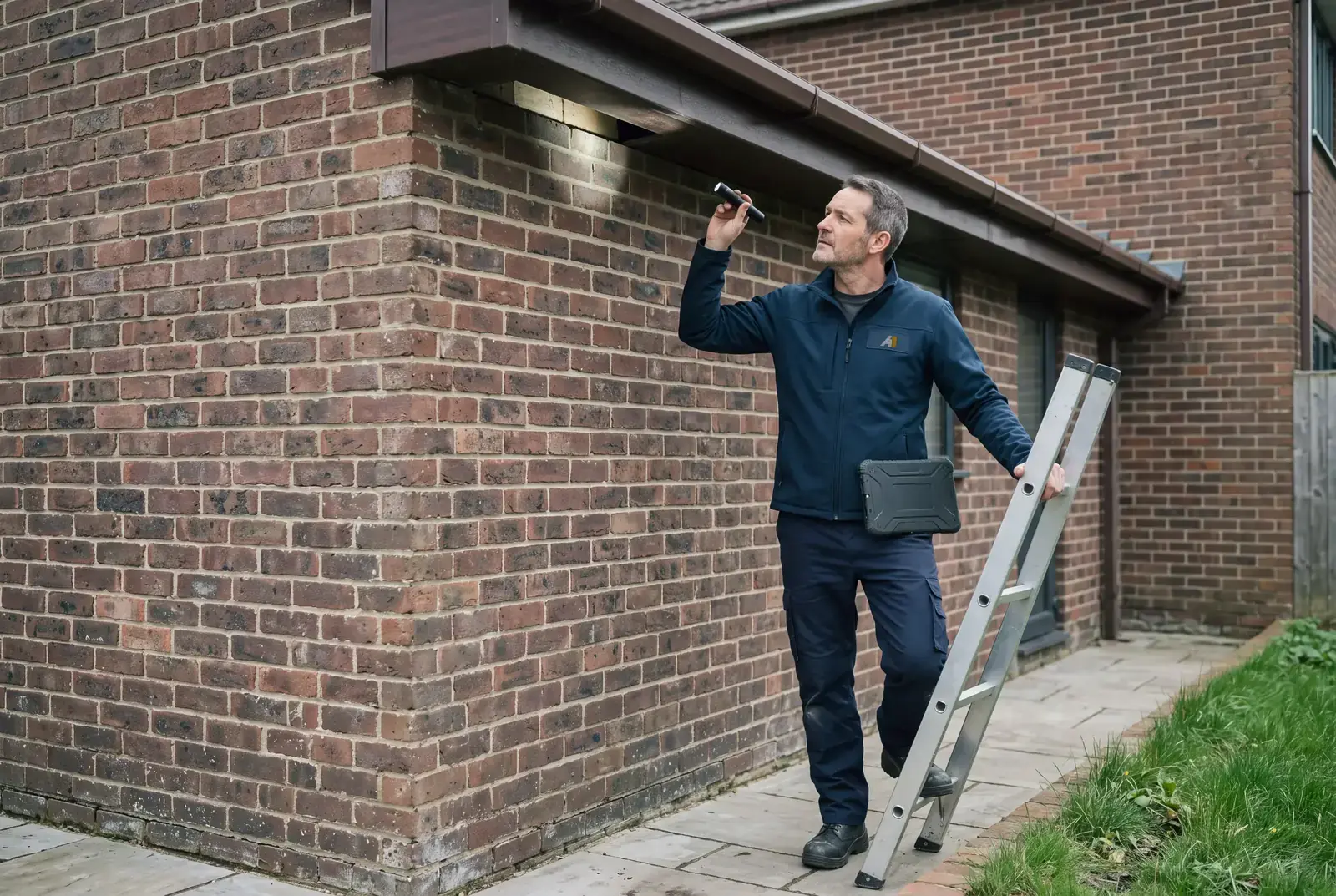
Wasp removal in Stevenage
European hornets have been recorded in Stevenage’s green spaces, Fairlands Valley Park and Norton Green Common among them. The NBN Atlas lists 15 hornet sightings within 5 km of the town from 2014 to 2023, and September has the most, six. Common wasps have nine records from 2018 to 2024, five of them in 2023. Spraying the nest with insecticide is the treatment, and dead-nest removal is a later visit that you choose to book. Of the town’s 687 premises on the food hygiene register, 182 are takeaways. Stevenage homes and businesses get technicians from A1 Pest Control. Ring 0800 059 0135, quote the SG postcode and say whether the nest is near a door, a window or somewhere children play.
About Wasps
A wasp nest shows itself through a steady stream of wasps flying in and out of one spot: a gap under the eaves, an air brick, a shed roof or a hole in the ground. A1 Pest Control treats the nest at the entrance with an insecticide spray, and the colony dies within 24 to 48 hours in most cases.
Read the full Wasps guideLocal notes for Stevenage
The council’s wasp page says wasps are least active in the early morning and late evening, and most active when temperatures reach the twenties. Terraced houses make up 46.1% of the borough’s households and flats 20.1% (ONS Census 2021, TS044).
The council’s page on pests in garages tells readers to contact the Hertfordshire Beekeepers Association about honey bees.
For rats, bed bugs and the rest of the borough, see pest control in Stevenage, and for signs and treatment steps see our wasp removal page.
Local risk in Stevenage
Hornet years
Hornet sightings peaked at four in 2019. German wasps have two records, from 2016 and 2024. Like every figure on this page, these are sightings rather than nests.
Woods, greens and villages
The labels on the records include Burymead Recreation Ground, Fishers Green, Ridlins Wood and its playing fields, Poplars Meadow, Watery Grove, and the villages of Knebworth and Graveley.
Food premises
Pubs and bars number 44 and restaurants and cafes 132 on the register, and it lists no mobile caterers in the borough.
- Note whether the insects are brown and gold hornets or black and yellow wasps.
- Close loft hatches and windows near the entrance.
- Keep children off the grass round a hole in the ground until it is treated.
- If the nest is in a lock-up garage, tell us who holds the key.
- For a nest on a green or a recreation ground, name the closest gate.
Price and visit times
Starting from £170
We visit the next day as standard, and often the same day. Evening and weekend visits are available on request, and a weekend visit costs £60 extra.
Request a callCustomer reviews in Stevenage
Google rating: 5.0 from 6 reviews.
Your questions, answered.
When does wasp nest treatment start in Stevenage?
The council’s wasp page puts wasp nest treatment from late June. For a visit, call A1 Pest Control on 0800 059 0135.
When is an old wasp nest safe to remove?
An old nest is empty in winter and is safe to remove. The council says wasps do not reuse old nests.
Is it a wasp or a bee?
The council says solitary bees look like wasps and are active from April to early June, peaking in May, which is often too early for wasps. Swarming bees appear in late April and early May and are also mistaken for wasps. An early spring wasp may be a queen looking for a nest site. The council cannot remove honey bee nests or swarms.
When should I get professional treatment?
The council says to consider it if the nest is in a high-traffic area, vulnerable people can reach it, it is in your home or roof space, or someone in your household is allergic to stings. Wasps give a painful sting when disturbed, and a sting can cause a fatal allergic reaction, so get medical help at once if that happens.
Can I spray a wasp myself, and how do I keep them out?
To discourage nests, it advises sealing holes in eaves, soffits and brickwork and clearing vegetation and rubbish early in spring. Do not stand in front of a nest, because wasps fly straight to and from it.