Sectors
Pest control for Offices & workplaces
Offices, shared spaces and staff facilities.
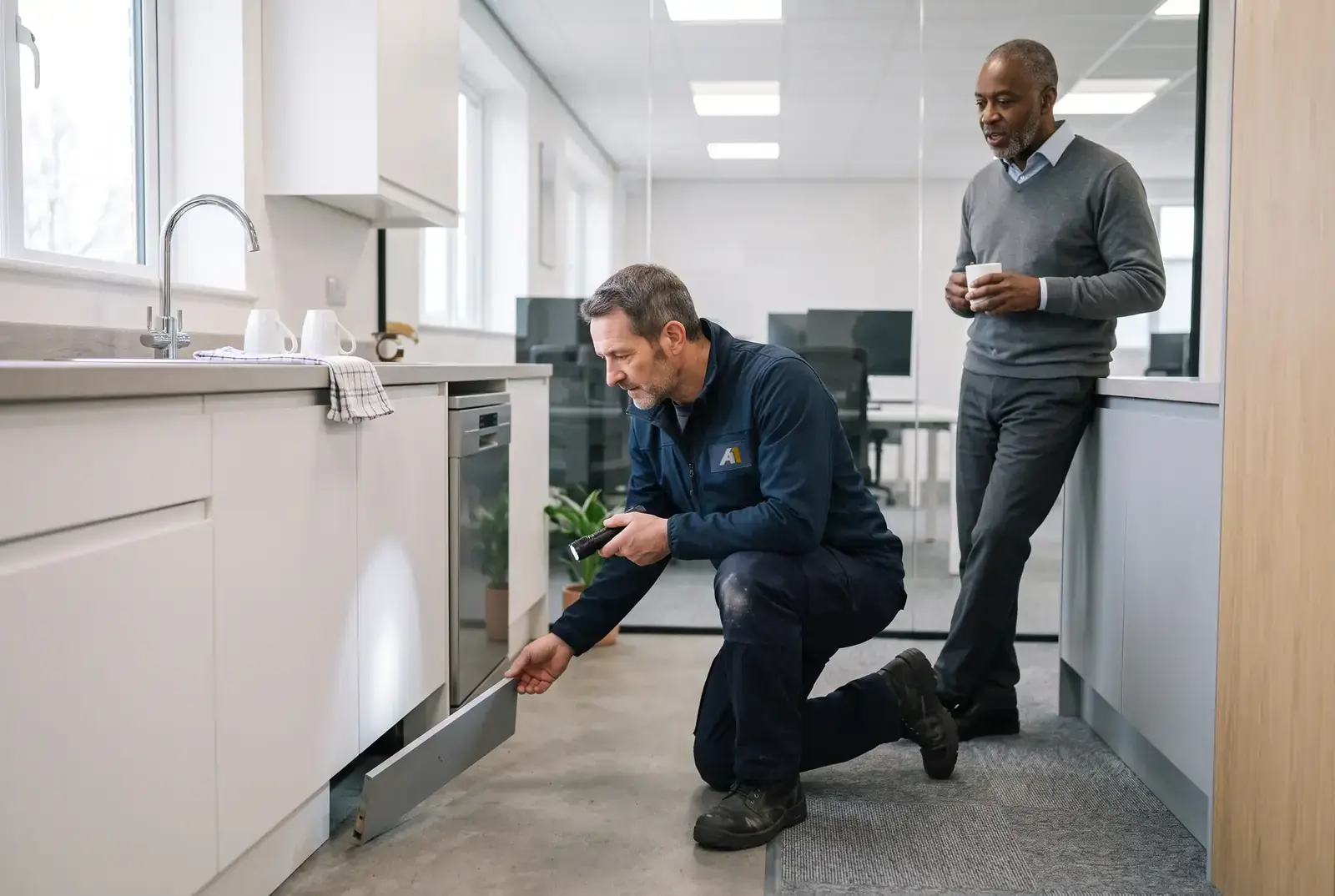
Offices attract mice and ants because staff kitchens, desk drawers and warm floor and ceiling voids give them food and cover. An A1 office contract covers inspection, numbered bait and monitoring points, treatment when activity appears, proofing advice and a written report after every visit, with visits planned around your working day.




What does a pest control contract include?
Each contract starts with a site inspection and a written risk assessment. The technician checks kitchens and tea points, washrooms, bin stores, plant rooms, risers and the voids above ceilings and below raised floors, then marks each monitoring point on a site plan.
- Inspection. Routine visits to check monitoring points, kitchens, bin stores and the gaps where services enter the building.
- Monitoring. Bait stations and traps for mice and rats, each numbered on the site plan.
- Treatment. Targeted treatment when we find activity, including ants in staff kitchens and wasp nests near entrances and smoking shelters in summer.
- Proofing advice. The gaps around pipes and cable runs, worn door sweeps and damaged air bricks that let mice in.
- Reporting. A written report after each visit with findings, treatments, products used and recommendations, ready to share with your landlord or managing agent.
Several offices? See how multi-site pest control contracts work.
What will an auditor or inspector expect to see?
Employers must keep the workplace and its furniture, furnishings and fittings “sufficiently clean”, and must not let waste build up outside suitable containers (Workplace (Health, Safety and Welfare) Regulations 1992, regulation 9).
Rodents bring a second duty. If rats or mice are living on or visiting your premises in substantial numbers, the occupier must tell the local authority in writing, and the council can serve a notice on the owner or occupier requiring treatment or structural repairs (Prevention of Damage by Pests Act 1949, sections 3 and 4).
Keep these on file for your landlord, insurer or auditor:
- the contract and risk assessment
- a site plan with numbered monitoring points
- visit reports with the products used
- a record of sightings staff reported and what we did about them
More about pest control for Offices & workplaces
Who deals with pests in a shared office building?
Your lease decides. The landlord or managing agent tends to look after common parts, roof spaces and bin stores, while each tenant handles its own floor. Check the repair and service charge clauses, and tell the managing agent when you see signs, because mice travel between floors through risers and ceiling voids.
What should staff do if they see a mouse?
- Clear food from desks and worktops and keep it in sealed containers.
- Note where and when they saw it, and look for droppings nearby.
- Tell your facilities contact, who calls us.
What attracts pests to an office?
- food left on desks and in drawers overnight
- kitchen and meeting room bins emptied once a day or less
- cardboard and archive boxes stored in basements and voids
- gaps where cables and pipes pass through walls and floors
Your questions, answered.
Does an office need a pest control contract?
No law names a contractor for offices. Employers must keep the workplace clean and deal with waste, and the occupier must tell the council about substantial numbers of rats or mice. A contract gives you scheduled checks and written reports, which is the simplest way to show a landlord, insurer or auditor that you manage the risk.
Why do mice keep coming back to our office?
Mice return when the gap they used is still open and food is still easy to reach. Shared kitchens, snacks in desk drawers and cable runs between floors give them both. Treatment removes the mice you have, and sealing the entry points and changing how you store food keeps the next ones out. Our reports list the gaps we find.
Can you cover several offices on one contract?
Yes. List the sites and postcodes in the form, and we will come back with a single proposal covering all of them. A multi-site contract gives you one account contact, one reporting format and one invoice for the whole estate, with local technicians allocated to each site.
Are your treatments safe around staff?
We choose the lowest-risk method that will work, explain any precautions before we start and tell you when rooms are safe to use again. Each visit report lists the products used and where we placed them, so your health and safety lead has a record of what is in the building.
Get in touch
Let's talk about your sector.
Tell us about your premises and what you need. We'll get back to discuss the right approach for your business.