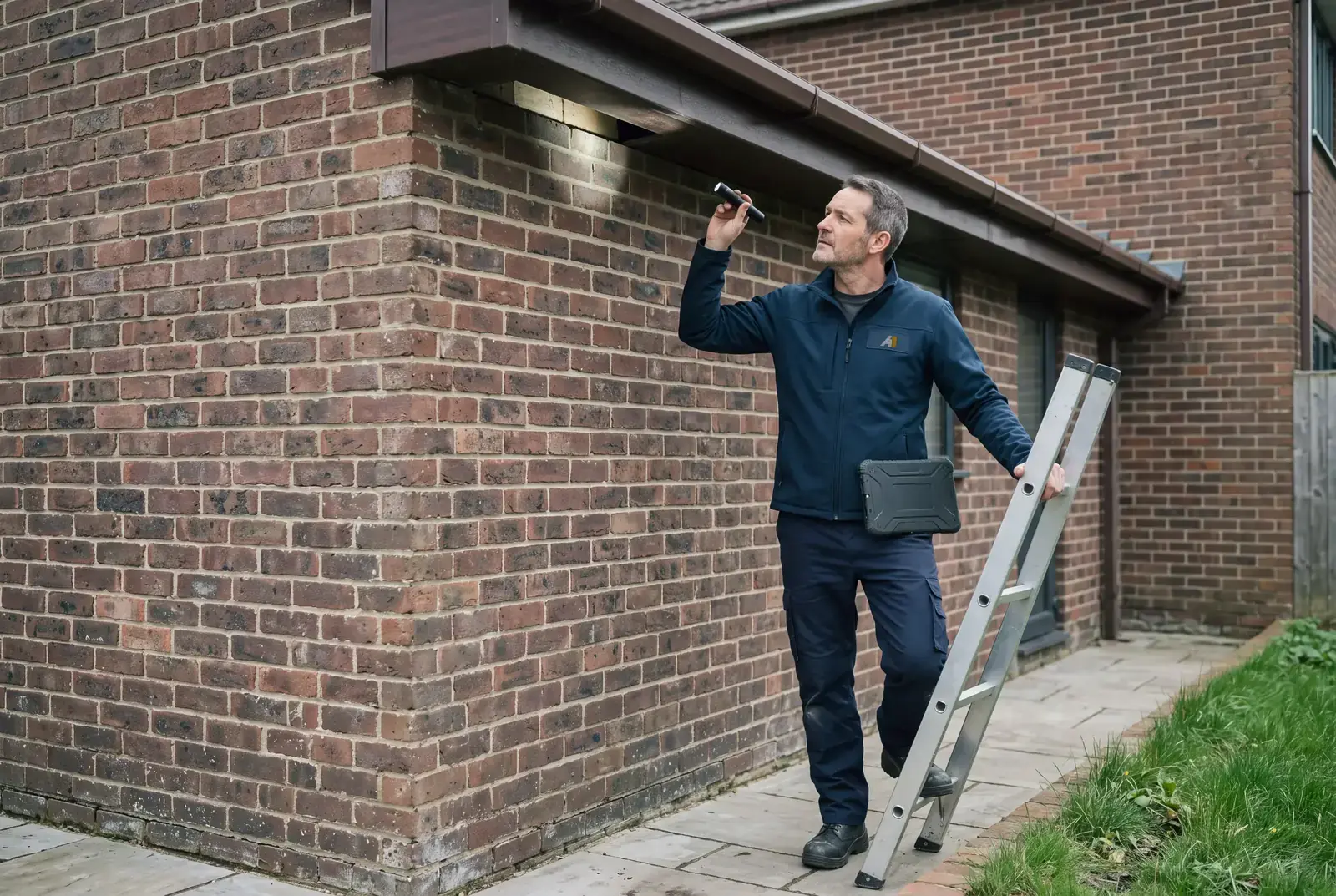
Wasp removal in Southampton
Wasp nest removal in Southampton means treating an active nest in a loft, shed, tree, hedge or hole in the ground before the colony grows. Southampton City Council does not remove bee swarms, so first work out what you have: wasps are yellow and black with a narrow waist, while honey bees are brown and furry. Our service covers homes, flats and businesses from Shirley and Bassett to Portswood, Woolston and the centre, SO14 to SO19, and the city sits in Hampshire, one of the counties A1 Pest Control covers. Ring 0800 059 0135, give your postcode and say where the wasps fly in and out.
About Wasps
A wasp nest shows itself through a steady stream of wasps flying in and out of one spot: a gap under the eaves, an air brick, a shed roof or a hole in the ground. A1 Pest Control treats the nest at the entrance with an insecticide spray, and the colony dies within 24 to 48 hours in most cases.
Read the full Wasps guideLocal notes for Southampton
Southampton City Council’s pest service page says it does not remove or treat bee swarms.
Only 13.0% of Southampton households live in a detached house and 25.8% in a semi-detached one, while 34.7% live in a flat (ONS Census 2021, TS044). That puts nests in eaves, shed roofs, hedges and the roof spaces above top-floor flats as often as in big family lofts, and the 148-hectare Southampton Common and the Itchen and Test valleys keep trees and banks close to many streets. A nest can be hard to spot because the only clue may be wasps flying back and forth to one gap.
Defra confirmed an Asian hornet in the Gosport area in September 2020, about 15 miles away. It poses no greater risk to people than native wasps but threatens honey bees, so report a suspected sighting through the Asian Hornet Watch app and keep clear of the nest.
For everything else we treat in the city, see pest control in Southampton, and for the signs and treatment steps see our wasp removal page.
Local risk in Southampton
Hornets lead the records
The NBN Atlas, accessed 11 November 2026, holds 32 European hornet sightings within 5 km of Southampton, against 13 for the common wasp and 4 for the German wasp. Hornets peaked at 10 in 2020 and have since logged between 1 and 4 a year, with 1 in 2025. Common wasp sightings ran from 4 in 2018 to 1 in 2022. Named public places include Chessel Bay, Southampton Old Cemetery, Bitterne Churchyard and Avenue Park.
Pubs and food stalls
The Food Standards Agency register lists 140 pubs, bars and nightclubs, 81 mobile caterers and 182 other caterers in the city. A nest near an outdoor serving area is worth reporting early.
A1 treats the nest with a spray, and a separate visit removes it. Stay clear of the entrance and keep children and pets away. The wasp nest guide and the Southampton pest control page list the rest.
Price and visit times
Anyone in rented accommodation should tell the landlord about a nest. A1 takes nest treatments for homes and businesses on 0800 059 0135.
Starting from £170
We visit the next day as standard, and often the same day. Evening and weekend visits are available on request, and a weekend visit costs £60 extra.
Request a callCustomer reviews in Southampton
Google rating: 5.0 from 6 reviews.
Your questions, answered.
Does Southampton City Council remove bee swarms?
No, it does not remove bee swarms. To book a private visit for wasps, call A1 on 0800 059 0135.
How do I tell a wasp nest from a bee swarm?
Wasps have yellow and black stripes and a narrow waist, while honey bees are brown and orange, covered in fur-like hair. Wasps nest in lofts, sheds, trees, bushes and holes in the ground, and the council does not treat bees. Describe what you see before anyone sprays anything.
Which areas do the Southampton postcodes SO14 to SO19 take in?
SO14 to SO19 take in the centre, Shirley, Bassett, Portswood, Swaythling, Bitterne Park, Sholing and Woolston. SO18 and SO19 also reach into Eastleigh borough around West End and Hedge End. Southampton is in Hampshire. Give your postcode through the form when you get in touch.
I saw a large hornet in Southampton. Could it be an Asian hornet?
It could be. Defra says the Asian hornet is smaller than our native hornet and poses no greater risk to people than native wasps and hornets, though it threatens honey bees. Take a photo from a safe distance, report it through the Asian Hornet Watch app and keep away from the nest. An ordinary wasp or hornet nest is a job for us.