Pest guide
Cluster flies: signs, treatment and prevention
Slow flies gathering in lofts and upper rooms.

Cluster flies are slow, dark grey flies, a little larger than a house fly, that gather in lofts, upper rooms and window frames in autumn to spend the winter. They breed outdoors and are not known to cause illness, but thousands can build up in one roof space. A1 Pest Control treats cluster flies in homes and businesses.
What signs should I look for?
Cluster flies arrive in autumn and stay until spring, so you notice them on cold autumn afternoons, or on a sunny winter day.
- Flies on warm walls in autumn: groups of flies on the south and west walls of the house in the afternoon, which move to the edges of upper windows and into the loft by evening.
- Clusters in the loft: dense groups in the roof space, in upper rooms and in the corners of window frames. A badly affected building can hold several thousand.
- Slow, clumsy flight: flies that buzz slowly around rooms and bump against windows, often on mild winter days or once the heating comes on.
- Golden hairs: about 8 mm long, dark grey, with fine golden hairs behind the head and wings that fold over each other at rest. The hairs rub off, so older flies can look bare.
- A sickly smell: a large mass of flies gives off a sweet, sickly smell.
- Dead flies: drifts of dead flies on the loft floor and on window sills.
Cluster fly or house fly?
A cluster fly is darker and a little larger than a house fly, flies more slowly and folds one wing over the other when it lands. Cluster flies matter little in summer. They become a problem in autumn and winter, when they move indoors in numbers.
Why are they a problem?
BPCA says cluster flies are not filth flies, and councils say they cause no particular harm. The trouble is how many gather in one place.
They breed in the garden
Females lay eggs on damp soil under dead leaves. The larvae burrow into earthworms and develop inside them, then pupate in the soil. Adults feed on plant sap, fruit and flowers. Two generations a year are common in Britain, and up to four in a hot summer. A loft full of cluster flies is not a sign of dirt in the house.
They come back to the same building
Cluster flies tend to pick the same building every year, sometimes one house in a row while the neighbours stay clear. One council believes a scent left in the roof space draws the next autumn's flies. Treatment brings the numbers down, but a fresh group can arrive the following year from the fields and gardens around the house.
Dead flies feed other pests
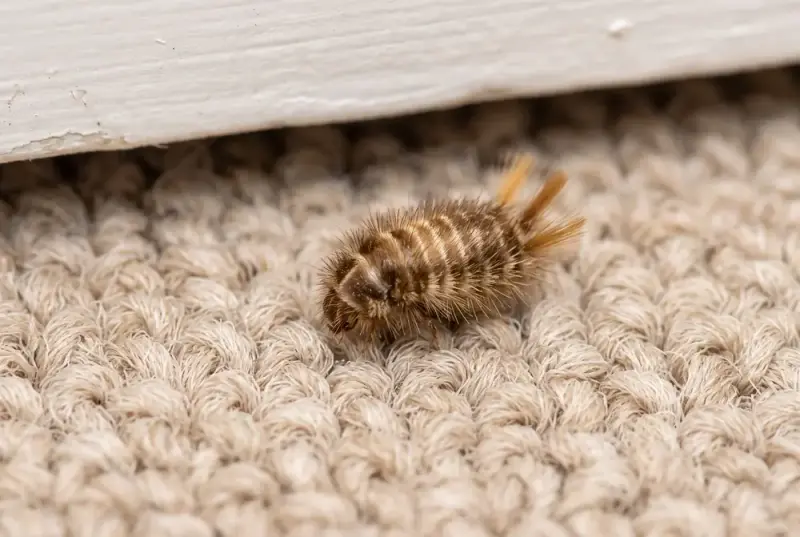
Dead flies left on the loft floor can feed carpet beetles and other insects that go on to damage fabrics, so clear them out when you can. See our carpet beetle page.
How do we get rid of them?
A typical professional treatment for cluster flies follows these steps.
- Check for bats. Bats roost in lofts and the law protects them, so the technician checks the roof space first. Where there are signs of bats, the technician uses no insecticide and refers you to the Bat Conservation Trust.
- Find where they gather. The technician checks the loft, upper rooms and window frames, usually on the south and west sides of the building, where the clusters form.
- Treat the roof space. For a heavy infestation, the usual method is an insecticidal fog or smoke in the loft, which kills the flies it reaches. BPCA guidance for professionals names pyrethroid and permethrin products for this.
- Deal with the rooms. The technician vacuums or treats the flies in upper rooms and around windows, and dusts gaps that cannot be sealed, such as under tiles or thatch, with insecticide.
- Proof what can be proofed. Sealing or meshing gaps around windows, pipes, soffits and air vents cuts the number that get in next year.
Control is rarely complete, because the flies come from outdoors and return to the same building. If they come back next autumn, you may need a further treatment.
Homes and business premises
For homes
Cluster flies are more common in rural areas and in houses with a loft. If you only see a few, a vacuum cleaner deals with them. Call us if the loft or upper rooms fill up each autumn, or if flies keep coming out whenever the heating goes on. We price by the number of bedrooms, so you know the cost before the visit.
For businesses
Any building with a warm roof space can host cluster flies, and church halls are among the places where councils report them. Visitors can mistake large clusters for a hygiene problem, even though the flies breed in the fields around the building. See education and community buildings and commercial pest control.
How do I stop them coming back?
- Seal gaps around service pipes, overflows, soil pipes and chimneys.
- Fill gaps where the roof tiles meet the soffits: crumpled wire mesh first, then filler.
- Repoint loose mortar, run mastic around the outside of windows and doors, and use a household sealer inside.
- Fit fine mesh over air vents and airbricks.
- Vacuum clusters as soon as you see them, and seal the vacuum bag inside a second bag before you bin it.
- Clear dead flies from the loft and window sills.
BPCA says proofing will seldom keep every fly out, but it cuts the numbers. If you use a fly spray in the loft, check for bats first.
How much does treatment cost?
Cluster fly treatment, by the size of the property:
- 1 bedroom: £200
- 2 bedrooms: £245
- 3 bedrooms: £290
- 4 to 5 bedrooms: £335
A retreatment costs £110 for 1 bedroom, £155 for 2, £200 for 3 and £245 for 4 to 5. Weekend visits cost £60 extra.
Your questions, answered.
Are cluster flies harmful?
No. Cluster flies are not known to cause illness, and BPCA says they are not filth flies: they breed in earthworms in the soil outside. The problem is the numbers, the slow buzzing around rooms and the sickly smell of a large group. Dead flies left in the loft can feed carpet beetles, so clear them out when you can.
Why do I have cluster flies in my loft?
Cluster flies look for a dry, sheltered place to spend the winter, and lofts, upper rooms and window frames suit them. They gather on sunny south and west walls on autumn afternoons and move inside as it cools. They often return to the same building every year, which is why one house can be affected while its neighbours are not.
Why do cluster flies appear in winter?
Cluster flies hibernate in the loft and in gaps around windows. When the heating comes on, or on a sunny winter day, the warmth tricks some of them into waking early, and they come out slowly into upper rooms and onto windows. In spring the survivors look for a way out to breed outdoors.
How do I get rid of cluster flies?
For a few flies, vacuum them up and seal the bag before you bin it, or use a household fly spray. For a loft full of them, a professional fog or smoke treatment of the roof space is the usual answer, once the loft has been checked for bats. Sealing gaps around windows, pipes and vents cuts the number that get in next year.
Will cluster flies come back next year?
Often, yes. Cluster flies tend to choose the same building every autumn, and BPCA says preventing them is mostly impossible. Treatment brings the numbers down and proofing cuts the ways in, but a new group can still arrive the following year from the fields and gardens around the house.
How can I tell a cluster fly from a house fly?
A cluster fly is about 8 mm long, a little larger and darker than a house fly, with fine golden hairs behind the head. At rest it folds one wing over the other. It flies slowly and is easy to catch, and it turns up in groups in autumn and winter.
Tell us what's happening.
Share your postcode and the signs you have noticed.