Pest guide
Mites: signs, treatment and prevention
Bird mites, clover mites and flour mites.
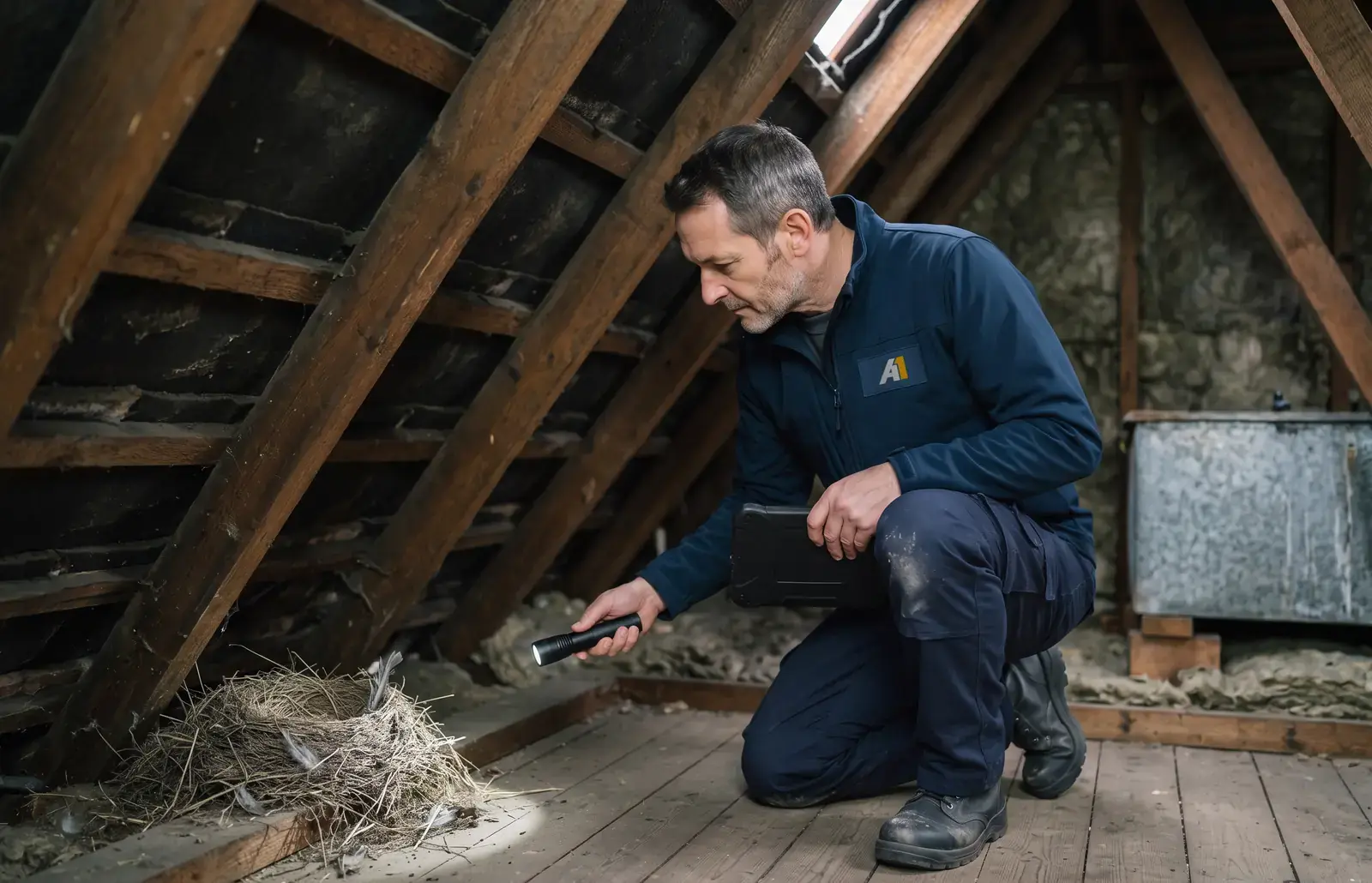
Mites are tiny eight-legged relatives of spiders, often too small to see. The ones that need pest control are usually bird mites from old nests in the loft or eaves, red clover mites on walls and windows, and flour mites in damp food. A1 Pest Control treats mites in homes and businesses.
What signs should I look for?
At first you will not see the mites. You will feel the itching, or spot tiny specks that move.
- Itchy bites in upper rooms: very itchy lumps, sometimes with blisters, in rooms below a loft or eaves where birds have nested. Once a nest is empty, bird mites move into the house looking for food.
- Tiny moving specks: bird mites are very small, light brown to dark red, and appear in large numbers, usually in upper rooms.
- Red specks on walls and windows: clover mites are bright red, about 1 mm across, and climb walls and come in through window frames in spring and autumn. Crushing them leaves a red stain.
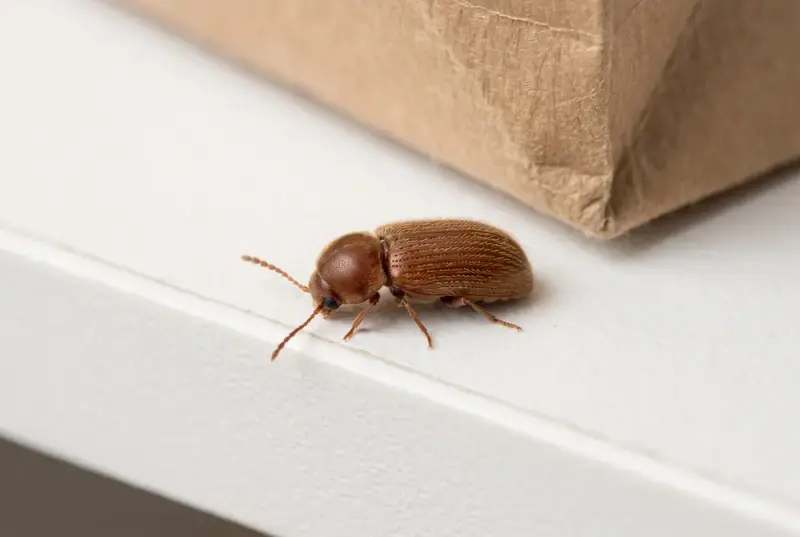
- Mites in dried food: flour mites are pale and about 0.5 mm long. They live in damp cereals, pasta, pet food and dried fruit.
Mites, bed bugs or fleas?
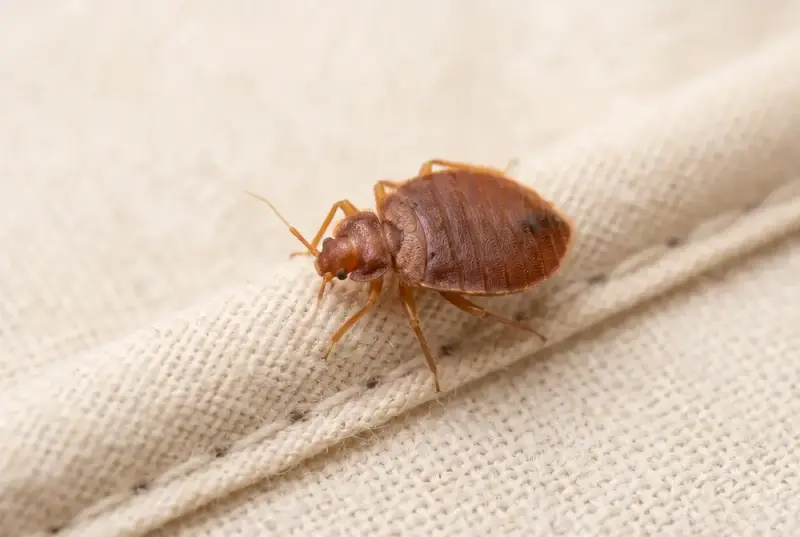
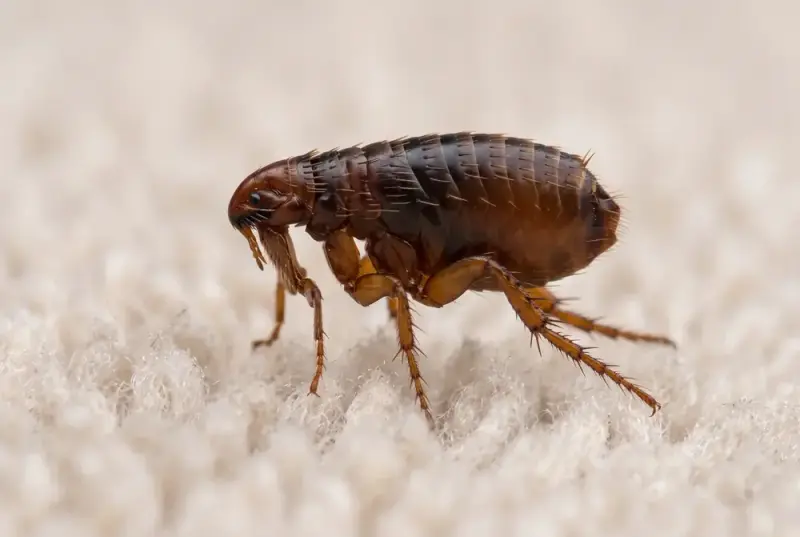
Bed bugs are about 5 mm long, big enough to see, and leave bites in lines or groups, with blood spots and brown droppings on the sheets. Flea bites are usually in groups below the knees. The NHS describes mite bites as very itchy lumps, and with bird mites there is usually an old nest in the loft, the eaves or on a ledge nearby. See our bed bug and flea pages.
When it is not a pest control job
Scabies is caused by a mite that lives in the skin, and the NHS says it is treated with a cream or lotion from a pharmacist, or by a GP. House dust mites live in every home and cannot be removed completely; Oxford City Council calls them a medical issue. If you have itchy bites and no mites, nest or insects can be found, a pharmacist or GP can help work out the cause.
Why are they a problem?
Bird mites look for a new host
Bird mites feed on the blood of birds. When the birds leave a nest in a loft, under the eaves or on a ledge, the mites spread out looking for food. BPCA says adults and young mites then feed on householders and pets, though Oxford City Council says they rarely bite people. BPCA also warns they can still be in a loft after the birds have gone.
Clover mites stain
Clover mites are harmless to people, food and fabrics, but they come indoors in large numbers in spring and autumn, and crushed mites leave red marks on walls.
Flour mites spoil food
Flour and storage mites contaminate food stock and can trigger allergies, so you have to throw infested food away.
Nesting birds are protected
Under the Wildlife and Countryside Act 1981 it is an offence to intentionally take, damage or destroy the nest of any wild bird while it is in use or being built. You have to leave a nest in use until the birds have gone, and the main nesting season runs from March to September, the RSPB says. The law protects bats and their roosts too, so a technician checks a roof space for bats before treating it.
How do we get rid of them?
BPCA says treating mites yourself is unlikely to work, and treatment starts with the source. A typical professional treatment follows these steps.
- Identify the mite. Bird, clover, flour and dust mites need different treatment, and some itching has nothing to do with mites, so the technician first finds out what is there.
- Find and remove the source. For bird mites, that means taking out the old nest in the loft, the eaves or on a ledge once it is no longer in use, and sealing the entry hole. For flour mites, it means binning the infested food.
- Prepare the rooms. A1 Pest Control sends you a preparation sheet before a mite treatment, so the rooms are ready on the day.
- Treat the affected areas. The technician treats the rooms, the loft and the cracks where mites shelter with an insecticide. Chesterfield council advises that only specialists carry out space spraying.
- Treat again after hatching. Mite eggs and young can hide in cracks away from the treated areas, so a second treatment follows once they hatch. BPCA advises traps before and after to check the result.
- Proof the building. Sealing the holes birds used, and cutting back plants that touch the walls for clover mites, stops them coming back.
Homes and business premises
For homes
In homes, mites often come from the old nests of sparrows, starlings or house martins in the loft or eaves, BPCA says, and move into the upper rooms once the birds have gone. If birds have nested in your roof and you now have itchy bites upstairs, call us. We price mite treatment by the number of bedrooms.
For businesses
Flour and grain mites in stored food are a risk for food businesses. Bromley Council advises keeping stock off floors and away from walls, throwing away old or spilt stock, adding storage areas to the cleaning schedule and using a pest control contractor. Nests in the eaves of food premises can also feed stored food pests. See food premises and commercial pest control.
How do I stop them coming back?
- Seal the holes birds use to get into the loft and eaves, once any nest is no longer in use.
- Take stored carpets and clothes out of the roof space if birds have nested there.
- Keep plants and grass cut back from the walls of the house to keep clover mites out.
- Store flour, cereals, pasta and pet food in airtight containers in a dry cupboard.
- For a dust mite allergy, air the bedding, vacuum and ventilate rooms, and use mattress and pillow covers.
How much does treatment cost?
Mite treatment, by the size of the property:
- 1 bedroom: £210
- 2 bedrooms: £265
- 3 bedrooms: £310
- 4 to 5 bedrooms: £410
A retreatment costs £110. Weekend visits cost £60 extra.
Your questions, answered.
Can bird mites bite humans?
They can. BPCA says adult and young bird mites feed on householders and pets once the birds have left the nest. The NHS says mite bites cause very itchy lumps and sometimes blisters. A pharmacist can advise on creams and antihistamines for the itching.
How do I know if I have mites or bed bugs?
Bed bugs are about 5 mm long and easy to see, and they leave bites in lines or groups, with blood spots and brown droppings on the sheets. Mites are much smaller, often too small to see. Bird mite bites usually start in upper rooms below an old nest in the loft or eaves.
What are the tiny red specks on my windows?
In spring and autumn they are usually clover mites: bright red mites about 1 mm across that climb walls and come in through window frames. Crushing them leaves a red stain, so vacuum them up instead. Cutting back plants against the walls helps keep them out.
Will mites go away when the birds leave?
Not straight away. Bird mites feed on the birds, and when a nest is empty they spread out looking for food, often into upper rooms. BPCA says mites can still be in a loft after the birds have gone, so the old nest needs removing and the entry hole sealing.
Can I remove a bird nest from my loft?
Not while it is in use. Under the Wildlife and Countryside Act 1981 it is an offence to intentionally take, damage or destroy the nest of any wild bird while it is in use or being built. Once the birds have gone, seal the hole first, then remove the old nest. If there is a fresh nest or a bird in the loft, call a professional.
Is scabies treated by pest control?
No. Scabies is caused by a mite that lives in the skin, and the NHS says it is treated with a cream or lotion from a pharmacist, or by a GP for children under 2 or if there are complications. Treating your rooms for mites does not treat scabies.
Tell us what's happening.
Share your postcode and the signs you have noticed.