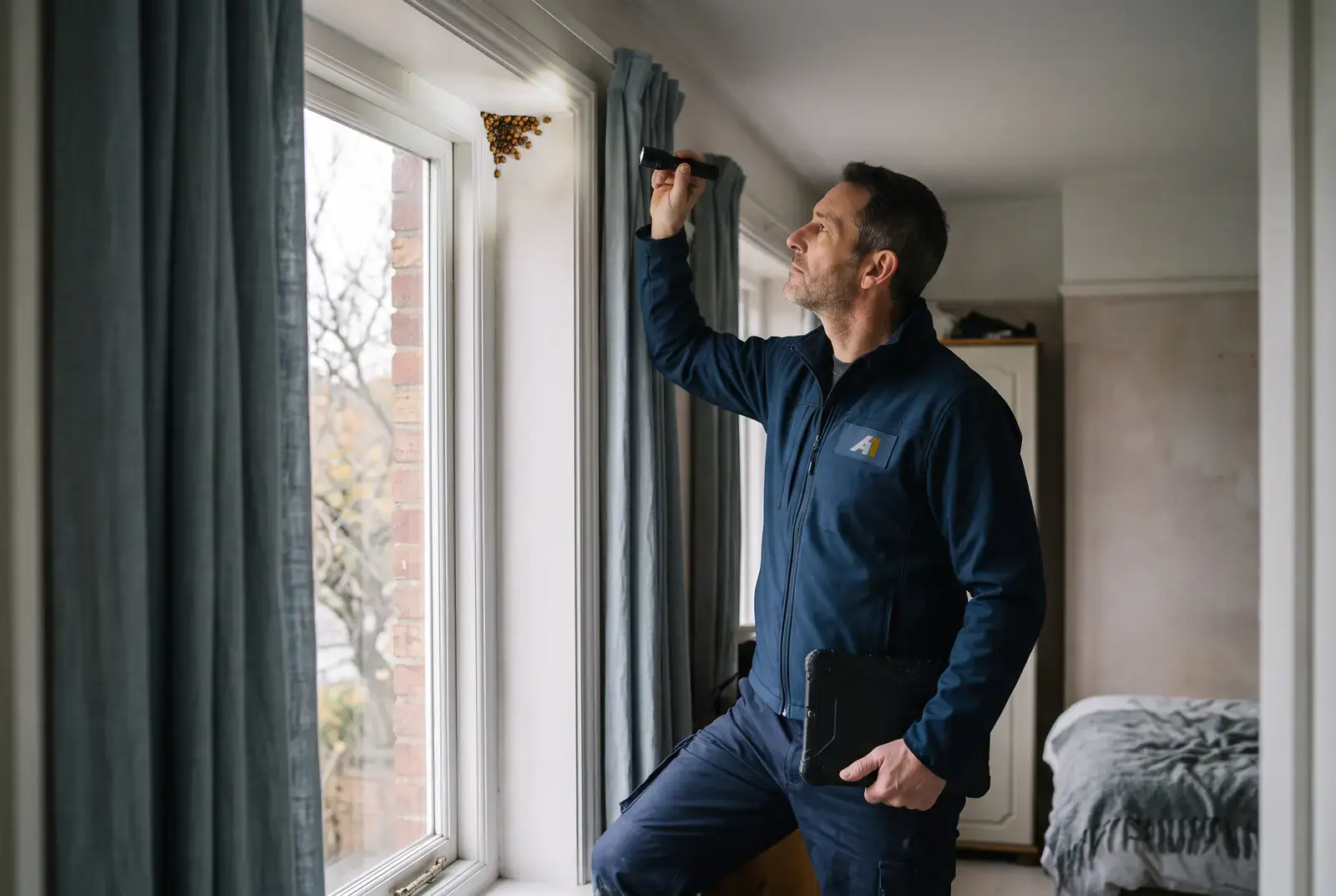
Ladybird removal in Horndean
The NBN Atlas holds 88 recorded harlequin ladybird sightings within 5 km of Horndean. The first is from 2006, and 2026 has 4 so far. The Royal Horticultural Society says adults go looking for winter shelter in autumn, gather in big groups and show most on the south side of buildings. A cluster of 8 to 10 mm ladybirds on a window frame, in a loft corner or on a bedroom curtain in cold weather is often this species, which varies widely in colour. They can leave a yellow stain. A1 Pest Control clears the clusters that come back each autumn. The company sends technicians to homes across Horndean. Say which windows they choose.
About Ladybirds
Ladybirds that crowd into window frames and lofts in autumn are often harlequin ladybirds, a non-native species first recorded in Britain in 2004. They do not damage buildings, but they smell and can stain fabrics when disturbed. A1 Pest Control deals with large groups that come back to homes and businesses each year.
Read the full Ladybirds guideLocal notes for Horndean
By year the sightings read 20 in 2006 and 14 in 2007, then 11 in 2014 and 9 in 2016, and between 1 and 4 a year from 2018 to 2026. July has the most, 23, then October with 16 and November with 14, so 30 of the 88 fall in the two autumn months when the RHS says adults look for shelter. Named places include Clanfield and Waterlooville. Woodland belts and hedgerows run along Catherington Lane and Lovedean Lane, according to East Hampshire’s character study, and Hazleton Common, 40 acres of heath with copses, lies between the A3(M) and the housing. Source for every count: NBN Atlas, downloaded 11 November 2026. Our Horndean pest control page lists the other pests we treat.
Local risk in Horndean
What they leave behind
Indoors the ladybirds are not dangerous, says the RHS, but a clear yellow liquid they exude can mark furnishings. Lift a cluster off fabric rather than squashing it.
Why spraying is a poor answer
The RHS says there is no means of controlling harlequins, because anything used against them would also harm native ladybirds. Our technician looks at what has gathered before deciding anything. The native two-spot and ten-spot ladybirds are only 4 to 5 mm long and also winter in buildings.
Removing a group
The RHS accepts that ladybirds cannot be stopped from coming in, and that they can be captured and removed or tolerated. A soft brush and a tub move a group outdoors on a mild day.
- Start with the windows that face south.
- Close gaps around loose frames and loft vents.
- Send us a photo if you are unsure of the species.
Our harlequin identification guide shows how to tell them from native species.
Price and visit times
East Hampshire District Council has stopped running pest control, and its pest advice page does not cover ladybirds. A big winter group in a Horndean home, office or shop is a private matter. A1 clears ladybird groups, and the number is 0800 059 0135.
Starting from £190
Not sure what you have found? Send us a photo first. Evening and weekend visits are available on request, and a weekend visit costs £60 extra.
Request a callCustomer reviews in Horndean
Google rating: 5.0 from 6 reviews.