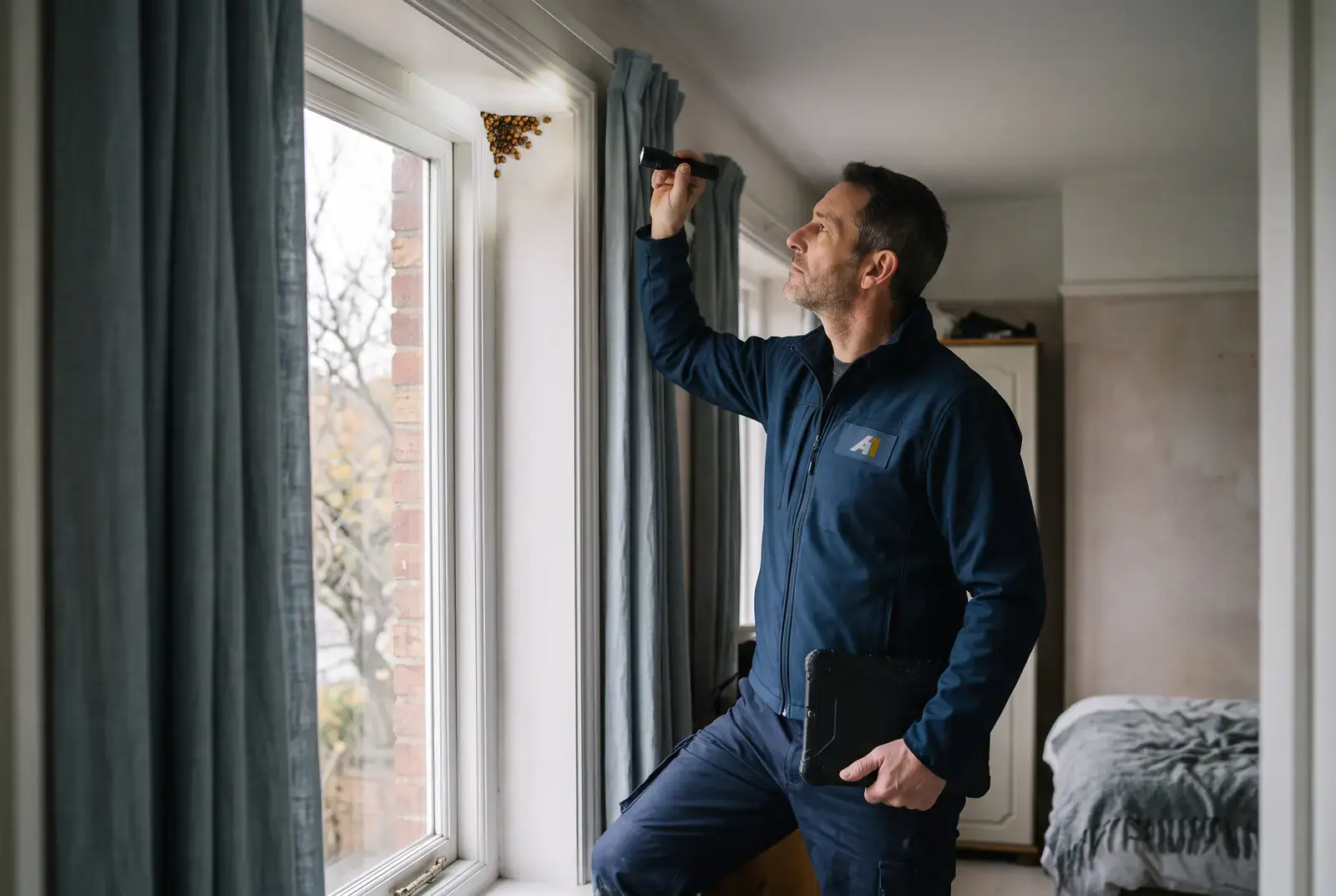
Ladybird removal in Havant
The NBN Atlas records 123 harlequin ladybird sightings within 5 km of Havant. The first is from 2005, one year after the species established itself in Britain, according to the Royal Horticultural Society, and the series peaks at 19 in 2006 and 17 in 2014. October and November together hold 44 of the 123, and July is the busiest month with 31. Come autumn, says the RHS, adults go looking for winter shelter and gather in numbers, most visibly on the south side of buildings. Clusters at a bright window or behind a curtain follow that habit. The insects are messy. A1 Pest Control removes groups that come back every year. A1 works on homes and businesses across Havant. Say which windows they pick.
About Ladybirds
Ladybirds that crowd into window frames and lofts in autumn are often harlequin ladybirds, a non-native species first recorded in Britain in 2004. They do not damage buildings, but they smell and can stain fabrics when disturbed. A1 Pest Control deals with large groups that come back to homes and businesses each year.
Read the full Ladybirds guideLocal notes for Havant
After 17 in 2014 the yearly count dropped to 1 in 2017, then reached 10 in 2021, and 4 sightings are logged so far in 2026. 2023 has none. June and November have 18 sightings each. Seven records name Havant, 2 Southbourne and 1 Drayton. The RHS says harlequins feed mainly on aphids but also take scale insects and the eggs and larvae of butterflies and moths, and the larvae sometimes eat each other. The counts are NBN Atlas figures, accessed 11 November 2026, and they are recorded sightings, not infestation levels. For everything else we treat, see the Havant pest control page.
Local risk in Havant
Marks on fabric
A clear yellow fluid released by harlequins can leave stains on soft furnishings, the RHS warns. Lift a cluster onto card and carry it outside, and do not crush it.
Why nothing keeps them out
According to the RHS, no treatment is available for harlequins because it would harm native species too, so they can only be removed or put up with. Growing from egg to adult takes roughly a month in warm weather, and a year can see several generations.
Check the species
Harlequins vary widely in colour, and some forms look like native ladybirds. The technician checks what has settled before choosing how to clear it.
- Begin with the windows that face south.
- A soft brush and a lidded tub, or a vacuum with a new bag, clears a group.
- Seal gaps around frames and loft vents over the summer.
Our ladybird guide shows how harlequins differ from natives.
Price and visit times
A winter cluster in a flat, shop or office is a private booking. A1 clears ladybird groups on 0800 059 0135.
Starting from £190
Not sure what you have found? Send us a photo first. Evening and weekend visits are available on request, and a weekend visit costs £60 extra.
Request a callCustomer reviews in Havant
Google rating: 5.0 from 6 reviews.