Ladybird removal in Haslemere
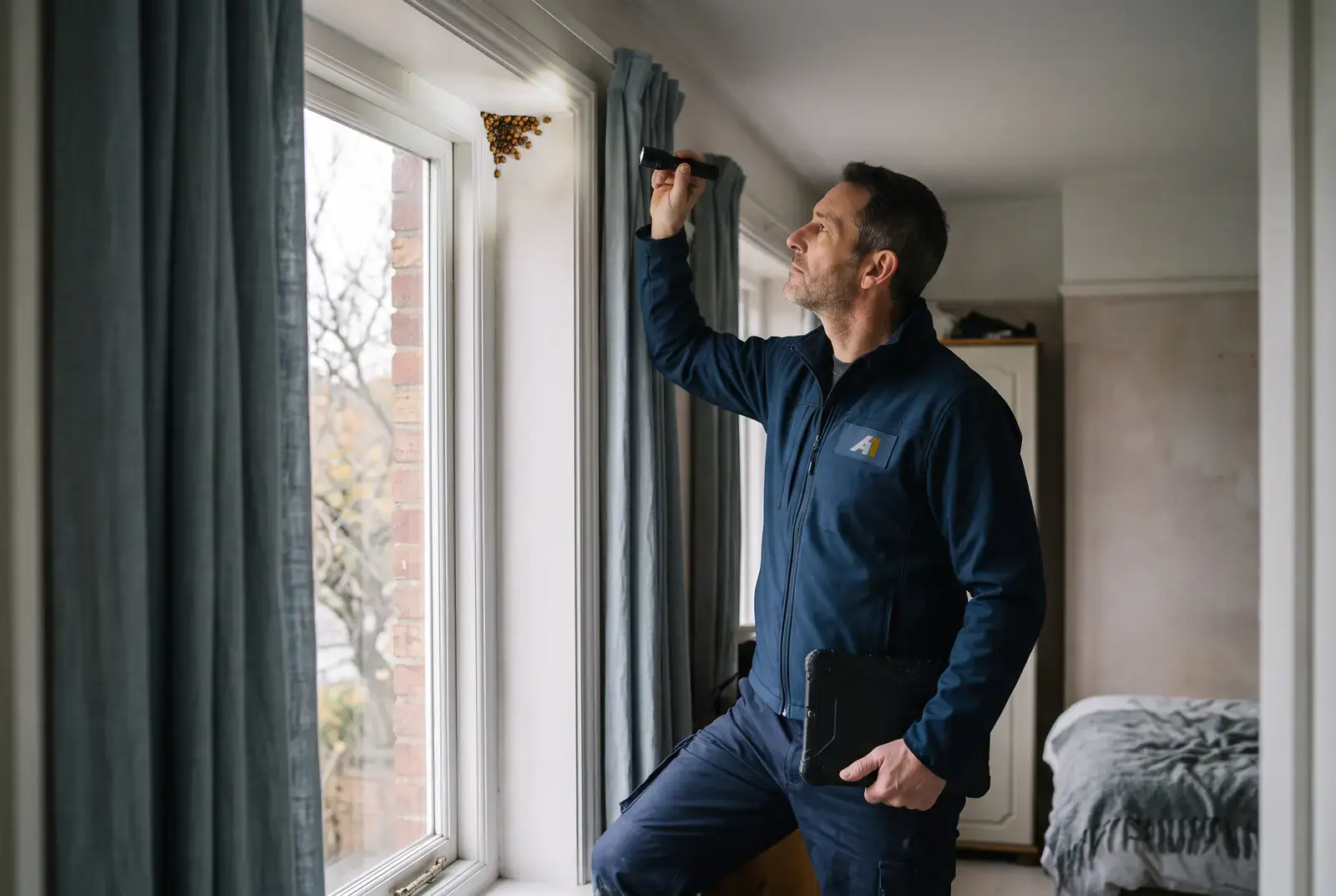
Harlequin ladybirds, first recorded in Britain in 2004, have turned up in Haslemere for nearly twenty years. NBN Atlas records, accessed 11 November 2026, show 27 harlequin sightings within 5 km of the town, from 2007 to 2026, 14 of them in Haslemere itself. The Royal Horticultural Society describes large winter groups, often settled indoors around window frames, curtains and lofts. The British Pest Control Association adds that harlequins leave a building undamaged, and the nuisance is the numbers, the stains and the smell. Native two-spot and seven-spot ladybirds also winter in buildings, sometimes in the same group, so the technician checks what you have first, then explains how to remove the group and which gaps it uses. A1’s technicians travel.
About Ladybirds
Ladybirds that crowd into window frames and lofts in autumn are often harlequin ladybirds, a non-native species first recorded in Britain in 2004. They do not damage buildings, but they smell and can stain fabrics when disturbed. A1 Pest Control deals with large groups that come back to homes and businesses each year.
Read the full Ladybirds guideLocal notes for Haslemere
The first Haslemere-area record dates from 2007, when 4 sightings were logged. Four more came in 2013 and 5 in 2022, and the latest of the 27 is from 2026. Besides the town, 4 sightings come from Fernhurst, and others name Grayswood and Lynchmere. The other recent years had 3 sightings in 2021, 1 in 2023, 2 in 2024 and 3 in 2025. By month, June has 5 records, July and August 4 each and May 4, while October has 3. These are sightings of ladybirds, not household cases. For everything else we treat here, start from the Haslemere pest hub.
Local risk in Haslemere
Mild days in winter
A winter group sleeps through the cold, and on warm afternoons a few wake and crawl about. Loft hatches, window curtains and shed corners all deserve a look in spring as well as autumn.
Stains and a smell
A scared ladybird oozes a yellow fluid that marks curtains, carpets and pale cloth. Vacuuming a group deepens the smell. Professor Helen Roy, quoted on our ladybird page, suggests a soft brush and a lidded tub instead.
Harlequin or native
An adult runs 5 to 10 mm long, and colour tells you little, as the black form carrying two red spots and the orange form with as many as 19 black spots are both widespread. The pale pronotum behind the head carries black markings in an M shape.
- Brush a group into a tub and tip it out in the garden.
- Fill gaps round window and door frames.
- Rinse marked fabric promptly.
Price and visit times
Waverley Borough Council does not treat ladybirds. Its page covers rats, mice, wasps, bed bugs, fleas and cockroaches in homes, and gives cluster flies and carpet moths their own lines. A ladybird group indoors is the occupier’s to clear with a brush and a tub, or a contractor’s. A1 takes ladybird work in Haslemere on 0800 059 0135.
Starting from £190
Not sure what you have found? Send us a photo first. Evening and weekend visits are available on request, and a weekend visit costs £60 extra.
Request a callCustomer reviews in Haslemere
Google rating: 5.0 from 6 reviews.