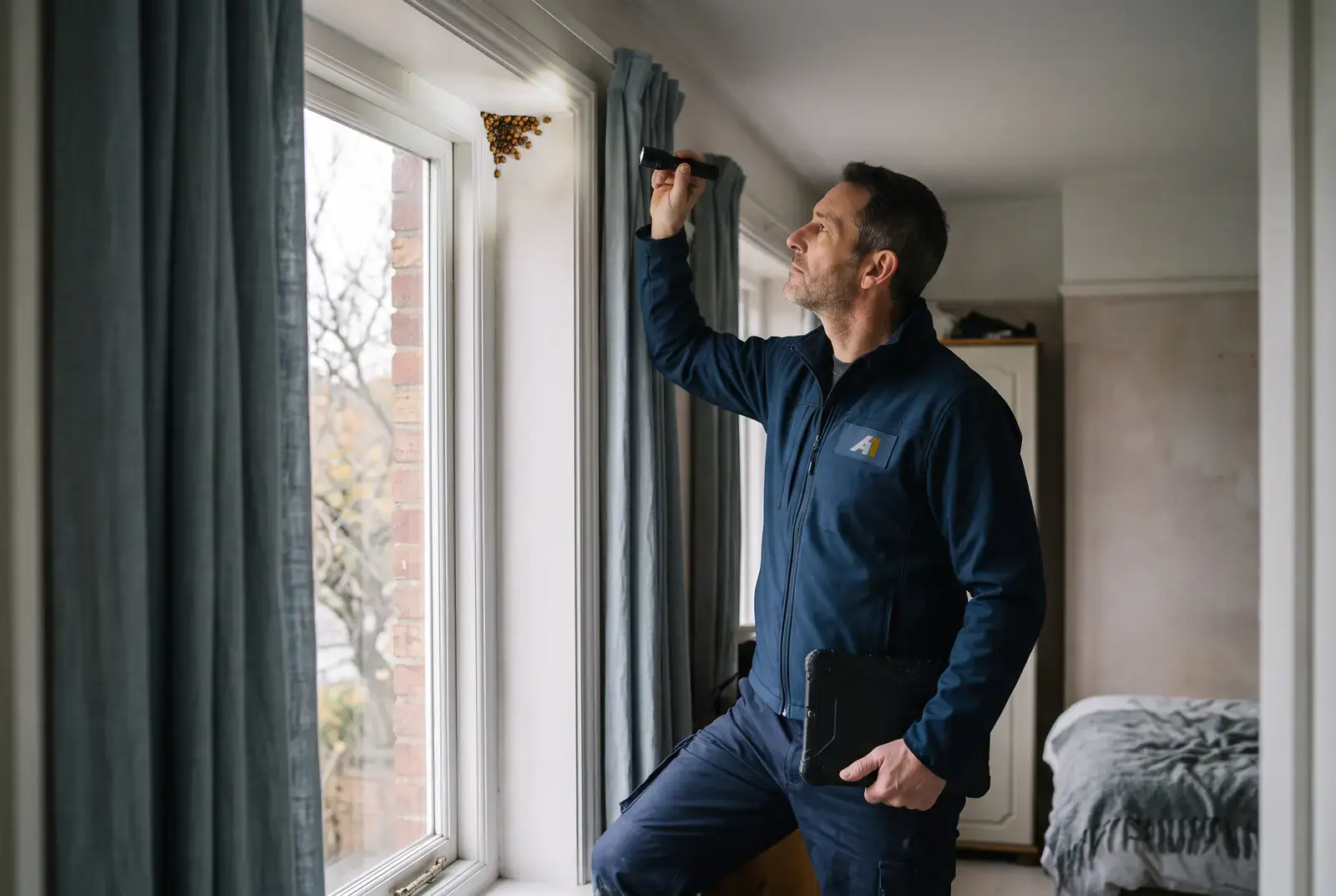
Ladybird removal in Godalming
Ladybirds look for a winter hiding place in autumn, and groups of harlequins gather on sunny walls and window frames. Harlequins were first recorded in Britain in 2004, and they do not damage buildings. They are usually larger than native ladybirds, around 5 to 10 mm, and a disturbed group gives off a yellow fluid that smells and can stain. The NBN Atlas, accessed 10 November 2026, holds 96 recorded harlequin sightings within 5 km of Godalming, and 41 of them fall in October, November and December. A1 Pest Control treats the cracks and gaps where groups settle, once the technician has checked which species are in them. Native two-spot and seven-spot ladybirds winter indoors too, so the check comes first. We drive.
About Ladybirds
Ladybirds that crowd into window frames and lofts in autumn are often harlequin ladybirds, a non-native species first recorded in Britain in 2004. They do not damage buildings, but they smell and can stain fabrics when disturbed. A1 Pest Control deals with large groups that come back to homes and businesses each year.
Read the full Ladybirds guideLocal notes for Godalming
Of those 96 harlequin records, 50 were logged in 2006 and 2007 and 17 between 2016 and 2025, with 2 in 2025. The same database holds 67 sightings of the native seven-spot ladybird, the latest in 2026, and 53 of them fall between May and August, against 1 in October. It also holds 23 sightings of the native two-spot ladybird, the latest in 2025. No year from 2017 to 2025 has more than 3 harlequin records. Place names in the harlequin records include Binscombe and the Charterhouse to Eashing SSSI. For other pests, see the Godalming pest control page.
Local risk in Godalming
Sun-facing walls
The trouble with harlequins indoors is numbers, smell and stains on curtains and paintwork. Harlequins eat the eggs and larvae of other ladybirds, and the Society says no control harms only them, so treatment aims to get them out of the rooms and stop them returning.
Allergic reactions to harlequins have been reported but are rare, and the risk of a bite is greatly exaggerated. Spiky charcoal-grey larvae with orange stripes live on garden plants in spring and summer.
Why they return
Groups come back to places that worked before. Cracks around window frames, soffits and loft hatches mark the route.
- Vacuum a group instead of crushing it.
- Seal gaps round window frames.
- Fit fine mesh over vents.
- Check that loft hatches close tightly.
The ladybird removal guide shows how to tell a harlequin from a native ladybird.
Price and visit times
Its page covers a short list of pests in homes. For a ladybird group at a home, school or shop, A1 can book a visit.
Starting from £190
Not sure what you have found? Send us a photo first. Evening and weekend visits are available on request, and a weekend visit costs £60 extra.
Request a callCustomer reviews in Godalming
Google rating: 5.0 from 6 reviews.