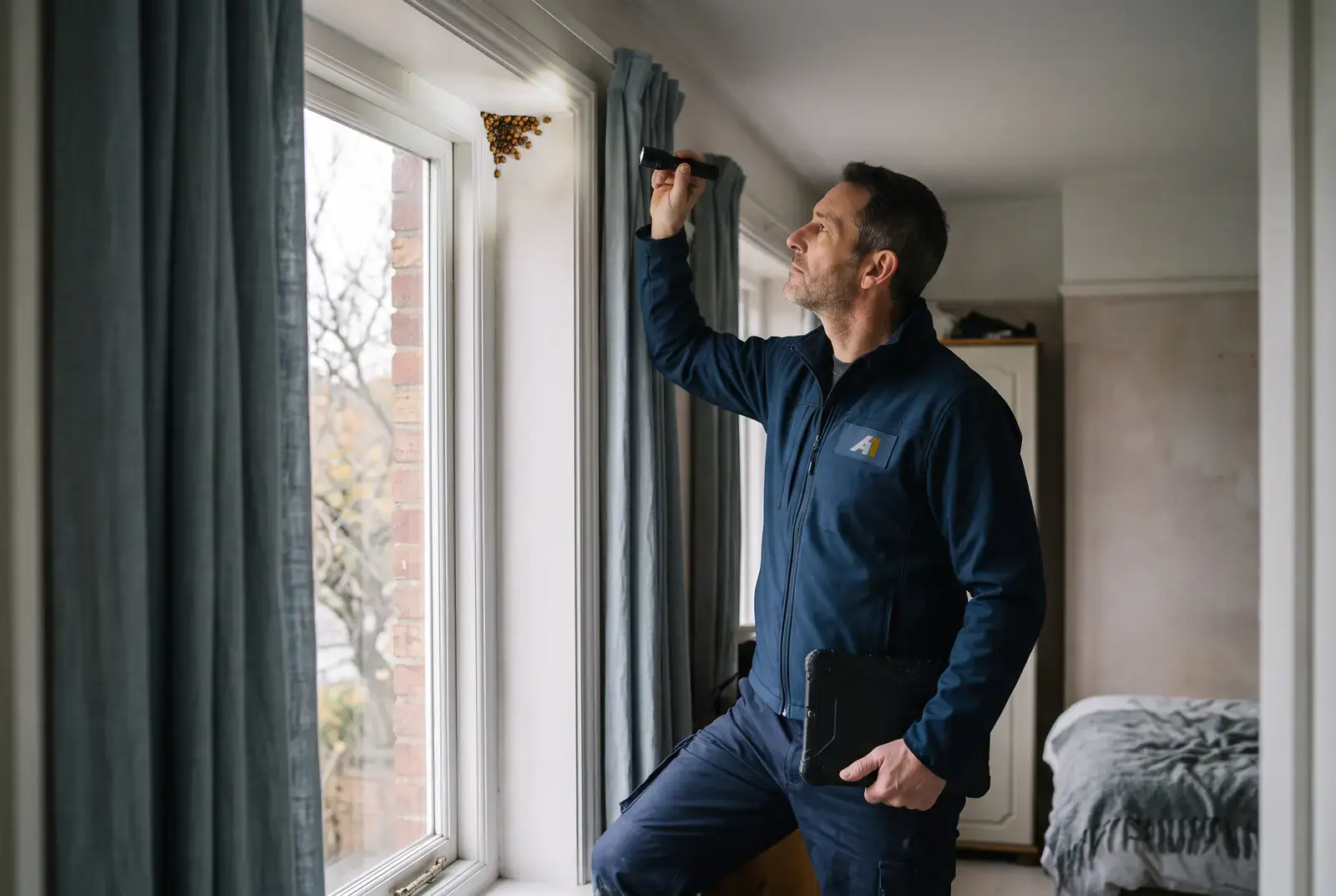
Ladybird removal in Chichester
Harlequin ladybirds look for a winter hiding place in autumn, and groups gather on sunny walls and window frames. The NBN Atlas, accessed 11 November 2026, holds 93 recorded harlequin sightings within 5 km of Chichester, and October is the peak month with 23. The first local records are from 2006, and 2007 is the busiest year with 17. Harlequins do not damage buildings, but a disturbed group gives off a yellow fluid that smells and can stain. A1 Pest Control checks the species first, because native two-spot and seven-spot ladybirds also winter indoors, then treats the cracks and gaps where groups settle. A1 covers the city of Chichester. Send your postcode and a photo.
About Ladybirds
Ladybirds that crowd into window frames and lofts in autumn are often harlequin ladybirds, a non-native species first recorded in Britain in 2004. They do not damage buildings, but they smell and can stain fabrics when disturbed. A1 Pest Control deals with large groups that come back to homes and businesses each year.
Read the full Ladybirds guideLocal notes for Chichester
Sightings by year reached 12 in 2016 and 3 in 2025, well below the 17 logged in 2007. Chichester and Fishbourne are named as places. June has 16 sightings and July 15, while adults and larvae feed on garden plants before the autumn move. The harlequin, native to Asia, was first recorded in Britain in 2004, and the first local records follow two years later, early in its spread. April has 11 sightings, when adults that wintered in a building wake and leave. Those counts are sightings, not a measure of how many ladybirds enter homes. For other pests see the Chichester hub page.
Local risk in Chichester
Why they come inside
The Royal Horticultural Society advises that harlequins in the house do no harm to people. The complaint is volume, a sour smell and stains on curtains and paint. Harlequins prey on native ladybird eggs and larvae, and the Society notes that nothing controls them without harming other insects, so a visit aims to clear the rooms and close the gaps rather than wipe out the species.
A route they remember
A group that found a warm crack one year tends to use it again. Window frames, soffits and loft hatches on south-facing walls are the usual spots. Their larvae are spiky, charcoal-grey and orange-striped.
- Hoover a cluster up and empty the bag outdoors.
- Seal gaps round frames before October.
- Screen roof vents with mesh.
- Make sure loft hatches sit flush.
Our ladybird removal guide helps you tell a harlequin from a native species.
Price and visit times
Tenants should tell the landlord when a group settles on shared walls or a communal roof, so the whole building gets sealed. A1 Pest Control books ladybird visits for homes and businesses on 0800 059 0135.
Starting from £190
Not sure what you have found? Send us a photo first. Evening and weekend visits are available on request, and a weekend visit costs £60 extra.
Request a callCustomer reviews in Chichester
Google rating: 5.0 from 6 reviews.