Pest guide
Ants: signs, treatment and prevention
Spotting activity indoors and outside.
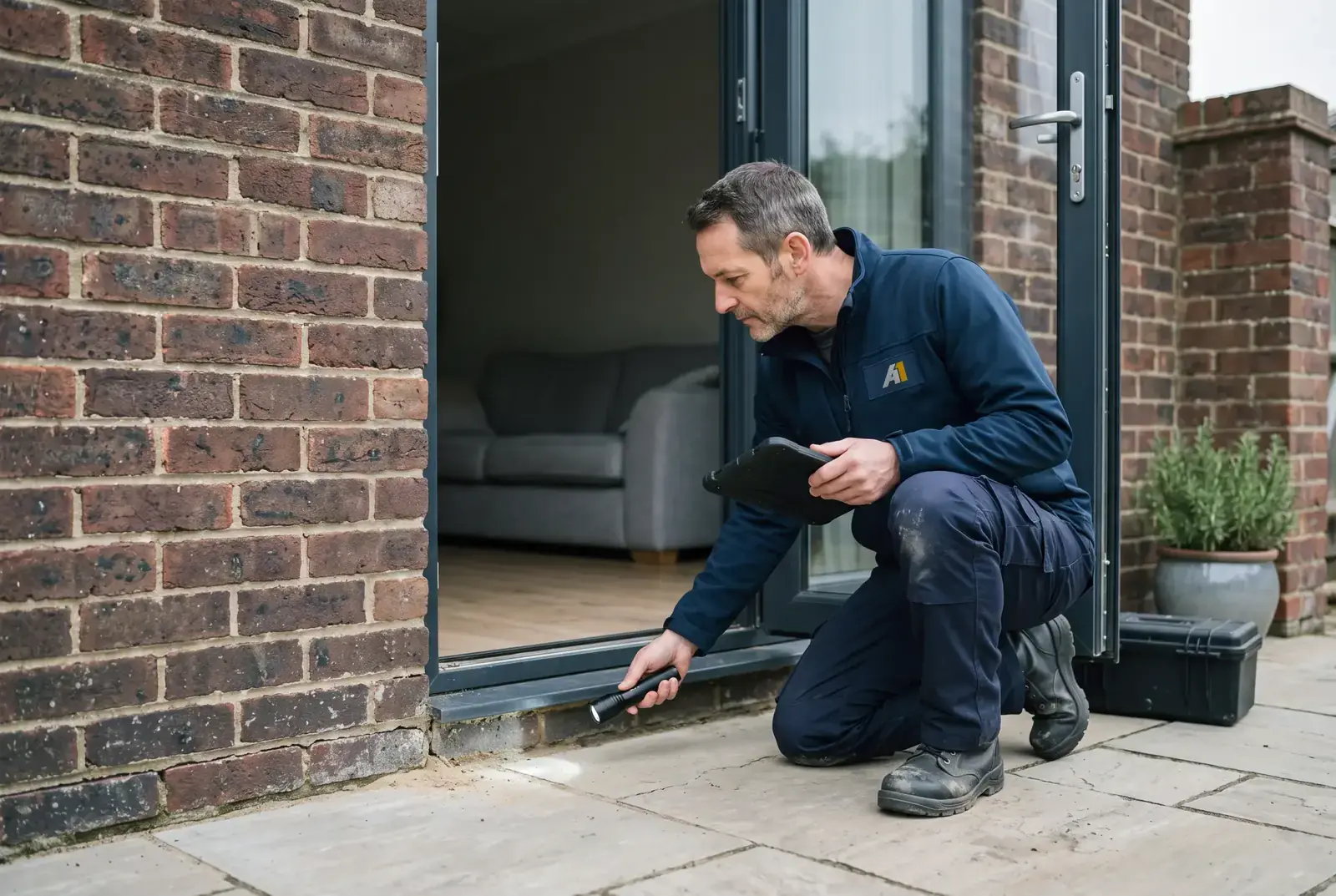
Ants indoors are most often black garden ants trailing from a nest outside or under the floor to food in the kitchen, from spring to late summer. A1 Pest Control treats ants with a gel bait or residual treatment at the nest and entry points, normally in one visit, and shows you which gaps to seal.
What signs should I look for?
Ants are easy to see. The useful part is working out where they are coming from.
- Trails: lines of small black ants along skirtings, worktops and window sills, heading to sugar, crumbs, fruit or pet food.
- Entry points: ants appearing from the same gap each day, such as under a patio door, beside a kitchen unit, at an air brick or through a crack in the floor.
- Soil or sand: small heaps of fine soil between paving slabs, at the base of walls or along the edge of the patio, pushed up from a nest below.
- Flying ants: winged ants pouring out of a gap in the paving, lawn or wall on a warm, humid summer day. This is a mating flight from a large, established nest.
- Ants in heated buildings all year: tiny pale yellow or brown ants in a block of flats, a hospital, a care home or a bakery, even in winter, point to pharaoh ants, which need a different treatment.
Which ant is it?
- Black garden ant (Lasius niger): the ant most UK homes see, about 3 to 5 mm long and dark brown to black. It nests outside in lawns, flower pots, compost bins and under paving, and comes indoors to forage.
- Pharaoh ant: about 2 mm long, pale yellow to light brown, living inside the structure of large centrally heated buildings. Sprays make it worse, because the colony splits and spreads through the building.
- Flying ants: the winged males and new queens of ordinary garden ants. They do not sting, and they die or drop their wings within a day or two.
Why are they a problem?
Black garden ants do not damage buildings or bite in any way that matters, and the RHS notes they do little direct harm in the garden. The problem starts when a trail finds its way into your kitchen.
Food and hygiene
Ants walk over bins, drains and the ground before they cross your worktops, food packets and pet bowls. Once a trail finds sugar or grease, more ants follow the scent left by the first ones, and the trail grows by the day.
Nests close to the house
A nest under the patio, a path or the floor slab can send ants into the house every summer from the same gap. Wiping up the trail clears the ants you can see, but the nest stays in place and keeps producing workers.
Pharaoh ants in shared buildings
The British Pest Control Association calls pharaoh ants a serious public health pest. In the UK they live inside large centrally heated buildings such as high-rise flats, hospitals and bakeries, often near boilers and ovens. A nest can hold tens of thousands of workers, only 5 to 10% of them forage, and a disturbed colony splits and spreads through the building. The BPCA advises calling a professional for any pharaoh ant problem.
How do we get rid of them?
- Follow the trail. The technician follows the ants back to where they come in and, where possible, to the nest itself.
- Treat the nest and entry points. For garden ants we apply a residual insecticide or gel bait at the nest, the entry points and the edges of the trail. For pharaoh ants we use baits only, placed across the affected area.
- Let the bait work. Worker ants carry gel bait back and feed it to the queen and the young. Do not wipe the bait, spray over it or clean the treated edges for the time we advise.
- Seal and advise. We show you the gaps to fill around doors, kitchen units and the floor edge, and tell you how to keep food out of reach so the next colony has less to find.
Garden ants normally need one visit. Pharaoh ant colonies can split when sprayed, so baits are the usual treatment, and they work over a period of weeks as the ants carry the bait back to the nest.
Homes and business premises
For homes
Most home ant problems start at a patio door, a kitchen floor edge or an air brick, from a nest just outside. We find and treat the nest and the way in, and give you a fixed price before any work starts.
For businesses
In food businesses, care homes and shared residential blocks we survey the building to find out which species it is and how far it has spread, then treat with baits on a schedule and write up each visit for your records. Pharaoh ants need a planned, building-wide approach. See commercial pest control and pest control for food premises.
How do I stop them coming back?
- Wipe up sugary spills, crumbs and grease straight away, and do not leave dirty dishes out overnight.
- Keep sugar, honey, jam, cereals and pet food in sealed containers.
- Lift pet bowls once your pet has eaten, or stand them in a shallow tray of water.
- Seal gaps along skirting boards, around pipes and under patio and back doors.
- Keep bins closed and rinse recycling.
- Clear soil and plants away from the base of the house walls, where ants can nest right next to an entry point.
For more summer advice, read how to get rid of ants in summer.
How much does treatment cost?
Ant treatment, Pharaoh ants included, costs £240, and each extra visit costs £240. Weekend visits cost £60 extra. Pharaoh ant work in larger buildings is priced on a survey.
Your questions, answered.
Why do I keep getting ants in the kitchen?
Ants follow scent trails laid by the first workers to find food, so one ant that finds sugar or crumbs can lead many more in. They come from a nest outside or under the floor, which wiping up the trail does not touch. Treating the nest and entry points, sealing gaps and keeping food in sealed containers stops the trail coming back.
Why have flying ants appeared?
Flying ants are the winged males and new queens of an established nest, out on their mating flight. Garden ants fly on warm, humid summer days, often in July and August, and many nests in an area can swarm on the same day. They do not sting and the swarm is over within a day or two. If they come out indoors, the nest is close to or under the house.
Can I use ant powder or spray from a shop?
Sprays kill the ants you can see but often miss the nest, so the trail returns. Never spray pharaoh ants, because the colony splits and spreads. If ants keep coming back after a couple of weeks, or you see them in winter in a heated building, call us.
Do you treat ants in the garden?
We treat ants that are coming into the house, nesting under a patio you use, or causing a problem around a business. Where a nest is the source of ants indoors, we treat it along with the entry points.
How long does ant treatment take to work?
Garden ant treatment takes a single visit in most cases, and you should see far fewer ants within a few days as the bait reaches the nest. You may see more ants at first while they feed on the bait. Pharaoh ants take longer, two to three weeks or more, because every part of a large colony has to take the bait.
Are ants a health risk?
Black garden ants are not known to spread disease, but they walk over bins and drains before crossing your worktops, so keep food covered and clean surfaces they have crossed. Pharaoh ants are different. The BPCA calls them a serious public health pest in large heated buildings such as hospitals, flats and bakeries, and they need professional treatment.
Ant treatment near you
Tell us what's happening.
Share your postcode and the signs you have noticed.