Pest guide
Rats: signs, treatment and prevention
Signs, entry points and next steps.
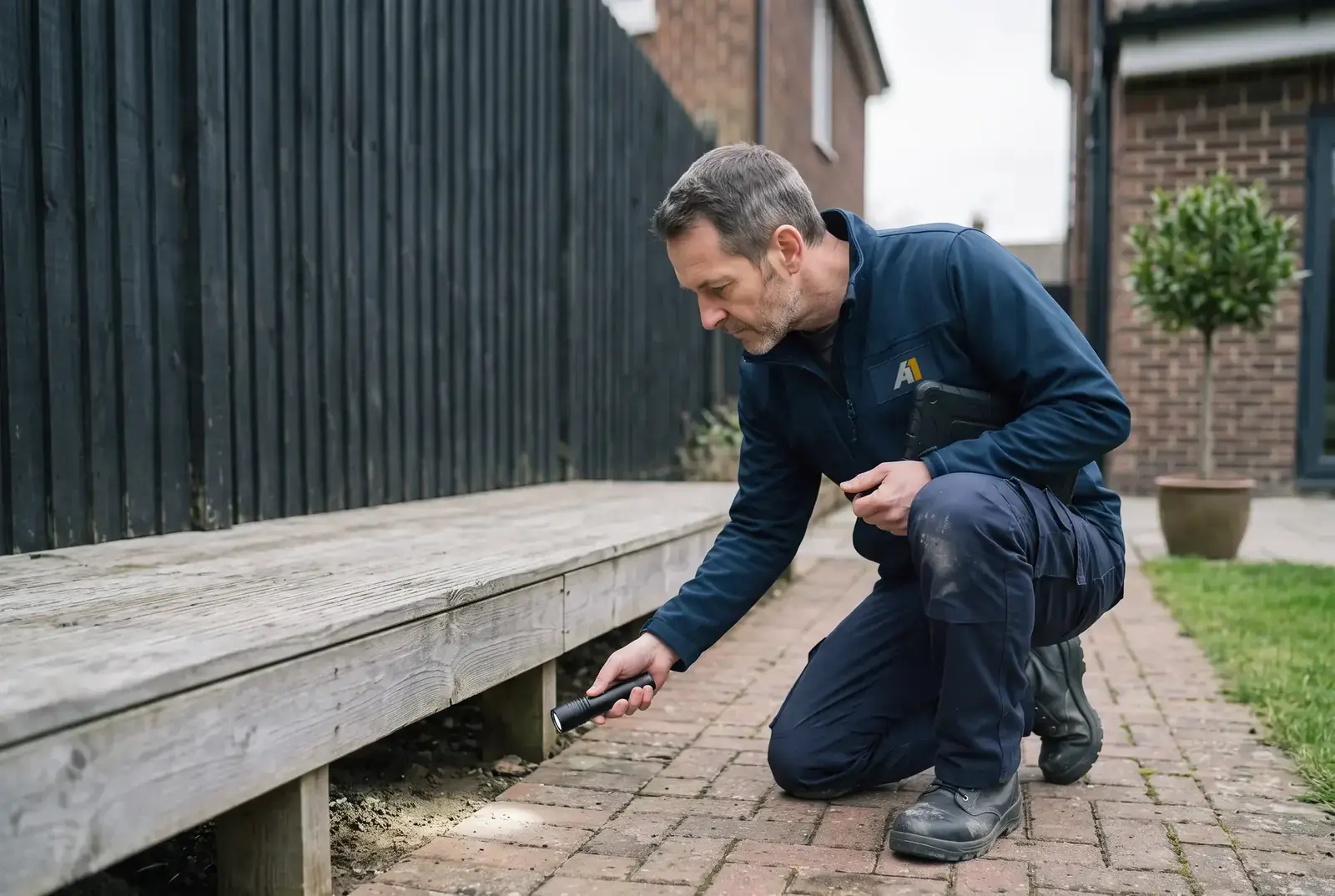
Rats in a home or business usually show themselves through droppings (dark, about 1 to 2 cm, pointed), scratching or gnawing noises at night, greasy smear marks along skirtings, and gnawed packaging or cables. A1 Pest Control treats rats with a site survey, targeted baiting or trapping, and proofing of the entry points, normally over two to three visits.
What signs should I look for?
Most people notice the droppings or the noise first. Look for:
- Droppings: dark, about 1 to 2 cm long and pointed at the ends, often in clusters along walls, in cupboards or behind appliances. One rat can leave up to 40 in a night.
- Noises at night: scratching, gnawing or scurrying in the loft, under floors or inside walls after dark.
- Smear marks: greasy grey marks along skirtings, pipes and the edges of holes, where their fur rubs on the same route each night.
- Burrows: holes in banks, under sheds, decking or compost bins, often right beside a wall or path.
- Gnawing: chewed food packaging, wood, plastic pipes or cable sheathing.
- Smell: a stale, ammonia smell in enclosed spaces such as lofts and under-stairs cupboards.
- Sightings: rats live in groups, so if you see one, expect more nearby. They feed at night, but in autumn and winter hungry rats come out in daylight too.
Rats or mice?
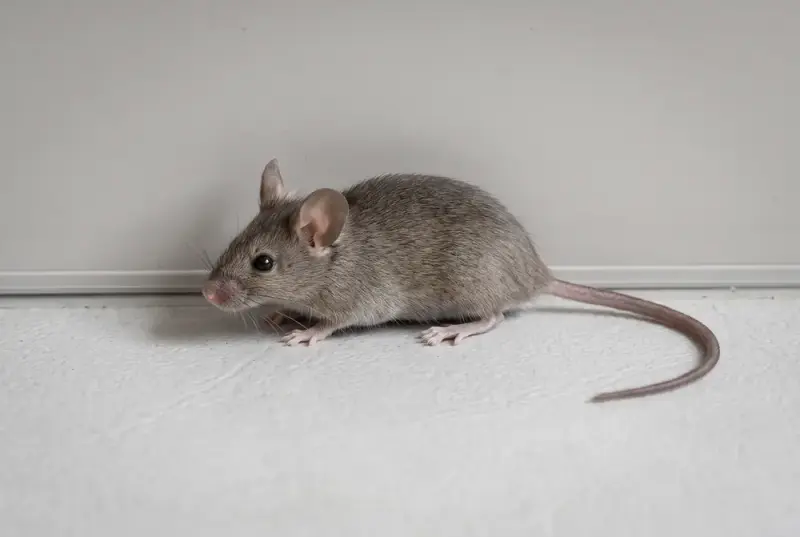
Size and droppings are the quickest way to tell them apart. If you are unsure, describe what you have found and we will tell you which it is likely to be.
| Sign | Rats | Mice |
|---|---|---|
| Body size (without tail) | About 23 cm, often over half a kilo | 6 to 9 cm, under 25 g |
| Droppings | Dark, about 1 to 2 cm, pointed | Black, rod-shaped, 3 to 6 mm |
| Feeding | Regular meals, about 50 g a night, wary of anything new in their runs | Nibbles at many sources, a little at a time |
| Gap they can use | About 15 mm | About 5 mm |
For more on the differences, see our rodent control guide and mouse control.
Why are they a problem?
Rats carry disease, damage buildings and contaminate food, and numbers grow fast: a female brown rat can breed every six weeks, with six to eight young each time.
Health
Rats spread disease through their urine and droppings. The best known is leptospirosis, also called Weil’s disease, which people catch when infected urine reaches a cut, the eyes or the mouth, often through water or soil. The UK Health Security Agency lists direct contact with rodents as a common source of infection in England, and the NHS describes the symptoms. Rats can also carry salmonella, which persists in their droppings and can reach people through food and worktops the rats have run across.
Damage and fire risk
Rats gnaw all the time to keep their teeth worn down. They strip the insulation from electrical cables, which can start a fire, and chew through plastic and lead pipes, which causes leaks. They nest in roof spaces, wall cavities and under floorboards, out of sight until the damage shows.
Legal and reputational risk for businesses
Under the Prevention of Damage by Pests Act 1949, your local council can serve a notice requiring you to deal with rats on your land. Food businesses must have adequate procedures to control pests under food hygiene law, and environmental health officers can close premises where pest activity puts health at risk. A customer who sees a rat can also cost you reviews and trade.
How do we get rid of them?
- Survey and identify entry points. A technician inspects inside and out: droppings, runs, burrows, drains, air bricks, gaps around pipes and the roofline. We explain what we found and how the rats are getting in.
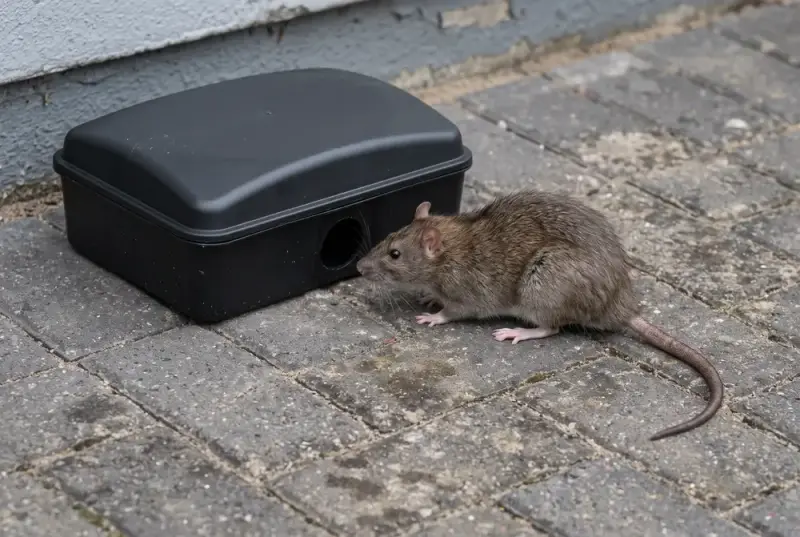
- Treatment plan. We place bait in tamper-resistant stations, set traps, or use traps alone where children, pets or wildlife rule out bait. We show you where each station sits and what to leave alone.
- Follow-up visits. We return to check how much bait has gone, remove dead rats and adjust the treatment. Most homes need two to three visits in total.
- Proofing and advice. Once activity stops, we seal the entry points and leave advice on bins, drains and the garden so new rats have no reason to move in.
Rats are wary of anything new in their runs, so bait and traps can take several days to work. You will see most of the progress by the first follow-up.
Homes and business premises
For homes
Most home rat problems start in the garden, the loft or under the floor, often through a broken drain or a gap around a pipe. We treat inside and out, place bait where children and pets cannot reach it, and tell you what to fix so the problem does not come back. You get a fixed price before any work starts.
For businesses
On commercial premises rats put food safety, stock and your hygiene rating at risk. We start with a site survey and risk assessment, then run a programme of monitored bait stations or traps, proofing and scheduled visits, with a written report after every visit for your auditor or environmental health officer. See commercial pest control or pest control for food premises.
How do I stop them coming back?
Rats return when the gap they used is still open and food is still easy to find. Work through this list:
- Seal gaps over 1 cm around pipes, cables, doors and under sheds. Rats can squeeze through about 15 mm, so pack holes with wire wool set in quick-setting cement.
- Check drains and air bricks. Replace broken drain covers, seal disused pipes and fit mesh over damaged air bricks.
- Keep bin lids shut, replace cracked bins and rinse recycling so it does not smell of food.
- Feed birds from a table or a feeder with a tray, and take feeders in at dusk while rats are active.
- Use a closed compost bin on a wire mesh base, and keep cooked food, meat and bread out of it.
- Cut back dense vegetation, clear woodpiles and rubbish beside the house, and keep the ground under sheds clear.
For more garden advice, read how to keep rodents out of your garden and how to keep pests out of your compost bin.
How much does treatment cost?
Rat treatment prices:
- Standard treatment: £280, covering 2 visits
- Humane treatment with cage traps and no poison: £240
A third visit on a standard treatment costs £95, and a treatment never runs to more than three visits. Each cage check on a humane treatment costs £95. Weekend visits cost £60 extra. We price commercial programmes per site, on the number of visits a year.
Your questions, answered.
Are rats dangerous?
They can be. Rats spread leptospirosis (Weil’s disease), salmonella and listeria through their urine and droppings, and they gnaw electrical cables and pipes, which can cause fires and leaks. Bites are uncommon and happen when a rat is cornered. If a rat does bite you, wash the wound well, even if the skin looks unbroken, apply antiseptic and get medical advice.
Can I deal with rats myself?
Rats are wary of new objects and breed fast, so DIY often fails on an established problem. A professional technician uses products not sold to the public and finds the entry point, which is what stops new rats moving in.
How long does treatment take?
The number of visits depends on the size of the infestation, and the CRRU UK Code of Best Practice says that in most cases any anticoagulant bait should have achieved control within 35 days. The first visit covers the survey and the start of treatment. The follow-ups check progress, remove bait and dead rats, and finish with proofing. Larger buildings, commercial sites and heavy infestations can take longer, and we tell you this at the survey.
Is the bait safe for pets?
No rat bait is safe for a pet to eat, so we put it in tamper-resistant stations fixed in place, out of reach of children, pets and other wildlife. Where that is not enough, for example a dog that roams the garden, we use traps instead. Tell us about your pets before the visit and we will plan around them.
Do rats come back?
They can if the reason they came is still there, because new rats find the same broken drain or gap under the door. The last visit covers proofing and advice on bins, compost and bird food. With entry points sealed and no easy food, a return is much less likely.
Who is responsible for rats in a rented property?
It depends on the cause and your tenancy agreement. In England a landlord must deal with rats that get in through disrepair they are responsible for, such as a broken drain or a hole in a wall, and with problems that were there when you moved in. Tenants should report signs to the landlord early. Shelter and Citizens Advice explain the rules.
Rat control near you
Tell us what's happening.
Share your postcode and the signs you have noticed.