Pest guide
Mice: signs, treatment and prevention
What to look for around your property.
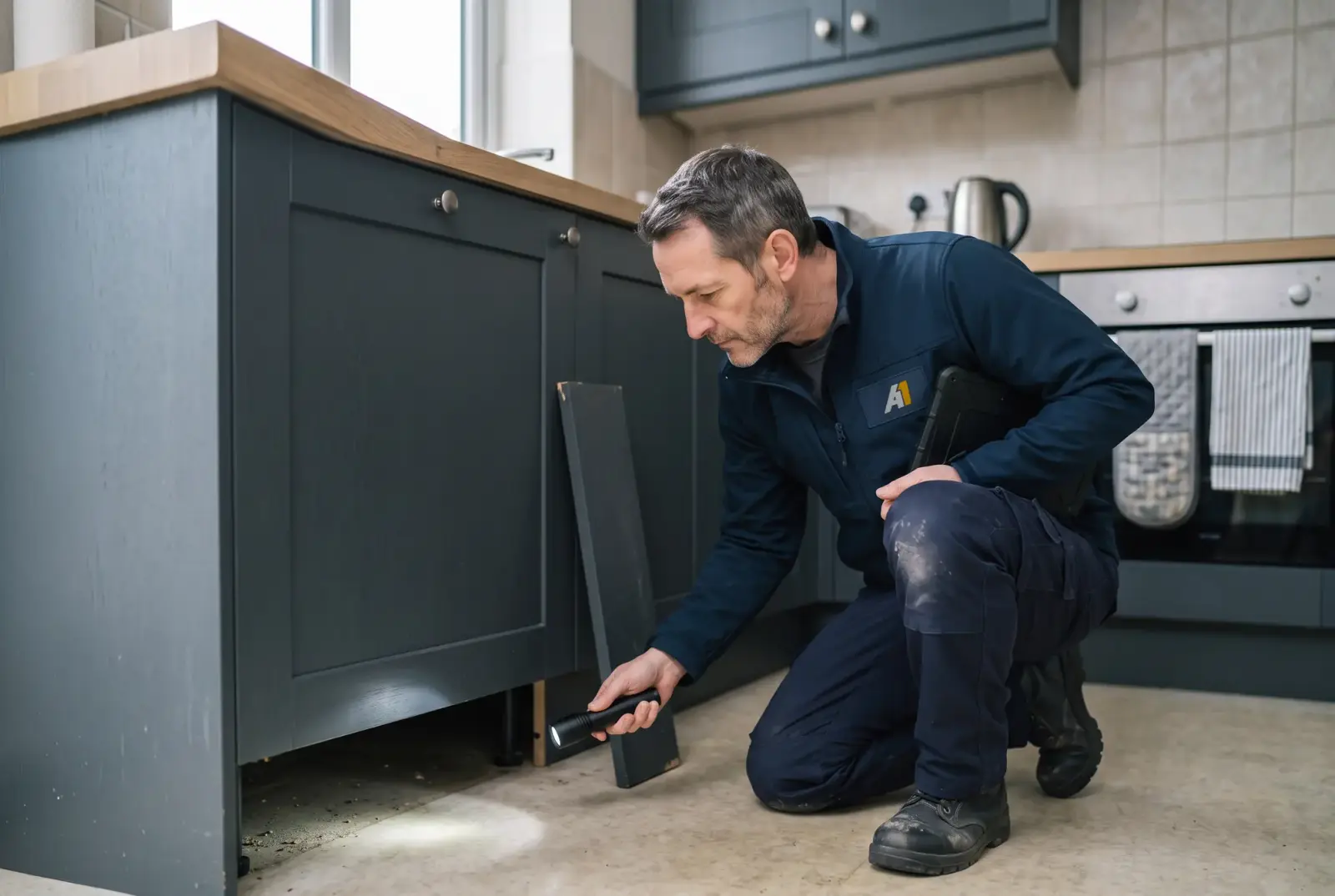
Mice in a home or business show up as small black droppings (3 to 6 mm, rod-shaped) under the sink or behind the cooker, scratching in walls at night, and nibbled food packets. A1 Pest Control treats mice with a survey, bait stations or traps on their runs, follow-up visits, and proofing of gaps as small as 5 mm.
What signs should I look for?
Mice leave more droppings than any other sign, and they leave them where they feed. Check these places first: under the kitchen sink, behind the cooker and fridge, around the boiler, in airing cupboards and in the loft.
- Droppings: black, rod-shaped and 3 to 6 mm long, about the size of a grain of rice. Fresh ones are soft and shiny. One mouse can leave around 80 a day, scattered rather than in piles.
- Nibbled food: small holes in cereal boxes, bread bags, pet food and bird seed, with crumbs and droppings nearby.
- Noises: light scratching and scurrying inside walls, under floors or above ceilings, at night.
- Smear marks: dark grey marks low on skirtings and around pipes where the oil in their fur rubs off.
- Nests: loose balls of shredded paper, cloth, insulation or cardboard in lofts, under floorboards, behind kickboards or in airing cupboards.
- Gnawing: chewed cables, skirtings, carpet edges and plastic, often with tiny tooth marks.
- Smell: a stale, musty smell in cupboards where mice have been active for a while.
Mouse droppings or rat droppings?
Mouse droppings are 3 to 6 mm and look like grains of rice. Rat droppings are much bigger, about 1 to 2 cm, and tend to sit in clusters. If you are finding both sizes, or you are not sure, our rodent control guide compares the two and our rat control page covers rats in detail. For a full checklist, read signs of mice in your home.
Why are they a problem?
A mouse problem grows out of sight. Mice breed fast, feed in small amounts from many places, and do not need a water source, because they get enough moisture from their food. They are most active at night, so you hear or find signs of them long before you see one.
Food contamination and health
Mice carry salmonella and listeria, both causes of food poisoning, and spread them through droppings and urine on worktops, utensils and open food. Because they nibble at many sources rather than one, a few mice can spoil a whole cupboard. Throw away anything they have touched and clean the surfaces with hot soapy water and disinfectant.
Damage and fire risk
Mice gnaw all the time to keep their teeth short. They chew electrical cables, water and gas pipes, packaging, woodwork and carpet. Gnawed cables behind kitchen units and in lofts are a known cause of electrical fires.
For businesses
Droppings in a kitchen, stockroom or office are enough for customers and staff to lose confidence. Food businesses must have adequate procedures to control pests under food hygiene law, and your local council has powers under the Prevention of Damage by Pests Act 1949 to require action against mice on your premises.
How do we get rid of them?
- Survey. A technician finds the runs, nests and feeding spots, and checks where the mice are getting in: gaps around pipes, under kitchen units, around the boiler flue, at air bricks and along the roofline.
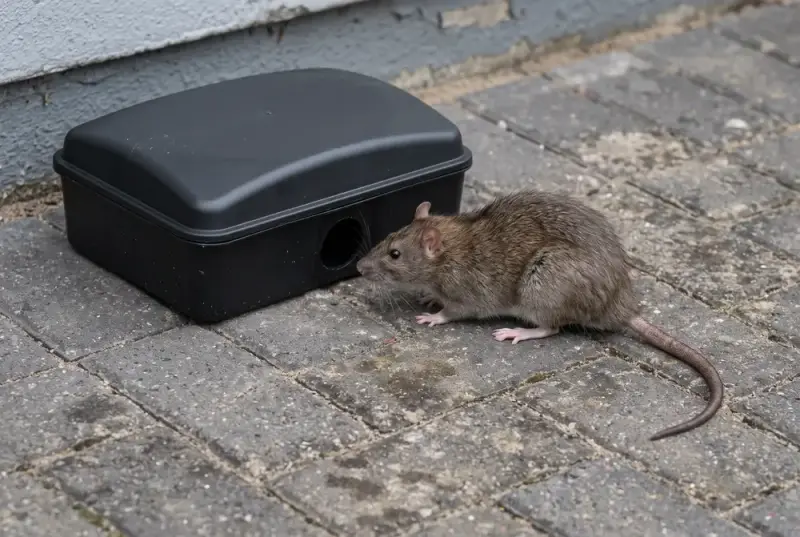
- Treatment. Mice feed little and often from many spots, so we place bait stations or traps close together on their runs, at right angles to the walls. Bait goes in tamper-resistant stations out of reach of children and pets.
- Follow-up visits. We check what the mice have taken, move stations to where activity continues, and remove dead mice and spent bait.
- Proofing. We seal the gaps mice use with materials they cannot gnaw, such as wire wool and cement, metal mesh or brush strips on doors, and tell you about anything you need a builder for.
The number of visits depends on the size of the infestation. Mice nibble at bait in small amounts, so expect activity to fall over a week or two rather than overnight.
Homes and business premises
For homes
Most mice come indoors in autumn and winter, looking for warmth and food. We treat the kitchen, loft and any voids under the floor, keep bait away from children and pets, and show you the gaps that let them in. You get a fixed price before any work starts.
For businesses
In kitchens, shops, offices and warehouses mice spread fast through ceiling voids, ducting and stock. We set up a monitored programme of bait stations or traps across the site, proof the entry points, and leave a written report after every visit for your audit records. See commercial pest control and pest control for offices and workplaces.
How do I stop them coming back?
A mouse can squeeze through a gap of about 5 mm, about the width of a pencil, so proofing is a large part of mouse control.
- Seal gaps around pipes, cables and boiler flues where they pass through walls, including behind kitchen units.
- Fit brush strips to the bottom of external doors and garage doors.
- Check air bricks and vents for damage and cover broken ones with fine metal mesh.
- Store cereals, pet food and bird seed in sealed hard containers, not bags or boxes.
- Clear crumbs from behind and under the cooker, fridge and dishwasher.
- Keep the loft and garage tidy, with stored items in sealed plastic crates rather than cardboard.
- Clear woodpiles and rubbish next to the house, and keep bin lids closed.
How much does treatment cost?
Mouse treatment prices:
- Standard treatment: £280, covering 2 visits
- Humane treatment with cage traps and no poison: £240
A third visit on a standard treatment costs £95, and a treatment never runs to more than three visits. Each cage check on a humane treatment costs £95. Weekend visits cost £60 extra. We price commercial sites on their size and the number of visits a year.
Your questions, answered.
How do I know if it is mice or rats?
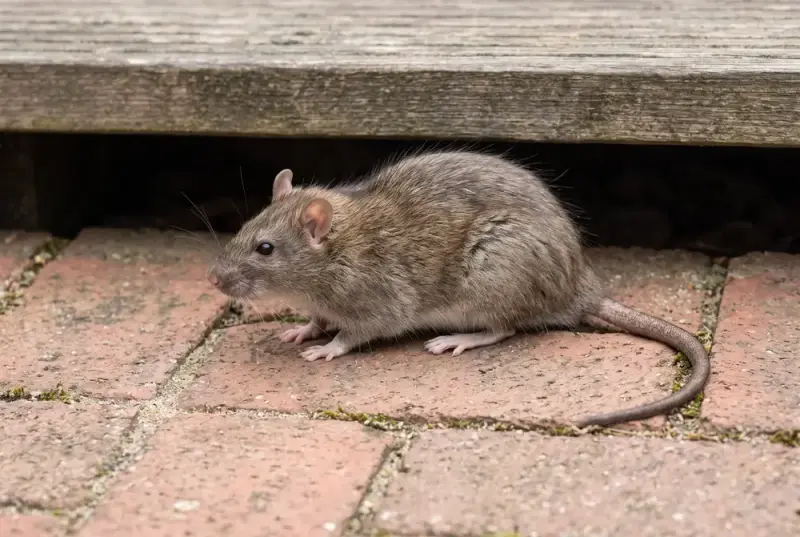
Start with the droppings. Mouse droppings are 3 to 6 mm, like grains of rice, and scattered. Rat droppings are 1 to 2 cm and tend to be grouped. Mice also make lighter scratching noises and nest indoors, while rats more often burrow outside or live under floors. If you are unsure, email us a photo of the droppings next to a coin.
How are mice getting into my house?
Mice need a gap of only about 5 mm. Common routes are gaps around pipes and cables under the sink, behind the boiler, around the gas or water meter, at damaged air bricks and under external doors. They also climb walls and get in at the roofline. Our survey finds the routes they are using, so new mice cannot follow them in.
Are mice dangerous?
Mice do not attack people, but they carry salmonella and listeria and spread them through droppings and urine on food and surfaces. They also gnaw electrical cables, which can cause fires. Throw away any food they have touched, clean worktops before preparing food, and wash your hands after cleaning up droppings. Wear gloves for the job.
Why do mice come back every winter?
Mice move indoors when the weather turns cold and food outside runs short. If the gaps they used last year are still open, a new group will find them. Proofing the entry points after treatment breaks the cycle. Storing food in sealed containers and clearing clutter in the loft and garage gives new arrivals less to settle into.
Can I use humane traps?
Yes. Check live-catch traps at least once a day so a trapped mouse is not left without food and water, and release it well away from the house or it may find its way back. On an established infestation, live traps cannot keep up with the breeding, so we combine traps, bait and proofing.
Is mouse bait safe with children and pets?
No rodent bait is safe to eat, so we use tamper-resistant stations that children and pets cannot open, fixed where they cannot be moved. In some rooms, such as a child’s bedroom or where a pet sleeps, we use traps instead of bait. Tell us about children, pets and any pet rodents before the visit.
How long does mouse treatment take?
The number of visits depends on the size of the infestation. You should see fewer droppings within the first week or two. Mice feed in small amounts from many places, so they can take longer to clear than rats. We finish with proofing so the problem does not start again.
Mice control near you
Tell us what's happening.
Share your postcode and the signs you have noticed.