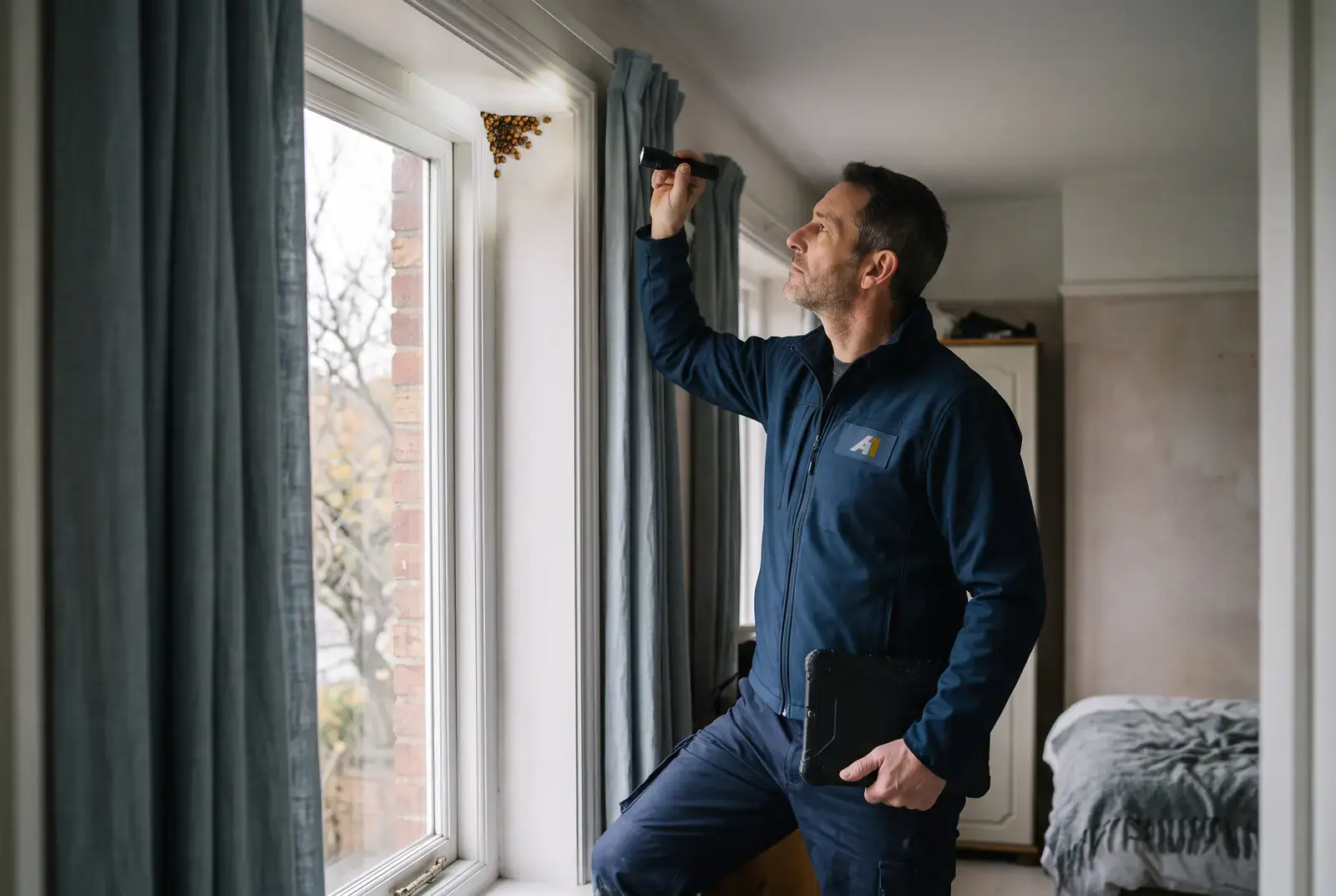
Ladybird removal in Newport
In Newport (PO30), ladybird removal can be booked with A1 Pest Control, starting from £190. Scale insects and the eggs and larvae of butterflies and moths also feature in the harlequin ladybird’s diet, the RHS says, though it feeds mainly on aphids. All 29 recorded harlequin sightings that the NBN Atlas (accessed 12 November 2026) holds within 5 km of Newport were verified through the iRecord Ladybird Survey, with the first in 2013 and 6 in 2019. In autumn harlequins gather in groups on the south side of buildings, and some move indoors. Technicians clear those groups from window frames, curtain folds and loft corners in homes, shops and offices across the town. Which windows draw the groups, and which rooms do they reach?
About Ladybirds
Ladybirds that crowd into window frames and lofts in autumn are often harlequin ladybirds, a non-native species first recorded in Britain in 2004. They do not damage buildings, but they smell and can stain fabrics when disturbed. A1 Pest Control deals with large groups that come back to homes and businesses each year.
Read the full Ladybirds guideLocal notes for Newport
By year the sightings are 1 in 2013, 2 in 2014, 5 in 2015, 1 in 2018, 6 in 2019, 4 in 2023, 1 in 2024, 4 in 2025 and 5 in 2026; a record exists in 9 different years, and 2013, 2018 and 2024 have a single sighting each. Ahead of July with 4, June is the busiest month, with 13 of the 29. The RHS says the species became established in Britain in 2004, nine years before the first Newport record. None of these figures says how many buildings have groups indoors. To see which other pests we treat, open the Newport hub.
Local risk in Newport
Diet and impact
The RHS says harlequins also eat other ladybirds and can be cannibalistic, and that the evidence on harm to native species is mixed, with research continuing.
Indoors
Furnishings may be stained by the clear yellow liquid that adults can exude. They cannot be discouraged from entering a building, and the RHS says they can be captured and removed.
Spotting a harlequin
Larvae are up to about 1 cm long, charcoal grey, spiked and marked with two orange stripes. Adults are very variable in colour, so size is the safer guide.
- Look behind blinds and curtain pelmets.
- Check sunny loft eaves for clusters.
- Look along window tracks.
- Take a photo of the group first, then move it.
Adults overwinter in sheltered places and emerge in spring to mate and lay eggs on plants hosting aphids. Pictures of harlequin colour forms are on the ladybird page.
Price and visit times
The landlord should hear from a tenant with a group on a shared wall, so the whole building can be dealt with. Ladybird visits to Newport are booked with A1 Pest Control on 0800 059 0135.
Starting from £190
Not sure what you have found? Send us a photo first. Evening and weekend visits are available on request, and a weekend visit costs £60 extra.
Request a callCustomer reviews in Newport
Google rating: 5.0 from 6 reviews.