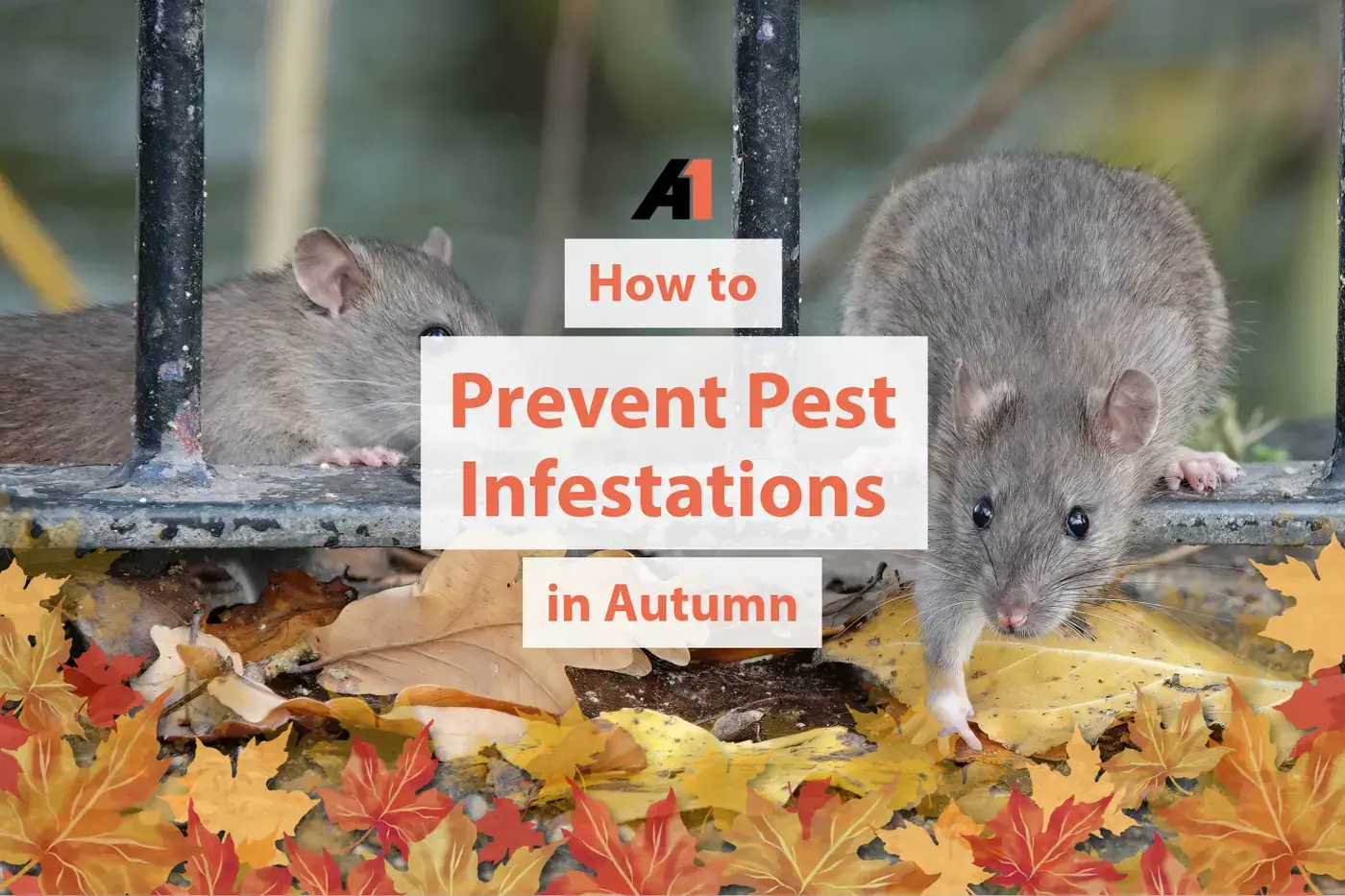
As autumn sets in, many homeowners look forward to cooler evenings, colourful leaves, and cosy nights indoors. But while we enjoy the change in season, common pests are on the move. As the weather turns cold, insects, mice and rats, and even cluster flies actively seek shelter in homes and businesses.
If left unchecked, these unwanted guests can cause serious pest problems: damaging property, contaminating food, spreading disease, and invading your personal space.
This guide will show you how to prevent pest infestations this autumn with practical pest prevention steps you can take before it’s too late.
Why Pest Activity Increases in Autumn
When the temperature drops, pests look for warmth, moisture, and easy access to food. They can enter homes through cracks in your home’s foundation, gaps around windows, or damaged vents.
Some of the most common pests in the UK during the winter months include:
- Rodents (mice, rats, and squirrels): capable of chewing through wood, wires, and insulation, causing expensive damage.
- Insects: ants, cockroaches, and flies look for crumbs, spills, and damp storage areas.
- Cluster flies and wasps: gather in lofts and cavities for long-term shelter.
- Bed bugs: tiny parasites that rob you of your sleep and spread easily on luggage and furniture.
- Birds: nesting in chimneys or roof spaces, creating both mess and noise.
Without pest control measures, these creatures can turn your house into their winter hideaway.
Step 1: Declutter and Protect Your Storage Areas
Pests thrive where clutter provides hiding spots. Paying special attention to storage areas like lofts, garages, and sheds can drastically reduce risk.
- Move cardboard boxes off the floors.
- Store seasonal items in airtight containers rather than open bags.
- Remove old clothes or furniture that may harbour bugs or other pests.
- Keep pet food sealed tightly. It’s a major attractant for rodents and insects.
A little prevention now helps protect your belongings and reduces the chance of an infestation later.
Step 2: Seal Entry Points Around Your Property
Rodents and insects can access even the tiniest gaps. A mouse can squeeze through a gap as small as 10mm, about the width of a pencil, while rats can gnaw their way in.
- Inspect around windows, doors, and your home’s foundation for cracks.
- Use caulk or steel wool to seal small holes and gaps.
- Repair loose roof tiles, air bricks, and ventilation covers.
- Create barriers where pipes or cables enter homes.
This control step is essential to prevent pests gaining access to your house or business.
Step 3: Maintain Cleanliness and Remove Food Sources
Keeping your property clean removes the main attractant: food. Rodents, insects, and bugs are opportunistic feeders.
- Sweep floors and wipe surfaces daily. Even a few crumbs are enough to sustain ants or cockroaches.
- Store food in sealed jars or airtight containers.
- Empty kitchen bins regularly and avoid leaving rubbish outside overnight.
- Use a vacuum to pick up droppings, dust, and pet hair.
These habits reduce the risk of an infestation and protect your home from pests looking for a quick meal.
Step 4: Manage Moisture and Warmth
Pests don’t just want food, they also look for warmth and moisture during the winter months.
- Fix dripping taps and leaky pipes.
- Ventilate damp rooms to improve air circulation.
- Check basements, cellars, and bathrooms for condensation.
- Keep firewood stacked away from walls to avoid attracting rodents and insects.
By controlling the environment, you can prevent pests from settling in.
Bonus Tip: Use Caution With DIY Pesticides
Some homeowners try to control pests with over-the-counter sprays or traps. While these can provide temporary relief, relying on chemicals and pesticides alone rarely solves the problem.
If you want to completely rid your house of pests, or if you’re dealing with a rodent infestation, it’s best to call a pest control professional.
When to Call a Pest Control Professional
If you notice droppings, gnaw marks, scratching sounds, or live pests, it’s time to call in the experts.
A1 Pest Control’s team can:
- Identify the species and source of the problem.
- Provide tailored pest control service for homeowners and businesses.
- Offer long-term pest prevention advice.
Our professional approach means you don’t have to worry about chemicals or unsafe DIY methods. We’ll help you take back your personal space from unwanted guests.
FAQs About Autumn Pest Prevention
What are the most common pests in autumn?
Mice, rats, cluster flies, ants, and wasps are the most common pests to enter homes during the colder months.
How can I prevent pests without using chemicals?
Focus on sealing gaps, decluttering, reducing moisture, and storing food properly. These steps prevent pests without pesticides.
Are pests dangerous to pets and humans?
Yes. Rodents, insects, and parasites can spread disease to both humans and pets. Acting early helps you stay safe.
Contact A1 Pest Control to Prevent Pest Infestations This Autumn
Knowing how to prevent pest infestations this autumn is all about preparation: decluttering storage areas, sealing gaps with steel wool, cleaning up crumbs, and controlling moisture. These small steps go a long way to protect your property from common pests like mice and rats.
But if you notice signs of an infestation, don’t wait. Contact the A1 Pest Control team today. Our trusted pest control professionals will identify the issue, apply safe treatments, and provide long-term prevention so you can enjoy your house this winter pest-free.
Get in touch with us now for fast, effective, and reliable pest control service.