FAQs
Frequently asked questions.
Answers for each pest, from rats and mice to wasps and bed bugs. Pick your pest below, or call us.
Call
0800 059 0135Coverage
Across the UK
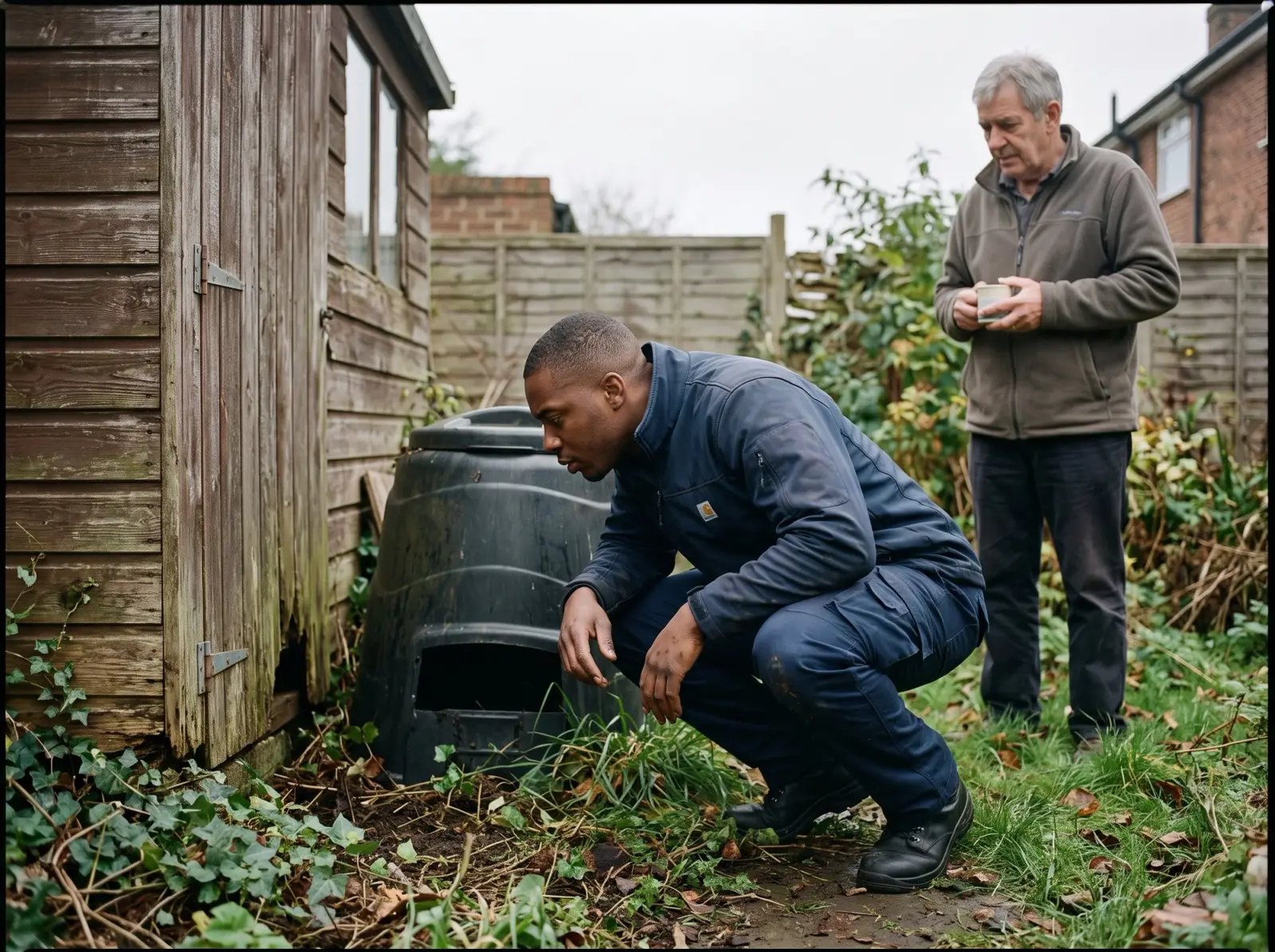
Droppings, or noise after dark, are what most people notice first, in a home or on business premises.
Read the rats guideThey can be. Rats can spread leptospirosis (Weil’s disease), salmonella and listeria, normally through their urine. They also gnaw electrical cables, which is a significant fire risk, and pipes, which can leak. Bites are uncommon and happen when a rat is cornered.
Rats are wary of new objects and breed fast, so DIY often fails on an established problem. A professional technician uses products not sold to the public and finds the entry point, which is what stops new rats moving in.
The number of visits depends on the size of the infestation, and A1’s standard rodent treatment is two visits. The CRRU UK Code of Best Practice says that in most cases any anticoagulant bait should have achieved control within 35 days. Larger buildings, commercial sites and heavy infestations can take longer, and we tell you this at the survey.
Rodent poison must be placed in a safe, secure spot out of reach of children and pets. A1 offers a humane option that uses cage traps and no poison. Tell us about your pets before the visit and we will plan around them.
They can if the reason they came is still there, because new rats find the same broken drain or gap under the door. With entry points sealed and no easy food, a return is much less likely. Closing dustbin and compost bin lids, and using a bird feeder with a catch plate, takes away easy food.
It depends on the cause and your tenancy agreement. Council guidance says the occupier, so the tenant, normally starts pest control, and the owner should be approached where the cause is a structural defect or something outside the tenant’s responsibility, such as rodents getting in from drains. Tenants should report signs to the landlord early.
They can. Rats feed on seed that spills from feeders and bird tables, and they come back to a reliable supply. Put out only what the birds finish in a day, bring food in overnight and clear spilled seed from the ground. A tray fitted under the feeder catches husks and dropped seed before it reaches the soil.
Rats look for dry, sheltered spots close to food. Common nesting places are under sheds and decking, inside compost heaps, in greenhouses, beside garden walls and in long grass or clutter. Look for burrows in the soil or under sheds, and for nests made from shredded vegetation. Rats often run along fences and walls between the nest and food.
If the rats keep coming back, call A1 Pest Control on 0800 059 0135 and we can find the nesting sites and entry points.
They can. Rats like compost heaps, and the RHS notes the light, crumbly compost is easy for them to burrow in. An open heap, or a plastic bin sitting on bare soil, is the easiest for rats to reach. Wire mesh beneath the bin, or a concrete base, helps keep them out.
Use a closed bin with a tight-fitting lid and fit a solid base or wire mesh underneath, because rats often burrow in from below. Raise tumblers off the ground, bury food scraps under brown material, and turn the heap often, since rats dislike disturbance. Check for gnaw marks, burrows and droppings around the bin and seal any gaps you find.
Look for droppings along the routes rats travel, greasy rub marks on skirting boards and walls, and gnawing damage to wood, floorboards and even soft metal. You may also find shredded cardboard or loft insulation used as nesting material, and hear scratching in the walls or ceiling at night, when rats are most active.
Rats look for food and quiet cover. Check kitchens and food cupboards for chewed packaging and spilled food, the loft for droppings and gnawed timber, and cavity walls and ceilings, which rats use as hidden routes. Dark, cluttered lofts suit them best, because they can hide and breed there undisturbed.
Seeing more rats than usual, or rats gathering in one area, suggests a nest close by. Watch where they come and go to narrow it down. Then check sheds, garages and decking for holes, burrows and gnaw marks, and look under dense shrubs and around compost bins for disturbed soil and entry holes.
Rats come indoors for warmth, food and shelter. Rats can nest in roof spaces and wall cavities, and clutter gives them hiding and nesting places. Rats also visit bird feeding stations, so use a feeder with a catch plate and do not scatter bird food on the ground.
Note where you have found droppings, rub marks or damage, and keep food, pet food and compost sealed so rats have less to eat. Then call A1 Pest Control on 0800 059 0135, or send us a message describing what you’ve noticed. We’ll tell you whether it looks like rats and how we would treat them.
Deal with how the rats get in and what feeds them, then treat the ones already there. HSE advises combining barriers with less food, water and shelter, plus traps or other control. A1 Pest Control treats rodents over two visits as standard, or with humane cage traps. Councils recommend a professional when shop products have not worked, and Gravesham says contractors outperform DIY treatments.
Remove what feeds and shelters them, then bring in a professional for treatment. Councils advise closed bins and composters, a bird feeder that catches spilt seed, bird food taken in at dusk, and no piles of wood or rubbish. Rochdale Council says burrow entrances turn up in grassy banks and beside paving or drain covers, and Liverpool lists sheds and garages as common places.
Rat droppings are dark brown to black, often in clusters, and usually have a blunt end and a pointed end. The Mammal Society records them as up to 1.7 centimetres long and 0.6 centimetres wide, with a putty-like texture. Liverpool City Council compares fresh ones to shiny jelly beans and gives a usual length of 1 to 2 centimetres.
A wild brown rat rarely lives much beyond a year or two. The Mammal Society says few survive more than one year, the People's Trust for Endangered Species gives up to 18 months, and the Canal and River Trust gives one to three years. Rats kept in captivity can reach around four to six years, according to the Mammal Society.
Almost anything. The Mammal Society calls the brown rat a true omnivore, with cereals a large share of its diet, and says spilt animal feed and bird feeder fallout often attract rats. The Woodland Trust adds fruit, seeds, eggs, insects, small chicks, mice and fish, plus food scraps of every kind in towns.
Yes, they are agile climbers. The People's Trust for Endangered Species says brown rats climb well and occasionally go up trees. Gravesham Borough Council advises cone and balloon guards on drainpipes to stop rats climbing them, and East Hampshire District Council lists climbing plants and unprotected downpipes as routes to a house. Cutting plants back from walls and roofs removes some of those routes.
Foxes do, mostly young rats. The Mammal Society names foxes, stoats, polecats and owls among the predators taking large numbers of rats, and the People's Trust for Endangered Species says cats, foxes and owls take young rats while adults have few natural predators. Predators alone do not empty a building of rats, because food, water and shelter set how many an area supports, says HSE.
Mostly, yes. The Woodland Trust says brown rats are most active after dark, and the Canal and River Trust agrees. Rochdale Council adds that rats can still turn up by day when they are searching for food, water or shelter, so a daytime sighting does not rule rats out.
Take away food, water and shelter, and close the gaps. HSE says rats avoid crossing open ground, so clearing cover beside buildings helps, and mesh over openings keeps them out. Gravesham Borough Council adds checking that air bricks are intact, making sure drain covers are in place and undamaged, using a lidded bin for food waste and keeping cooked food, meat and bread off the compost heap, and Thames Water advises sealing gaps around heating and water pipes.
Usually with an easy meal, somewhere to shelter and a gap to get through. HSE links rodent numbers to the food, water and shelter on offer. The Woodland Trust notes brown rats are drawn to bins, compost heaps and leftover food, and Rochdale Council says a gap of about 15 millimetres is enough to let one into a building.
Mostly by staying close to people. The Mammal Society records brown rats breeding all year round in human dwellings, and the Woodland Trust says they are most common in towns and cities, where bins and compost heaps draw them in. The People's Trust for Endangered Species adds that their burrows may be used for generations.
Colony is the usual word. The Mammal Society says brown rats form loose colonies, ranked mainly by size and age, with small family groups inside. The People's Trust for Endangered Species says high-ranking males hold the prime spots near food, and that large colonies divide into smaller social units.
Yes, and well. The Woodland Trust calls brown rats very strong swimmers that have been known to dive for molluscs in rivers where this food is plentiful. The Canal and River Trust says they can stay under water for as long as three minutes and swim more than half a mile, and the Mammal Society notes they often keep only the head above water while swimming.
It gives off a strong, foul odour, which comes from the body fluids of the carcass. It persists until the carcass has dried out, a process of two weeks or more. A heavy live infestation can also leave a musky smell, according to Gravesham Borough Council.
Ask a pest controller to help locate it. The carcass can sometimes be reached by opening the wall void, though that adds cost and time, and it is not workable in or behind a masonry wall. If it cannot be found, the smell will most likely fade within a couple of weeks as the body dries out.
Finding and removing the carcass comes first, and the area should then be treated to avoid lingering foul odours. Masking fragrances cover it only until they wear off, and that the foul odour carries on until the body has dried out, sometimes for a fortnight or more. Ozone generators cannot run in a room where people or animals are present.
Expect greyish-brown fur, a pointed muzzle, prominent ears and a long, almost hairless tail. The Mammal Society gives a head and body length of 15 to 27 centimetres and a usual weight of 200 to 300 grams, much larger than any mouse. Young rats are grey, which is why they get mistaken for mice, says the People's Trust for Endangered Species.
Through gaps smaller than most people expect. Rochdale Council says a rat needs only 15 millimetres, and East Hampshire District Council compares it to a 50p coin. Common routes are holes around pipework, damaged air bricks, disused dryer vents, garage door gaps, drains and manhole surrounds, and climbing plants that reach the house.
Some reach homes through domestic drains, as Liverpool City Council notes. Thames Water advises keeping drain inspection covers present and well maintained, and sealing disused pipes completely. You are responsible for the pipes that sit inside your boundary. If a council or pest controller confirms a fault in a public sewer, the water company says it can investigate that fault.
Keep food out of reach, throw away anything the rat touched, and work out how it got in. Gravesham Borough Council says rats can foul food and surfaces with urine, droppings and fur, and Sandwell Council's guidance for food premises advises wearing gloves to clean and disposing of contaminated food. A professional can then treat the rats and trace the entry point.
Rats in walls and ceilings point to a way in nearby. Liverpool City Council expects rats that have entered a house to be in cavity walls, lofts or under suspended floors. The People's Trust for Endangered Species notes that their runs show as dark smears in buildings. Rochford Council says a contractor will normally survey the property and decide whether treatment is needed, and HSE lists physical barriers such as mesh over openings among the measures that keep rodents out of buildings.
Food, water and shelter. HSE says any area supports only as many rodents as those three resources allow, so cutting off any one of them reduces numbers. The Canal and River Trust describes brown rats as very adaptable, needing little more than food and shelter, and the Woodland Trust lists bins, compost heaps and bird food as common supplies in towns.
Sometimes. The Woodland Trust lists mice among the smaller animals that brown rats eat and calls rats highly opportunistic, and the People's Trust for Endangered Species names rats among the predators of house mice.
Rats are bigger than mice. Gravesham Borough Council puts an adult house mouse at roughly 7.5 to 10 centimetres, tail excluded, and a brown rat at 20 to 25 centimetres. Their droppings differ as well, looking like black grains of rice for mice and black raisins for rats. Rochdale Council gives an adult rat's body length as 200 to 270 millimetres.
Yes. The Mammal Society describes rat droppings as foul and rancid smelling. A musky odour can also build up inside a property with a heavy infestation, according to Gravesham Borough Council, which lists smell alongside droppings, gnawing, tracks and burrows as things to look for when checking whether rats are present.
Take them as a sign that rats are nearby, and work out where the rats feed and get in. Gravesham Borough Council advises tracing where rats live and feed and the routes between those places. Sandwell Council's food-premises guidance says to wear gloves when clearing droppings. Rochford Council says to get a professional contractor if shop products have not solved the problem.
Look for entrances on grassy banks and beneath tree roots, plus beside paving and around drain covers, as Rochdale Council describes. The People's Trust for Endangered Species adds that rats dig burrows in banks and leave heaps of earth close by, and that burrows can be extensive and stay in use for generations. The Mammal Society notes that entrances are usually linked by obvious, well-used runs.
They are agile climbers, so plants and downpipes can give them a way up. The People's Trust for Endangered Species calls rats agile climbers, and East Hampshire District Council lists climbing plants, unprotected downpipes and damaged air bricks among the ways in. Liverpool City Council expects rats that have got into a house to turn up in lofts as well as cavity walls and under floors. Cutting plants back from the roof reduces the routes.
A professional can survey the loft, treat the rats and trace how they got in. A1 Pest Control's rodent service runs to two visits as standard, and humane cage traps are the alternative. Rochford Council says a contractor will normally survey first and decide whether treatment is needed. HSE lists physical barriers and traps among its non-chemical methods of rodent control.
Often, yes. Liverpool City Council names cavity walls, lofts and spaces under suspended floors as places rats are likely to be found once they are in a house. The People's Trust for Endangered Species notes that rat runs appear as dark smears indoors, so smears or gnawing away from the loft suggest they are moving about. A professional survey can map where.
A1 Pest Control's standard rodent treatment is two visits, or humane cage traps instead. Rochford Council describes the usual professional approach as a survey, then treatment that is mostly poison bait, with the contractor telling you where bait has been placed and leaving safety advice and an information sheet. Advice on hygiene may follow, to stop rats coming back.
Look for droppings, smear marks, gnawing, burrows and runs. Rochdale Council lists droppings, runs, smears and footprints, burrows and gnawed objects, and notes that rats are busiest after dark. Gravesham Borough Council adds that black smear marks form around holes they use often. Liverpool City Council gives rat droppings as typically 1 to 2 centimetres long.
Councils have a role, though what they offer varies. Citizens Advice says to tell your local council about a rat or mouse problem, because it might act against them or make a property owner or landlord carry out work. Private renters may be charged for treatment. Shelter adds that environmental health can inspect your home and may order your landlord to put it right.
Usually the landlord. Shelter says a landlord must deal with an infestation caused by a repair they are obliged to make, and its examples include wall cracks, absent roof tiles, broken vents or air bricks, and faulty external doors or windows. Tenants are only responsible if they encouraged pests, for instance with open bins or food left out. Report the holes to your landlord straight away.
Yes, in some cases. A1 Pest Control offers humane cage traps for rodents as an alternative to its standard two-visit treatment. HSE lists lethal and non-lethal traps among non-chemical controls and says traps must be checked regularly so any non-target animals can be released. HSE also puts barriers and a less rodent-friendly environment first, which cuts the reasons for rats to stay.
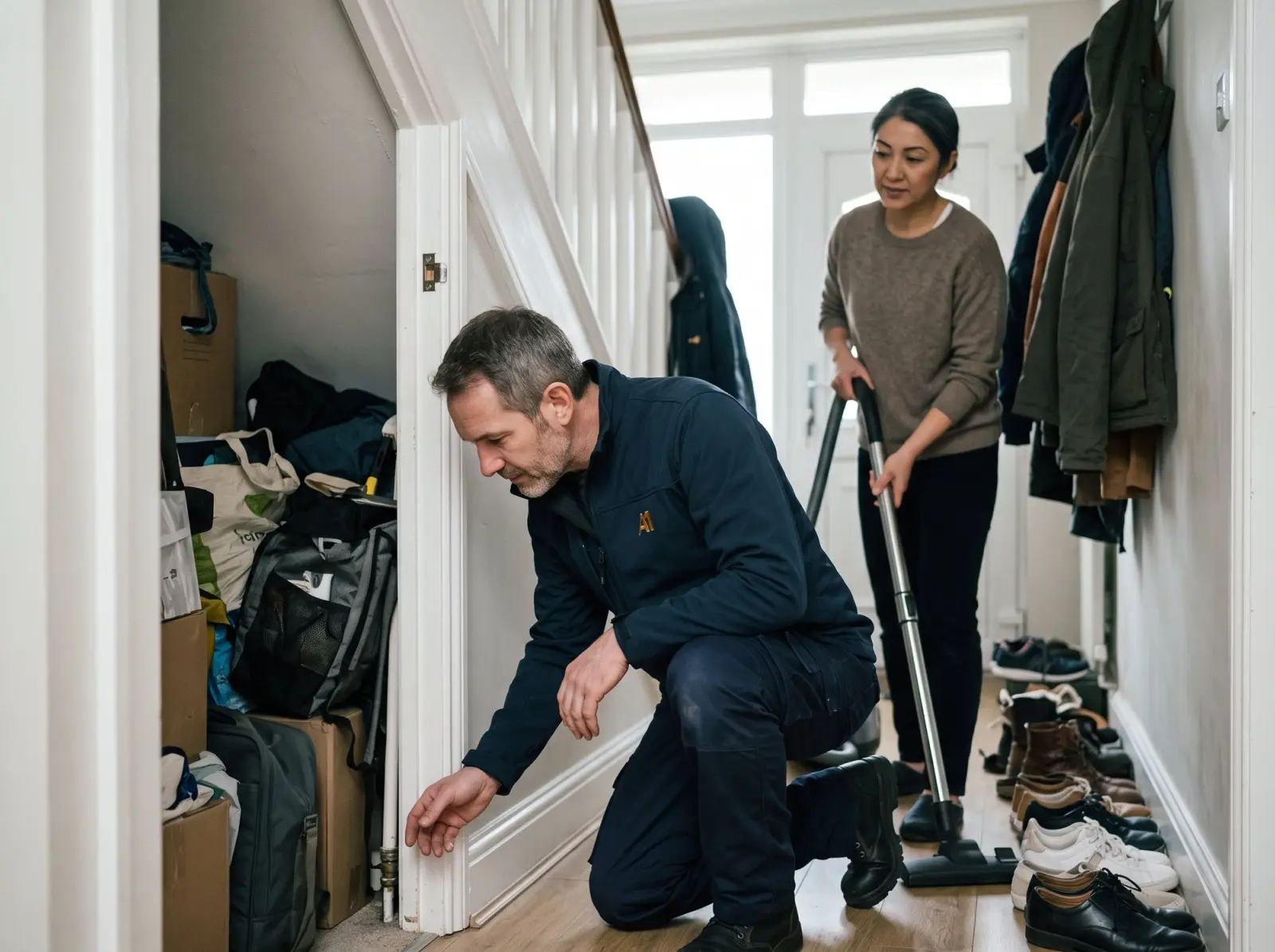
Small rod-shaped droppings around the kitchen sink or cooker are among the first signs people spot.
Read the mice guideStart with the droppings. Mouse droppings are 3 to 6 mm, like grains of rice, and scattered. Rat droppings are 1 to 2 cm and tend to be grouped. Mice also make lighter scratching noises and nest indoors, while rats more often burrow outside or live under floors. If you are unsure, email us a photo of the droppings next to a coin.
Mice need a gap of only about 5 mm. Common routes are gaps around pipes where they enter the building, damaged air bricks and gaps under doors. They also climb walls and get in at the roofline.
Mice do not attack people, but they carry salmonella and listeria and spread them through droppings and urine on food and surfaces. They also gnaw electrical cables, which can cause fires. Throw away any food they have touched, clean worktops before preparing food, and wash your hands after cleaning up droppings. Wear gloves for the job.
Mice move indoors when the weather turns cold and food outside runs short. If the gaps they used last year are still open, a new group will find them. Proofing the entry points after treatment breaks the cycle. Storing food in sealed containers and clearing clutter in the loft and garage gives new arrivals less to settle into.
Yes. A1 offers a humane option that uses cage traps and no poison. On an established infestation, live traps alone cannot keep up with the breeding.
Rodent poison must be placed in a safe, secure spot out of reach of children and pets. A1 offers a humane option that uses cage traps and no poison. Tell us about children, pets and any pet rodents before the visit.
The number of visits depends on the size of the infestation, and A1's standard rodent treatment is two visits. Mice feed in tiny amounts from many food sources, which makes them harder to control with toxic baits than rats.
Walk round the outside of your home and check for gaps around windows, doors, pipes and cables. Fill small holes with steel wool or sealant, repair loose roof tiles and air brick covers, and keep doors closed. Indoors, keep food and pet food in sealed containers and clear clutter from lofts and garages, where mice like to nest.
Mouse droppings are small, dark and pellet-shaped, about 3 to 6mm long. Fresh droppings are soft and dark, and older ones turn dry and crumbly. You usually find them along skirting boards, in cupboards, near food and under sinks. Wear gloves to clean them up, then wash the area with warm water and disinfectant.
Size is the quickest guide. Mouse droppings are about 3 to 6mm long, and rat droppings are much larger. House mice are small, with grey or brown fur, large ears and long tails. Both leave gnaw marks, grease marks and scratching sounds, but mice tend to nest indoors close to food, while rats often burrow outside.
Seal gaps around pipes, vents and external doors with steel wool or wire wool, and fit door sweeps to exterior doors. Keep food in airtight containers, wipe surfaces and do not leave food out overnight. Avoid open boxes for food or rubbish. Mice nest close to food, so taking it away makes your home far less attractive to them.
Block the ways in, remove food, then deal with the mice already inside. A1's rodent service offers two visits as standard, or humane cage traps. Which? says traps suit a shallow infestation but are not recommended once mice have nested, and that a mouse can pass through a 5 millimetre gap, so proofing counts. Gravesham Borough Council says professional contractors beat DIY treatments.
House mice eat mainly grain and fruit, plus insects and other invertebrates, according to the People's Trust for Endangered Species. The Mammal Society calls them omnivorous and says they prefer cereal foods to low-carbohydrate ones. Gravesham Borough Council lists partly nibbled food and packaging among the key signs of mice in a home.
Food, water and shelter, as with any rodent. HSE says an area supports only as many rodents as those resources allow. Which? quotes a pest controller on mice wanting food, shelter and warmth, with kitchen pipework and loft insulation supplying routes and nest sites inside a home.
Mostly, yes. The People's Trust for Endangered Species says house mice are mainly nocturnal and usually sleep through the day. Which? reports peak mouse activity after dark, so scurrying or scratching in walls or ceilings after dark is a common first sign. Gravesham Borough Council adds that you may not see them in daylight at all.
In the wild, a house mouse lives up to about 18 months, and few survive beyond six months, according to the People's Trust for Endangered Species. Indoors they breed fast. The Mammal Society records litters of five to eight arriving at roughly monthly intervals in buildings, so a small number of mice can become many within a season.
House mice are grey-brown with big pink ears and a long bare tail, says the People's Trust for Endangered Species, which adds that a slimmer head and smaller eyes tell them from wood mice and yellow-necked mice. Gravesham Borough Council gives an adult body length of about 7.5 to 10 centimetres excluding the tail, and the Trust records them at 12 to 22 grams.
Not reliably. Which? names peppermint oil as an example of a repellent since mice find its strong smell unpleasant, but a pest controller it quotes says repellents may keep mice from a room for a while without tackling the root of the problem. Which? adds that repellents mask an infestation rather than solve it, so blocking entry points and removing food matter more.
Food, shelter and warmth. Which? quotes a pest controller who points to kitchen pipework as a way in, loft insulation as a nest site and pet food left out as a lure. East Hampshire District Council calls bird feeders a common food source for rats and mice and advises cleaning kitchens, especially under appliances where food crumbs can collect.
Find the route they use, then close it. Which? says mice move through the fabric of a house, using cavity walls and warm pipework, and often end up in the loft. Scratching inside walls after dark is a typical sign. Gaps of 5 millimetres are enough for entry, so check outside walls and around pipes, and ask a professional to trace the route.
Act early. Which? says one mouse can soon become a bigger problem, and that a female can conceive again within a day of giving birth, with pregnancy lasting 19 to 21 days. The People's Trust for Endangered Species says house mice have up to ten litters a year of four to eight pups each, so a lone sighting can grow quickly.
Usually the way in is still open, or food is still available. Which? says repellents only deter mice and traps are not recommended once they have nested. A gap the width of a pencil is enough for a mouse, so one missed gap keeps the door open. A professional survey can locate the nest and the entry points that DIY attempts miss.
Check for droppings, shredded insulation and gnaw marks, and look for gaps at pipes, vents and eaves. Which? says loft insulation can serve as a nest site, and that mice tend to reach lofts after travelling through cavity walls and along warm pipework. Blocking entry points around the loft keeps new mice out once the existing ones are dealt with.
Start by working out where the mice live, feed and travel. Gravesham Borough Council advises looking for holes, gnawing, droppings, footprints and sightings. Which? measures mouse droppings at roughly 3 to 6 millimetres, and says nests turn up behind appliances such as the oven or fridge and in lower kitchen cabinets. Then seal entry points, or call a contractor.
Mice are far smaller. The People's Trust for Endangered Species gives a house mouse a head and body of 6 to 10 centimetres and a weight of 12 to 22 grams, while the Mammal Society puts a brown rat at 15 to 27 centimetres and usually 200 to 300 grams. Mouse droppings run 3 to 6 millimetres, against 1 to 2 centimetres for rats.
A1's standard rodent treatment is two visits, or humane cage traps instead. Rochford Council describes the usual professional approach as a survey of the property, then treatment that is usually poison bait, with the contractor telling you where bait sits and leaving safety advice. Gravesham Borough Council notes contractors tend to outperform DIY treatments.
Mice come in looking for food, warmth and shelter, and most homes offer all three. Which? says an opening of 5 millimetres will do, and that pipework and cavity walls lead them to kitchens and lofts. East Hampshire District Council lists holes around pipework, damaged air bricks and gaps around garage doors as common ways in.
Look for small black droppings like grains of rice, nibbled food and packaging, nests of shredded material, smear marks and scratching at night. Gravesham Borough Council lists nibbled food, droppings and nests as the main signs. Which? adds dark greasy marks along skirting boards and a strong ammonia-like smell from mouse urine.
Common. The People's Trust for Endangered Species puts the Great Britain house mouse population at about 5.2 million, locally abundant, with houses and food stores their best-known habitat. Which? puts call-outs for mice at roughly 80,000 a year.
Check where gas, electricity, water or waste pipes pass through walls, plus air bricks and the base of doors. Gravesham Borough Council says holes mice use often can carry black smear marks around the edges. Which? says a 5 millimetre opening is enough, so check outside walls, windows, vents and pipes closely. East Hampshire District Council also lists garage doors and unused dryer vents.
Usually the landlord. Under Shelter's guidance, a landlord must deal with pests that stem from a repair they are responsible for, and must keep the home fit to live in through the whole tenancy. Examples include damaged vents, air bricks and exterior doors, plus leaking pipes. A tenant could be responsible if they encouraged pests. Report the holes to the landlord promptly.

Telling rats from mice matters, because the treatment differs. Rat droppings measure 1 to 2 cm, mouse droppings 3 to 6 mm.
Read the rodent control guideLook at the droppings first. Rat droppings are about 1 to 2 cm long and grouped together. Mouse droppings are 3 to 6 mm, like grains of rice, and scattered. Heavy gnawing noises and burrows outside point to rats. Light scurrying and droppings in kitchen cupboards point to mice. If you are unsure, tell us what you have found and we will help you work it out.
Yes. A building with easy food and several ways in can have both, often in different places: rats outside, in drains or under floors, and mice in the kitchen or loft.
Not on the humane option, which uses cage traps and no poison. Professional rodenticides are only supplied to users who can show proof of competence under the stewardship regime run by the Campaign for Responsible Rodenticide Use.
Squirrels are active in daylight, so noise early in the morning and at dusk points to squirrels, often with heavier thumps. Rats and mice are active at night: rats sound heavier and gnaw, mice sound light and quick. Droppings help too, so look in the loft for them before you call. Tell us when you hear the noise and what you have found.
The Prevention of Damage by Pests Act 1949 says the occupier of land, other than farmland, must tell the local council in writing if rats or mice are living there in substantial numbers. Councils have a duty to keep their districts free of rodents as far as practicable and can serve notices requiring treatment.

Look for one busy entrance, such as an air brick, a shed roof or a gap beneath the eaves, with wasps flying straight in and out.
Read the wasps guideYou will see wasps at the entrance for a few hours after treatment, because returning foragers fly in and pick up the insecticide. Council guidance says it may take up to 10 days before every wasp is dead, so keep away from the nest and do not block the hole. If you still see steady activity after several days, call us.
Not always. Wasps never reuse an old nest, so a treated nest in a loft, wall or roof can stay where it is without causing problems. If the nest is somewhere you use, such as a shed or a play area, it can come out once the colony is dead.
Bees are not treated like wasps. They are an important, beneficial species that pest controllers rarely treat as a pest. If you are not sure what you have, send us a photo.
The European hornet is Britain’s largest social wasp, with workers up to 25 mm against about 15 mm for a wasp worker (RHS). The yellow-legged (Asian) hornet is smaller than the European hornet and shows one yellow stripe on its abdomen, where the European hornet shows several. If you think you have found a yellow-legged hornet or its nest, do not go near it and report it to the Non-native Species Secretariat.
The same nest will not be used again, because new queens leave in autumn, hibernate and build new nests in spring. A good nest site can attract a new queen, though, sometimes right next to the old nest. Filling gaps in the eaves and checking sheds and lofts in April and May lets you catch a new nest while it is small.
Queen wasps come out of hibernation in spring and start looking for a nest site. Each queen builds a small nest on her own and raises her first workers, who then expand it. By late summer a large nest can hold thousands of wasps. A nest found in spring, while it is still small, is easier and safer to deal with than one found in August.
For most people a sting is painful and passes within a few days. Some people have a severe allergic reaction, called anaphylaxis, which is a medical emergency. The NHS says to call 999 if someone suddenly has swollen lips, mouth, throat or tongue, is struggling to breathe or swallow, or faints after a sting. Wasps can sting more than once, and a disturbed nest can attack in numbers.
In early spring, check eaves, rooflines, window frames and wall cavities for gaps and seal them. Trim overgrown hedges and bushes, cover compost heaps, and keep food waste in sealed bins. When you eat outside, cover food and drinks and clear up spills. If you spot a small nest forming, call A1 Pest Control to treat it before the colony grows.
No. Wasps defend their nest, and disturbing it without protective equipment can lead to many stings at once. Some species, such as the German wasp, defend their nests hard. Keep people and pets away, note where the wasps go in and out, and call A1 Pest Control on 0800 059 0135 to arrange treatment.
Wasps scrape wood fibre from garden furniture, sheds and fences to build their nests, which leaves paler patches, but the RHS says no real damage is done. A single nest can hold thousands of wasps by late summer, so check roof spaces, sheds and outbuildings in spring, while any nest you find is still small.
The clearest sign is more wasps than usual, especially if they fly to and from the same spot. Listen for constant buzzing from a wall, roof space or shed, and look for clusters of worker wasps, a papery nest, or chewed wood on fences, sheds and garden furniture. Watching the flight path for a few minutes often leads you to the entrance.
Queen wasps look for dry, sheltered spots that protect the nest from predators and bad weather. Common places are garden sheds, wall cavities, lofts, roof eaves and bird boxes, and some wasps nest underground. Wasps also feed on sugary food such as fruit, fizzy drinks and sweets, so nests often sit close to a reliable food source.
The queen wasp comes out of hibernation in spring and looks for a nest site on her own. She builds a small nest from chewed wood mixed with saliva, which dries into a papery material, and raises the first workers. The workers then take over the building, and the nest grows through the summer. In autumn the colony dies, apart from new queens, which hibernate.
No. Wasps do not reuse an old nest. Only new queens survive the winter, and each one builds a fresh nest the following spring. A sheltered spot can attract a new queen in a later year, so check lofts, sheds and eaves again in spring. An old, empty nest found in winter is safe to leave where it is.
Keep children and pets away, and do not block, knock or spray the nest yourself, because disturbed wasps defend it and can sting more than once. Note where the wasps go in and out. If the nest is near a door, path or play area, call A1 Pest Control on 0800 059 0135. Anyone with a known sting allergy should stay well clear.
Social wasps hunt insects and feed them to their young, which makes them natural pest controllers. The Natural History Museum estimates that wasps in the UK catch about 14 million kilograms of insect prey each summer, including caterpillars and greenfly. Adult wasps also visit flowers for nectar and can carry pollen between plants.
Adult wasps eat only sugars, such as flower nectar and the honeydew that aphids produce. They hunt caterpillars, greenfly and other insects, but they feed those to their larvae rather than eating them. The larvae make a sweet secretion that adults also drink. Late in summer they often switch to sweet foods and drinks around people.
Yes, by accident. Wasps visit flowers for nectar and carry pollen from plant to plant as they go. The Natural History Museum says their contribution is smaller than that of bees but still plays a valuable part. The RHS also describes wasps as predators and pollinators that help the natural balance in a garden.
No. Wasps do not make honey. Research by Landcare Research in New Zealand notes that wasps do not store honey or pollen like bees, so they are forced to feed even in cold or rainy weather. Adult wasps feed on sugars such as nectar, and workers bring insects back to feed the larvae.
Worker wasps live for a few weeks at most. Landcare Research in New Zealand found that nearly all workers do not reach three weeks of age. The nest lasts one season: the old queen and the males die in autumn, and only the new queens overwinter to found nests the following spring, according to the Woodland Trust.
The RHS gives May to October as the timing for social wasps. Oxford City Council describes queens starting nests in April or May, nests becoming noticeable in July, activity peaking in August and September, and nests declining from October as temperatures and food supplies drop.
A wasp nest is made of paper that wasps produce by chewing wood fibre and mixing it with saliva. The RHS notes that wasps look sleeker than the furrier bumblebees and honeybees. Watching the insects that come and go is the quickest way to tell which you have.
When a nest is large or sits where people are likely to disturb it. Oxford City Council says larger nests may need professional treatment, and asks owners to consider whether treating a nest is needed at all, since wasps help gardens. The RHS also warns that disturbing a nest invites defensive stings. A1 Pest Control treats wasp nests with a nest spray.
A wasp nest begins tiny in spring and grows through summer. Oxford City Council reports up to 20,000 wasps in one nest at its peak, with an average of 2,000 to 5,000, and says loft nests can grow very large. The Woodland Trust gives a range of 5,000 to 10,000 individuals.
Leave the nest alone where you can, because wasps defend a disturbed nest by stinging anyone nearby, says the RHS. Oxford City Council lists wall cavities, sheds and soil banks among usual nest sites, and the RHS says some species nest underground. A1 Pest Control uses a nest spray on wasp nests, and clearing the dead nest is a separate visit.
Wasps are drawn to artificial light, and open windows give them an easy way in. Oxford City Council advises closing windows, dimming visible lights and hanging net curtains. It also notes that wasps nest in roof spaces, airbricks and wall cavities, so a nest close to the building is worth looking for.
One season, and the nest is never reused. The RHS says nests end in late summer or autumn, though the papery structure may survive for several years before it crumbles. Oxford City Council adds that a nest dies off completely after some heavy frosts, so a big nest found in a loft in winter or spring is an old one.
Social wasp workers die in late autumn, says the Natural History Museum. Oxford City Council says nests decline from October to December and die off completely after heavy frosts. New queens leave to hibernate in sheltered places like lofts and burrows made by animals, and some survive to start nests in spring.
A wasp nest is a papery structure of hexagonal cells wrapped in an outer layer, built from chewed wood fibre. A queen starts it about golf-ball size in spring. The RHS says species like the common wasp usually nest underground or in dark cavities like roof spaces, while other species build exposed nests on buildings or among branches. A steady stream of wasps at one entrance gives away an active nest.
A queen wasp looks much like a worker, with bold yellow and black banding, a triangular head and a narrow waist, but she is larger. The Woodland Trust gives her length as around 2 cm against 1.2 to 1.7 cm for workers, while the RHS says 20 to 25 mm for queens and about 15 mm for workers. Queens are easiest to see in early spring and late summer.
Watch for wasps travelling in and out of a single entrance in a constant flow. The RHS says that traffic is how a social wasp nest is recognised. Oxford City Council says activity builds through July, peaks in August and September, and fades from October, so an empty nest found out of season is an old one from a previous year that the wasps will not reuse.
Take care and get specialist advice first. The Bat Conservation Trust says it considers insecticides appropriate only where wasps threaten public health and the treatment itself is safe for people and other animals, and it asks for personalised advice before going ahead. It suggests clearing an old nest in April, or between September and October, to limit the chance of disturbing bats.
Yes. The Bat Conservation Trust says hornets, like wasps, do not reuse nests, so the best plan is to let the hornets leave in autumn before taking the nest down. For bees it advises asking a local beekeeper about moving them. The British Beekeepers Association adds that its beekeepers deal only with honey bees, not with wasps, hornets or bumblebees.
Look at the body shape and hair. The RHS says social wasps have slimmer, smoother bodies than bumblebees, while honeybees and most solitary bees look hairier. The British Beekeepers Association describes honey bees as having a furry chest and bent antennae, and says bumblebees are bigger and furrier than honey bees.
Contact a specialist rather than a volunteer swarm collector. The British Beekeepers Association says beekeepers are normally unable to retrieve honey bees from inside roofs, cavity walls or chimneys, and it advises using a reputable company with experience of removing colonies. Removing the comb and honey as well as the bees prevents later damage.
Volunteer beekeepers collect swarms, and the British Beekeepers Association lets you enter your postcode to find the nearest one. They are volunteers and are not paid, though some ask for expenses. Swarms usually settle into a cluster within about 15 minutes. The association says the volunteers can only help if the insects are honey bees.
Usually not. The British Beekeepers Association says most bumblebee colonies are small, the insects rarely sting unless provoked, and their nests normally die out in autumn. It advises leaving them alone if possible and not blocking entrance holes, because the bees may then find another way out into the property. Once the season ends, the old entry hole can be sealed.
The RHS says the yellow-legged hornet, also called the Asian hornet, is smaller than the native European hornet. It has a darker brown-black body, yellow lower legs and a single yellow band on the abdomen, whereas the European hornet has several. The RHS lists the identification guide held by the Non-native Species Secretariat as the place to compare.
Keep away from it and report it. The RHS says anyone who thinks they have spotted this species or its nest should not approach, and the British Beekeepers Association calls it an invasive species that must be reported and says an active nest should never be disturbed. The RHS links to the official reporting page.
Social wasps are the colony-living kind, and British species are usually yellow with black or reddish-brown markings. The RHS says seven species commonly occur in gardens. Vespula wasps, including the common wasp, favour underground or dark sites, while Dolichovespula species build out in the open, for example on buildings or in shrubs and trees. The hornet is the largest of them.
Where possible, yes. The RHS says it is best to leave nests undisturbed and to value the wasps as helpful hunters and pollinators. The Bat Conservation Trust agrees that not every nest needs treating and suggests leaving one if it causes no problems, though it notes wasps from neighbouring nests can still visit a garden or home.
Yes, in many ways. The RHS says wasps give caterpillars and other insects to their grubs, which can reduce plant damage, and it counts them as an important part of garden wildlife. Adult wasps also pollinate flowers they visit. The main garden complaint is late summer, when wasps may damage ripe fruit such as plums, pears and grapes.
The RHS suggests enclosing some of the fruit in bags made from fine mesh such as muslin or nylon tights. Grapes in a glasshouse can be protected with a screen across the door and ventilators to keep wasps out. Picking ripe fruit early is sensible too, since the RHS says the damage mostly happens in late summer, as wasps turn to ripe fruit.
The evidence is unclear. The RHS says foraging wasps can be caught in a jar with a sweet liquid, but it is not clear whether traps cut local wasp numbers or draw in more wasps from further away. The Bat Conservation Trust suggests asking a pest controller about traps and lures if wasps keep returning after a nest is removed.
The RHS says wasps defend a disturbed nest by stinging anyone nearby, and the Bat Conservation Trust says people are most likely to meet wasps between late July and early October. The Bat Conservation Trust says that in this period the larvae produce less sugar, so adults look for sugar in human food. The RHS says wasps sting anyone close to the nest in its defence, for example when a hedge is trimmed.
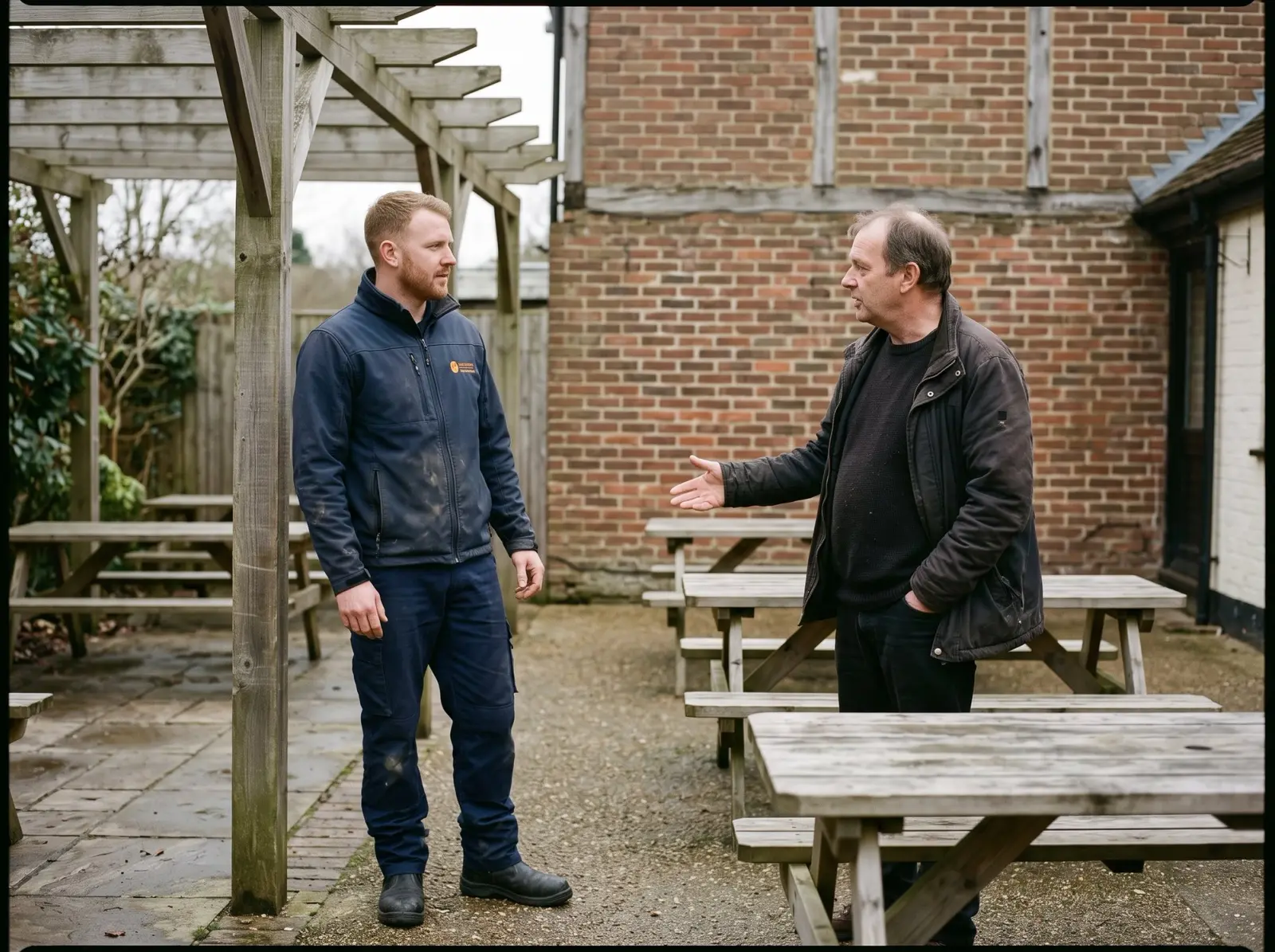
For businesses, wasp treatment is a seasonal programme: checking the site for nests from spring and treating each one when it turns up.
Read the wasp treatment guideIn spring. Queens start new nests in April and May, and a nest found then is small and easy to treat. By July and August the same nest can hold thousands of wasps and sit right next to your busiest outdoor space. Starting early also gives you time to fix bins, waste stores and gaps in the building before the season peaks.
Bees are not treated like wasps. A bumblebee nest lasts only a few months. If you are not sure what you have, we can help you identify it.
It stops the wasps from nests on your site. Wasps forage for over a mile from the nest, so some will come from gardens and trees nearby. Covering bins and waste stores, and keeping food and drink covered outside, gives them less to come for, because workers turn to sweet food at the peak of the season.
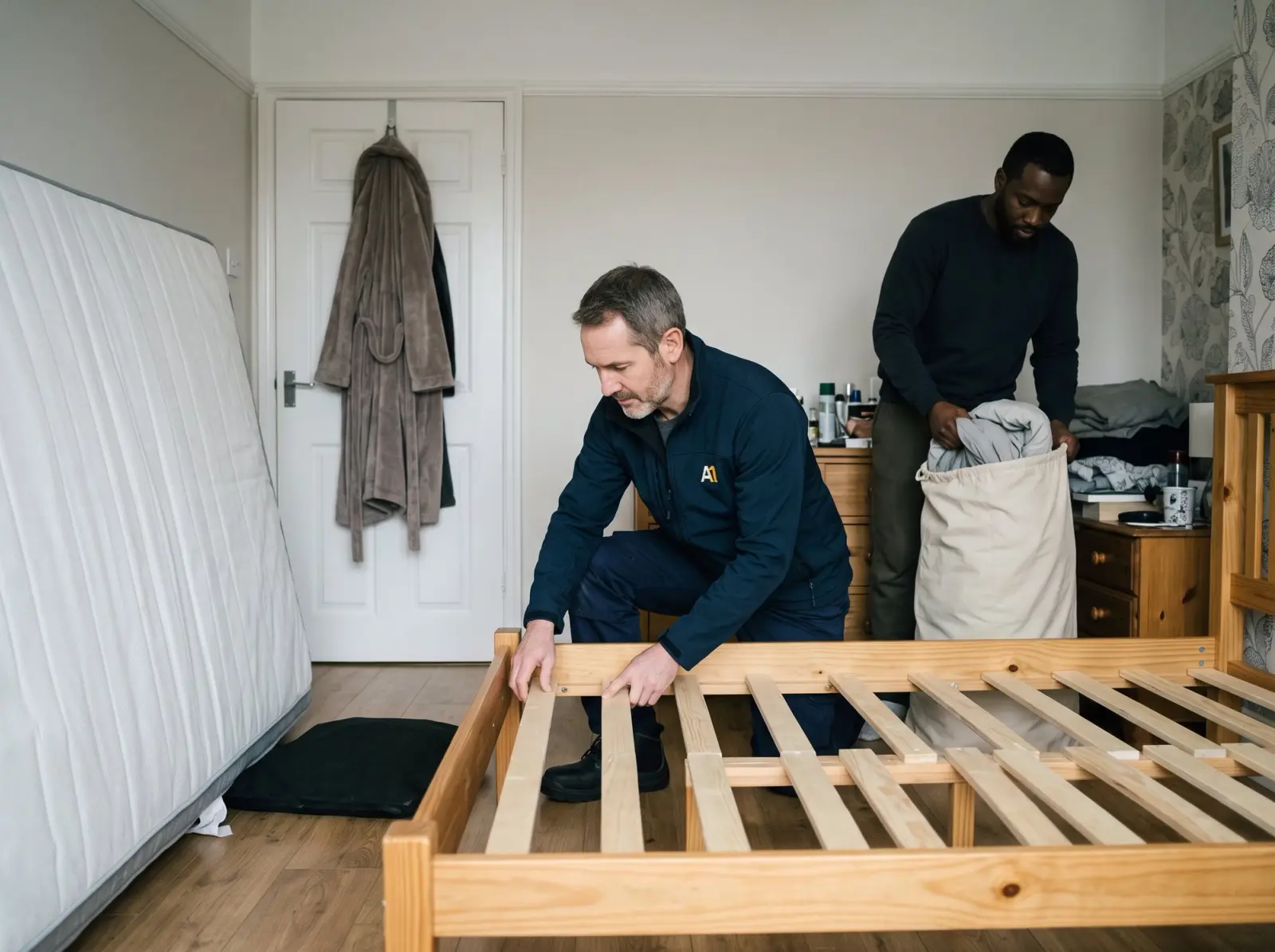
Itchy bites on the arms, neck, face or legs, and small blood spots on sheets, are among the signs.
Read the bed bugs guideBed bug bites are often in a line or small group on skin exposed while you sleep, such as the arms, neck and shoulders, and they itch. Bites alone are not proof, because other insects bite too and some people do not react. Look for blood spots on the sheets and dark specks along mattress seams. If you find those as well, it is likely to be bed bugs.
No. Bed bugs feed on blood, not dirt, and they can turn up in any home or hotel, however clean. They arrive in luggage, clothes and second-hand furniture. Clutter does give them more places to hide and makes them harder to spot, so a tidy bedroom helps the treatment work, but a clean home can still get bed bugs.
The NHS says it is very difficult to get rid of bed bugs yourself, and things you can try at home are unlikely to clear them completely. Bed bugs hide in tiny cracks, and their eggs survive many treatments. You can help by washing bedding at 60°C, vacuuming and keeping clutter down, but most infestations need a professional treatment with a follow-up visit.
Not in most cases. We treat the mattress, seams and bed frame. A mattress with torn covers or a heavy infestation may be better replaced, but wait until after treatment, wrap it before you carry it through the house, and do not leave it where someone else might take it.
The number of visits depends on the size of the infestation, and eggs can survive the first treatment and hatch afterwards. Flats with neighbours who also have bed bugs, and rooms full of clutter, can make treatment longer. Follow the preparation list and do not move to sleep in another room unless we tell you to.
Only for some treatments, such as bed bug sprays, and only for a few hours. You stay out of the treated rooms until the surfaces are dry, and we tell you in advance how long that is. Take pets with you, and cover or remove fish tanks.
Bed bug bites are not known to spread disease in Britain. The harm comes from the bites themselves: intense itching, swelling and, if you scratch, a risk of infection. NHM says bed bug bites can be debilitating when they disturb your sleep every night.
Before you unpack, pull back the sheets and look along the mattress seams for small black or brown spots, rust-coloured stains and pale shed skins. Check the headboard, the joints of the bed frame, nearby furniture and the curtains, where bed bugs hide in cracks. If you find any of these signs, ask for a different room. Keep your case off the bed while you look.
Keep your suitcase on a luggage rack or a hard surface, away from the bed and the floor. If you have stayed somewhere with bed bugs, check luggage and clothing carefully before you take them indoors, wash clothes at 60C and tumble dry them hot for at least 30 minutes. Items that cannot be washed can go in a plastic bag in the freezer for 2 to 3 weeks. On longer trips, a bed bug encasement for your luggage adds another layer of protection.
Look for itchy bites in a line or cluster, often on the face, neck and arms, the skin you leave uncovered in bed. Check your bedding for small blood spots and brown or black spots, which are bed bug droppings, and look for shed skins along the mattress seams. Some people also notice a musty smell in the bedroom.
Bed bugs are small, flat, oval insects that feed on blood, and adults are 4 to 5 mm long. The Natural History Museum says they are usually mahogany brown, turning dark red or purple once fed. They are mostly active at night, shelter in cracks by day, and cannot fly, though they run fast.
Use a bright light to check crevices, corners and mattresses. The Natural History Museum says bed bugs use crevices and the space behind wallpaper for resting and egg-laying, and that specks of faeces and a distinctive odour can show they are there. On a wall a bug looks like a moving brown lentil, and activity peaks before dawn.
Bed bugs travel with people and their belongings. The Natural History Museum says small invasions can follow buying second-hand furniture, and that hotels and guest houses carry the greatest risk because guests can bring bugs in their luggage. The museum notes people have carried bed bugs across the world, so luggage and furniture can take them from one building to another.
Search the whole area to map the full extent of the problem, using a light on crevices and mattresses, as the Natural History Museum advises. For treatment, A1 Pest Control uses a spray, or steam and spray, and sends a preparation sheet before the visit. Acting early matters, because infestations are easiest to clear before the bugs scatter into places you cannot reach.
Yes, an infestation can be cleared, and the earlier it is found the easier that is. The Natural History Museum says early discovery lets an infestation be eradicated before the bugs spread into hard-to-reach hiding places. It also says adults can go up to a year or longer between meals, so a spare room left empty is no cure.
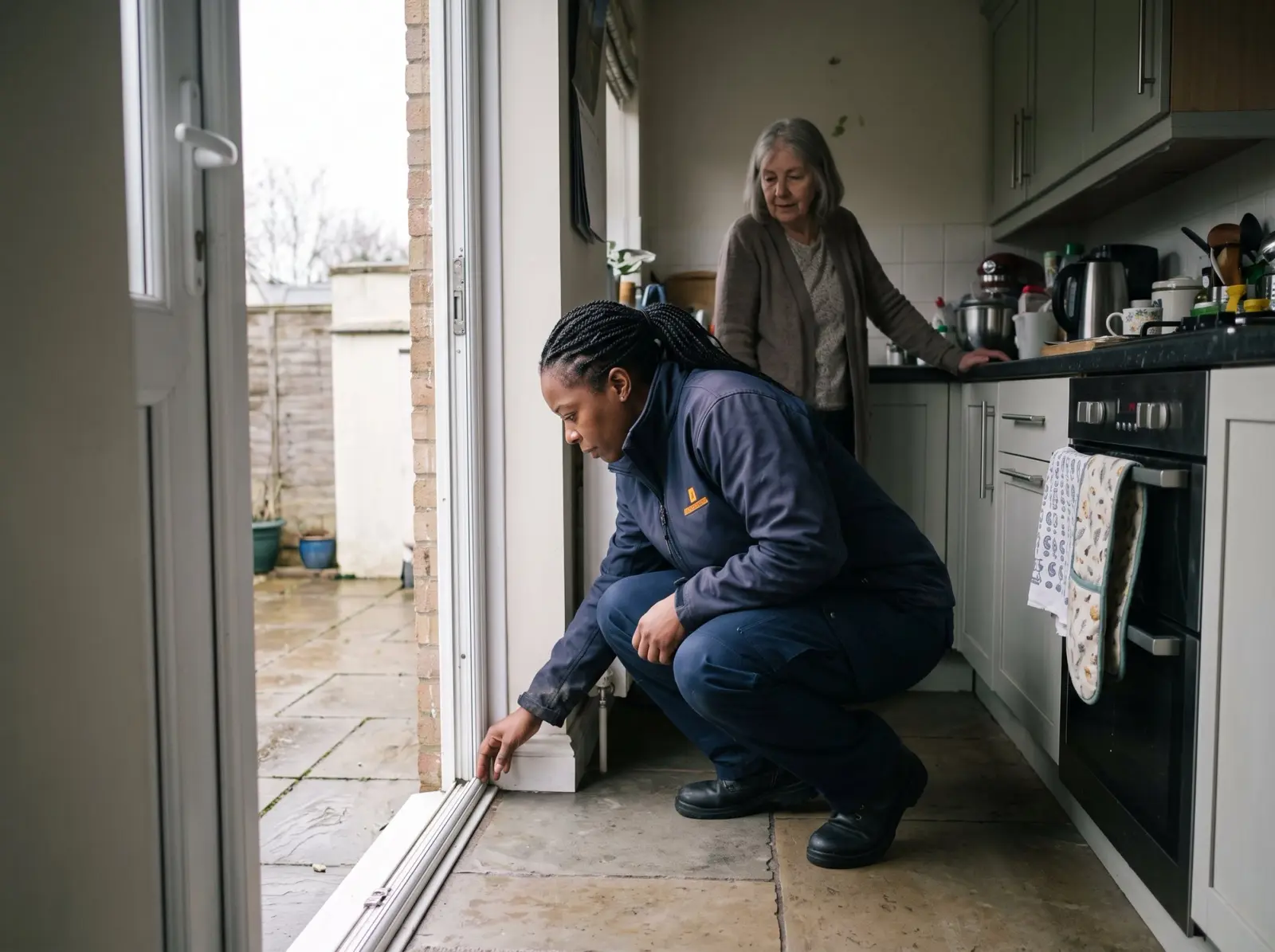
The usual culprit is the black garden ant, following a trail from a nest outdoors or below the floor to kitchen food.
Read the ants guideAnts follow scent trails laid by the first workers to find food, so one ant that finds sugar or crumbs can lead many more in. They come from a nest outside or under the floor, which wiping up the trail does not touch. Treating the nest and entry points, sealing gaps and keeping food in sealed containers stops the trail coming back.
Flying ants are the winged males and new queens of an established nest, out on their mating flight. Garden ants fly on warm, humid summer days, often in July and August, and many nests in an area can swarm on the same day. They do not sting and the swarm is over within a day or two. If they come out indoors, the nest is close to or under the house.
Oxford City Council says ants’ nests must be dealt with for an infestation to be controlled, and that nests can be found by following the trails. If ants keep coming back after a couple of weeks, or you see them in winter in a heated building, call us.
We treat ants that are coming into the house, nesting under a patio you use, or causing a problem around a business. Where a nest is the source of ants indoors, we treat it along with the entry points.
Black garden ants nest outside and forage widely for food, and sugar and crumbs draw them indoors. Once one ant finds food, it leaves a scent trail that leads the rest of the colony to it, which is why lines of ants appear so fast.
Black garden ants (Lasius niger) are the ants most UK households see. They form long trails when they forage indoors. Flying ants are usually black garden ants in their reproductive stage.
The clearest sign is a trail of ants along skirting boards or kitchen worktops. Look as well for small piles of soil or sand near cracks and walls, small holes in the ground that may be nest entrances, winged ants indoors, and ants inside cupboards or food packaging. If you see more ants than usual, act before the problem spreads.
Wipe kitchen surfaces and sweep up crumbs, keep cereals, sugar and pet food in airtight containers, and take pet food bowls up between meals. Seal cracks around windows, doors and skirting boards with silicone, and check the gaps where pipes enter the house. Trim plants that touch the outside walls, because ants use them as routes in.
If the nest sits close to your home, ants will keep returning until someone finds and treats it. Call A1 Pest Control on 0800 059 0135 for help.
Flying ants are the winged young queens and males that leave an ant nest at certain times of year. The RHS says they often emerge in large numbers during humid summer weather, an event sometimes called flying ant day. They fly up and mate, after which the males die and the young queens look for places to start new nests.
No. Most ants in a nest are wingless workers, which are sterile females. Only the young queens and the males grow wings, and they appear only in certain seasons. The RHS adds that a nest also holds one or more fertile queens, and that more than 30 ant species live in Britain.
Young queens do, but an established queen does not. The RHS says winged queens fly up to mate, and once mated a queen no longer needs her wings, so they are bitten off. She then searches for a suitable place to found a new nest.
There is no fixed date. The RHS says nests release winged ants in large numbers when the weather turns humid in summer, and this is often labelled flying ant day. Weather radar can pick up the mating swarms. Because humid weather sets it off, the swarms seem to appear suddenly.
Ants are most active from April to October, according to the RHS. In that period nests are busy, and small heaps of fine soil can show on lawns and around pots. In the cooler months ants are less active, which is why the RHS suggests winter for repairing lawn turf that nests have disturbed.
Probably, and possibly in greater numbers. The RHS says that when a colony is destroyed, incoming queen ants are likely to take over the territory and may set up even more new nests. For that reason it advises tolerating ants in gardens where possible, since they do no direct harm to garden plants.
Usually not. The RHS says ants should be tolerated in gardens wherever possible, because they play a part in garden biodiversity and prey on many other invertebrates. Unless a nest is particularly troublesome, the RHS considers ants best left alone, as destroying a colony can lead to new queens moving in.
The RHS suggests brushing the soil heaps flat on a dry day before mowing, so the mower does not smear soil across the grass. Where years of ant activity have left an uneven surface, it advises peeling back the turf, removing the extra soil and relaying it, which is easier in winter when ants are less active.
Ants do little direct damage to plants, according to the RHS. They can disturb the soil around roots, push soil up onto the surface, and bury low-growing plants or unsettle roots in pots. The RHS adds that ants may protect aphids from ladybirds and other predators, and more aphids can mean more plant damage.
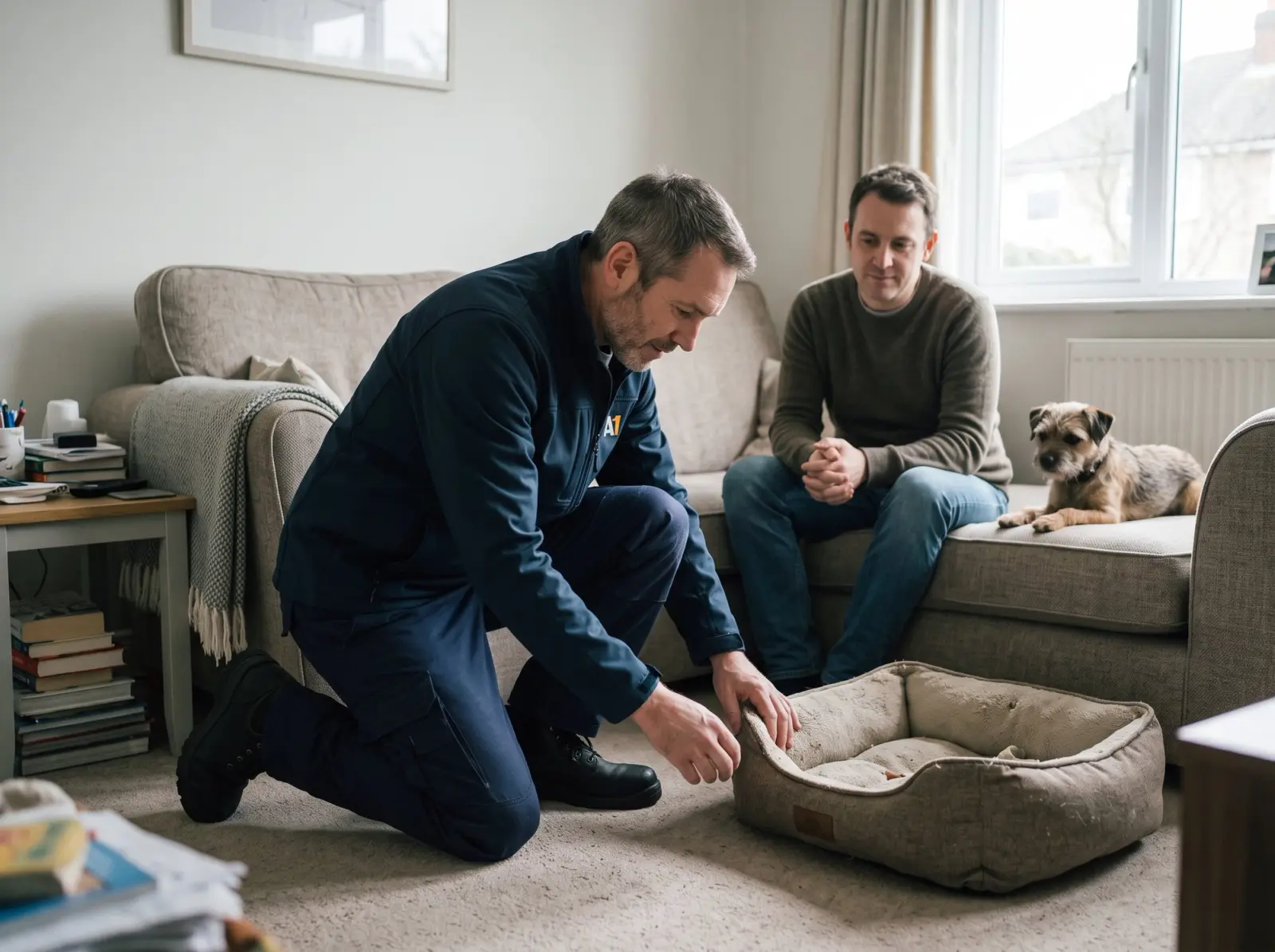
Bites that itch around the ankles and a pet scratching more than usual are among the signs.
Read the fleas guideLook for itchy red bites around your ankles and lower legs, a pet that keeps scratching, and black specks in its coat or bedding. Put the specks on damp white kitchen roll: if they turn red, they are flea droppings. You may also see small dark insects jumping on carpets or your socks in the rooms where your pet sleeps.
Flea pupae can lie dormant in carpets for up to nine months and hatch when someone walks in, so a home left empty after a previous owner’s pets can be full of hungry fleas. Fleas also come in from birds’ nests or squirrels in the loft, and on clothing after visiting a home with pets. The treatment is the same, with the source dealt with too.
Yes, for a few hours. You, your children and your pets stay out of the home until the treated surfaces are dry, and we tell you how long that is in advance. When you come back, open the windows for a while. Cover fish tanks and switch off their pumps before the visit, and keep reptiles in their sealed tanks.
The spray does not kill flea eggs or the pupae in their cocoons, so new fleas keep hatching for a while and die when they touch the treated surfaces. Seeing some fleas for 10 to 14 days after treatment is normal. Do not vacuum or wash the floors for two weeks. If you still see fleas after four weeks, call us.
Once the treated surfaces are dry, people and pets can use the rooms again. Keep pets out until then, and cover or remove fish tanks, which are sensitive to insecticides. Tell us about any reptiles, birds or small animals, and anyone in the home who is pregnant or has a breathing condition, so we can plan the treatment around them.
The RSPCA says it is essential to treat both your pet and your home, as fleas can survive in the environment for many months without a host, and Plymouth City Council says eggs and developing fleas are often found where people sleep and relax. If you are still being bitten after a few weeks, or you have moved into a home with a heavy infestation, a professional residual spray treats those areas.
Adult fleas are normally 1 to 4 mm long and brownish, with no wings but powerful legs for jumping, according to Rochdale Borough Council. That makes them visible to the eye, though small. Oxford City Council says most homes meet cat or dog fleas, and cat fleas are the more common, even on dogs.
Adult fleas live on warm-blooded animals and lay eggs after feeding. The eggs drop onto flooring, fabrics and bedding, and hatch into larvae after several days. Rochdale Borough Council says larvae take two to three weeks to develop, then spend about two more weeks in a cocoon before emerging as adults. Oxford City Council notes adults can wait longer to emerge.
Yes. Oxford City Council says adult fleas can wait longer than a month to emerge, which sometimes causes infestations in homes without pets. Rochdale Borough Council advises tracing the source of the fleas, since the adults feed on warm-blooded hosts.
Adult fleas live on animals, but the eggs and young stages develop in carpets. Oxford City Council says eggs shed by animals end up in carpets and floorboards, where the larvae live on debris and flea droppings. Rochdale Borough Council adds that eggs land on floors and soft furnishings, pet bedding included.
The RSPCA says flea season runs between late spring and early autumn, from April through November, and peak activity falls in summer. They thrive in warm, humid weather. Fleas can still be a problem all year, because heated homes give them good conditions to reproduce indoors during the colder months.
Yes, though they prefer animal blood. Oxford City Council says fleas will bite people in high infestations, and that the bites can be very irritating. Rochdale Borough Council says bites can cause an allergic reaction and intense itching, and it suggests contacting your GP if you have concerns about them.
Constant scratching is the main sign. The RSPCA also lists hair loss, sore patches, redness, tiny dark specks in the fur and small browny-black insects moving about. Rochdale Borough Council says the specks are flea droppings, made of dried blood, which turn red when wiped with a damp tissue. If you are unsure, the RSPCA advises speaking to your vet.
The RSPCA suggests combing your pet with a fine comb above something white, such as kitchen paper. Any fleas or droppings fall onto the paper. Add a little water, and if the droppings go reddish brown, your pet very likely has fleas. If you are still unsure, ask your vet.
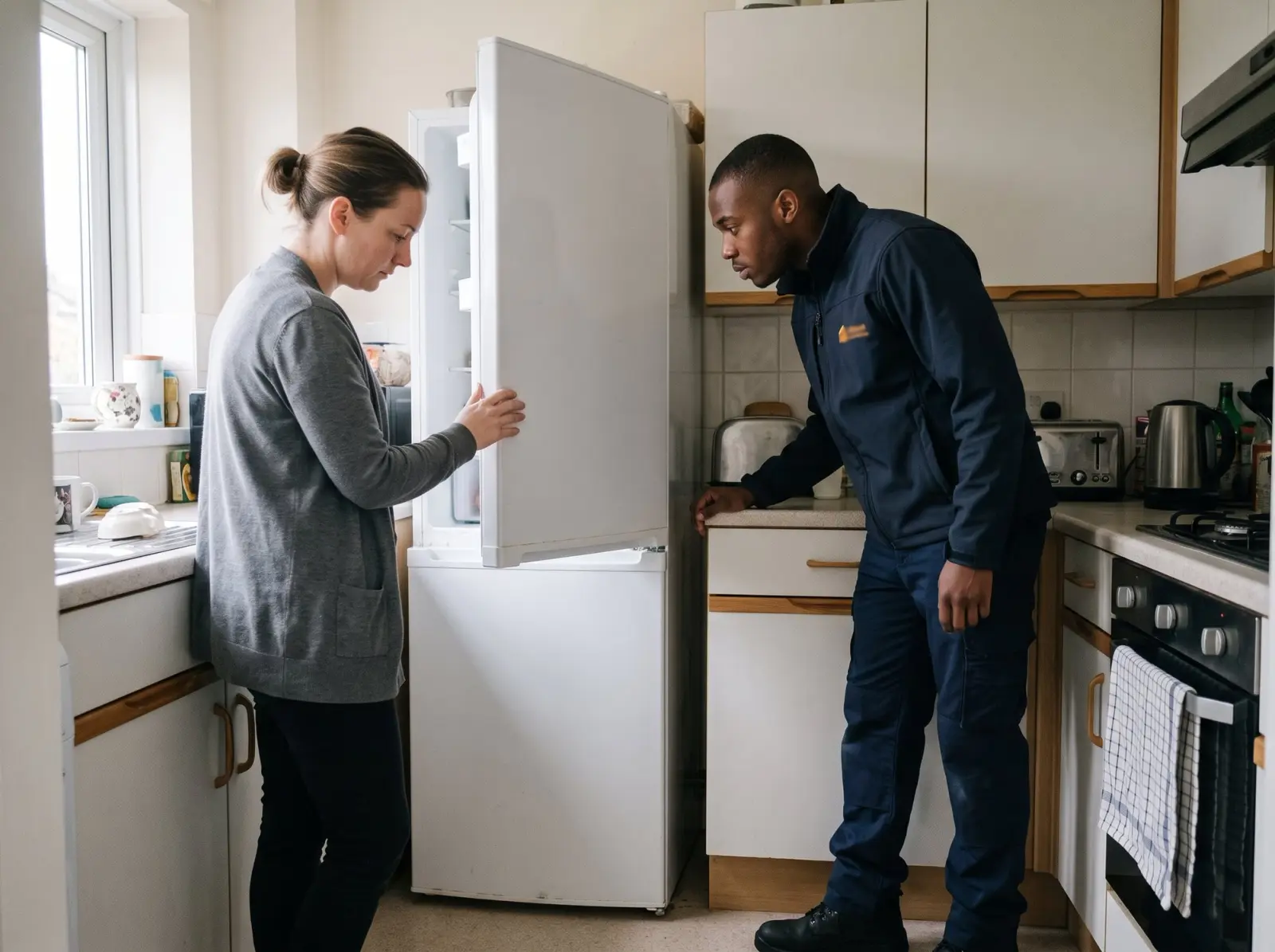
Cockroaches show themselves at night, so you may spot brown or black insects dashing for cover when the kitchen light comes on.
Read the cockroaches guideCockroaches can be brought in with food and packaging, in laundry and food deliveries, or in suitcases after a trip abroad. Cockroaches also move from sewers and drains into buildings, and Oriental cockroaches thrive in cool, damp places such as basements and drains. A warm kitchen with crumbs, grease and a dripping tap gives them everything they need. Before an insecticidal treatment, clean thoroughly, paying attention to food and water sources and hiding places.
Most infestations come back after home treatment because the eggs survive and the cockroaches hide deep in voids and appliances. A professional treatment with follow-up visits clears the whole population, not only the cockroaches you can see.
The number of visits depends on the size of the infestation, and A1 treats cockroaches with weekly visits. Fareham Borough Council says cockroach eggs resist poisons and may lie dormant for months before hatching, and the German cockroach carries its egg case until the nymphs are ready to hatch.
An authorised officer can serve an emergency prohibition notice on a food business under the Food Safety Act 1990 where the state of its premises involves an imminent risk of injury to health. Call us as soon as you see signs.
Mostly no. German cockroaches have wings but cannot fly far, and some male oriental cockroaches manage a short flight of two or three metres. When a light comes on, a cockroach is far more likely to run for cover than to take off.
Yes. Two species account for most UK sightings: the German cockroach and the oriental cockroach. Gravesham Borough Council says both arrived by accident and are not native. Lambeth, Oxford and Rochdale councils name the same pair as the common species, so these are the two you are most likely to meet in London.
Almost anything. Bromley Council says cockroaches feed on nearly anything, from food crumbs to animal faeces. Crumbs, grease around the cooker and spilt liquid all give them a meal, which is why clearing them up straight away helps.
The two common UK species differ. The German cockroach is about 13 to 16 mm long, tan to dark brown, with two dark stripes between the head and the wings. The oriental cockroach is larger, around 25 mm, and dark reddish brown to almost black. Both carry long antennae and two sets of wings.
German cockroaches are smaller and stay close to food, in kitchens, cafes and hotels. Oriental cockroaches are larger and cope with cooler conditions, which lets them live outside near drains and bins as well as in damp basements. Bromley Council adds that male oriental cockroaches have longer front wings than females.
Like a smaller adult. Young cockroaches, called nymphs, resemble the adults except that they have no wings, according to West Lancashire Council. Oxford City Council describes them the same way, and notes that German cockroach nymphs hatch from the egg cases in 2 to 4 weeks while oriental ones take 6 to 12.
Look for brown egg cases shaped like a small kidney bean and for droppings that resemble black pepper. Cockroaches hide in cracks by day, so check with a torch in the dark, under appliances, behind cookers and inside cupboards. Seeing one scuttle away when you switch on a kitchen light at night is another sign.
It depends on the species. West Lancashire Council says an oriental cockroach capsule holds up to 16 eggs and a German cockroach capsule up to 32. Oxford City Council adds that a female can produce up to eight egg cases a month. German nymphs hatch within 2 to 4 weeks, oriental nymphs within 6 to 12.
At night. Cockroaches hide in cracks during the day and come out in the dark, then dash for cover when a light goes on. That habit can make a sighting feel sudden: switching on the kitchen light late in the evening may be the first time you see them.
Indoors, in warm places near food and water. Councils name kitchens, cellars, basements and heating ducts, plus sinks, drains, the backs of cupboards and the area around fridge motors. Oriental cockroaches can also live outside. They stay in cracks through the day, so you may find the hiding places before you find the insects.
Sources differ on the numbers. Rochdale Council says cockroaches can last several months without food but only a few days without water, while Bromley Council gives about a month without food and a week without water. Either way water is the limit, so fixing leaks and dripping taps matters.
West Lancashire Council puts adult oriental cockroaches at about 18 weeks and German cockroaches at roughly 34 weeks. Young cockroaches take around 14 weeks to reach adulthood in the German species and ten months to two years in the oriental species, so each generation takes time to develop.
Food, water, warmth and hiding places. Gravesham Borough Council advises clearing crumbs, cleaning up food residue around cookers, not leaving dirty dishes out overnight and fixing dripping taps and leaks. Bromley Council notes that cockroaches can settle in premises with excellent cleaning routines when food and warmth are available, so cleaning behind appliances and fixing leaks removes what draws them.
Damp helps them. Oriental cockroaches like humid, dark places near food, such as drains, sewers and damp basements, and every cockroach needs water. Mending dripping taps and leaks, and sealing gaps around drains and pipework, takes away both the moisture and the routes indoors.
Remove their food and their hiding places. Clear crumbs, store food and waste in sealed containers, wash out indoor bins and fix leaks. Fill small cracks with silicone or latex, patch larger holes, and keep rubbish and clutter away from pipes, drains and cupboards.
It is difficult. Gravesham Borough Council rates shop-bought insecticides as less effective than professional products and recommends calling in help at the first signs. Bromley Council explains that the problem is reaching the eggs and cockroaches hidden in cracks and gaps. Cleaning and sealing gaps still support any treatment.
Lambeth Council describes gel bait placed under sink cabinets and around door hinges, with a spray for heavily infested areas, and Rochdale Council describes a baiting programme for continuous control. Treatment needs several visits. A1 Pest Control’s cockroach treatment runs as weekly visits, and you receive a preparation sheet beforehand.
Hidden eggs keep hatching. Bromley Council says insecticide struggles to reach eggs tucked behind cracks and cupboards, and that the programme should run until all the egg cases have hatched. The weekly-visit course that A1 Pest Control uses for cockroaches follows the same logic.
Bromley Council advises food businesses to hire a pest control contractor to plan a treatment programme, with weekly treatments likely at first and maintenance visits afterwards. Check deliveries for insects, clean as you go, keep waste in lidded bins and repair dripping taps.
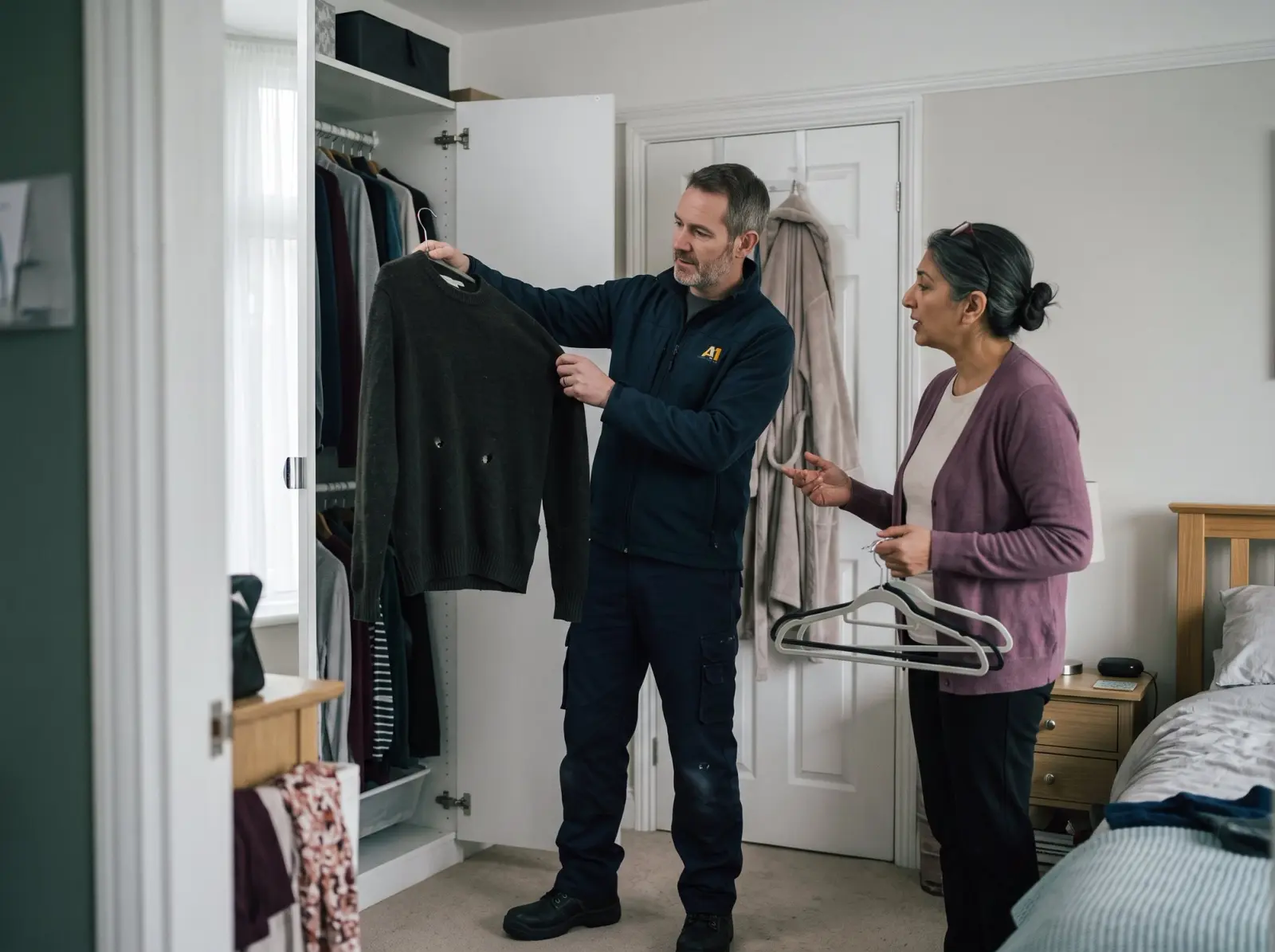
Holes in wool, silk or fur are the mark of clothes moths; webbing in flour, cereal or nuts is the mark of pantry moths.
Read the moths guideLook for irregular holes in wool, cashmere, silk or fur, fine silk webbing or small cases on the fabric, and small cream larvae in folds and seams. The adult moths are small, golden or grey-brown, and tend to run across fabric or flutter into dark corners rather than fly to the light.
They do not kill the eggs or larvae already in your clothes, so they cannot clear an infestation. Storing clean clothes in sealed bags or boxes and checking them every few weeks helps protect them. Once larvae are established in a wardrobe, the fabrics need cleaning or freezing and the storage needs treating.
Throw away any food with webbing or larvae, in a sealed bag outside. Empty the cupboard, vacuum the corners, shelf supports and hinges, and wipe it down. Store dry food in sealed hard containers from then on. If moths keep appearing after a few weeks, larvae may be pupating in cracks or another cupboard, and a professional treatment will reach them.
You can stop the damage spreading. The Natural History Museum says freezing to minus 20°C for a week, or heating fabric to 49°C for over 30 minutes, kills all life stages of clothes moths. Check the rest of the wardrobe.
Clothes moth larvae pupate for 10 to 50 days before the adult moths hatch out (Natural History Museum), so moths can keep appearing for some weeks after treatment from pupae that had already formed.
Moth larvae leave silk webbing, tunnels or cases on the fabric they eat. Carpet beetle larvae are hairy and brown, leave small clean holes with no webbing, and shed skins that look like tiny husks. Small round mottled beetles on a window sill in spring are adult carpet beetles. The treatment is similar, but the source is often different.
Moth larvae look like tiny white caterpillars. They hide inside folded clothes, along fabric seams and under carpets, and leave silky webbing behind as they feed. You may also find small irregular holes nearby. The adult moths are small and golden or pale brown, and you are most likely to see them flying in dark corners at night.
A hot wash kills larvae and eggs in clothes and fabrics that can take the heat. For delicate items, dry cleaning is the safer choice. Vacuum the wardrobe, the drawers and the floor around them at the same time, because larvae and eggs left there can move back onto clean clothes. Afterwards, store clean items in sealed bags or garment covers.
Pheromone traps attract and catch adult male moths, which reduces mating and shows you how many moths you have and where. They do not kill the larvae already feeding in your fabrics, so use them alongside cleaning, washing and sealed storage. If the traps keep filling up, call A1 Pest Control on 0800 059 0135.
Two species do most of the damage: the common clothes moth and the case-bearing clothes moth. Britain has more than 2,500 moth species, yet only two are largely responsible for spoiled clothing. Two smaller species, the brown house moth and the white-shouldered house moth, can also feed on fabric but currently cause less harm. Brown house moth larvae are drawn to feathers, fur and leather.
No. Adult clothes moths have atrophied mouthparts, so they cannot feed and they do not damage fabric. The larvae do the eating, and they gather every nutrient the adult will need before they pupate. Adults still matter, because a female lays her eggs within natural fibres a day or two after she emerges and mates.
It is one of the two moths most often found damaging natural fibres in UK homes. The adult has silvery grey-brown wings, a wingspan of 9 to 16 mm, and a big dark mark plus two smaller marks on the brown forewings, which often rub off with age. The larvae spin tunnel-like cases from silk and nearby material and carry them around as camouflage and protection.
Clothes moths favour dark, undisturbed places: wardrobes, drawers, storage boxes, and the pile of carpets and rugs. They like low light and soiled fabrics, and females lay eggs inside natural fibres. Infestations often begin in cupboards and boxes kept in attics or basements, and the case-bearing species can start out in birds' nests, so an unused chimney deserves a look.
Clothes moths look for dark, quiet, humid spots with natural fibres to lay eggs in. Clothes moths prefer dirty fabric: larvae feed on keratin in natural fibres such as wool, silk and fur, and sweat and food or drink residue add what they need. Pet hair and dust help too. Humid air suits them, so keeping storage areas dry, for instance with a dehumidifier, makes them less welcome.
Clothes moth larvae eat keratin, a protein found in wool, silk, fur, feathers and leather. Linen and velvet are on the at-risk list too, and larvae also take keratin from pet hair, dust, skin flakes and stored balls of wool. Sweat and food or drink residues on fabric attract them as well. Animal-bristle brushes and taxidermy can be targets.
Eggs hatch within 4 to 10 days in summer, and cooler weather can stretch that to three weeks. Larval growth then takes anywhere from a month to two years, depending on conditions, and pupation lasts 10 to 50 days. Warmth speeds up the cycle, which is why moths often seem busier in spring and summer.
Larvae leave trails across woollen garments, thin patches in carpets and bare spots on fur coats, where they cut the hair off at the base. Tapestries can suffer too. Look for small irregular holes and threadbare areas from surface grazing, silk tubes blending with the cloth, and cobweb-like webbing where larvae cluster. Check folds, seams and the area behind labels.
Yes. The Natural History Museum reports that clothes moth infestations have become more common in recent years, and the common clothes moth turns up more often than the case-bearing one. Warm summers can raise moth activity, because heat speeds up the life cycle, while heated homes keep conditions suitable for them through the winter.
Clean natural-fibre clothes first, then seal them in airtight bags or containers. Wash at 60°C or freeze at -18°C before storing, even when clothes look clean, because sweat and food residue can be invisible. Vacuum-sealed bags stop moths reaching the fabric. For long storage, check the contents from time to time.
Yes, it helps clear infestations from carpets and upholstery. Use the crevice tool along skirting boards and under sofas and sideboards. Suction may miss eggs and larvae buried deep in the fibres. Tip the contents into a bag and bin it outside promptly, since larvae can thrive in vacuum bags.
Not by itself. Britain has over 2,500 moth species and just two are largely responsible for clothes damage, so a single moth is a prompt to look closely, not proof of a problem. Clothes moth larvae are white, up to 13 mm long, with a brown head, and they hide in folds and silk tunnels. If you find signs of clothes moths, act quickly.
Indian meal moths are small, with a 10 to 15 mm wingspan. Each forewing is purplish brown with a pale yellowish base, and the hindwings are a greyish white. In some lights, dark adults look black. Larvae are whitish to yellow with reddish or yellowish brown heads and measure about 12 mm when fully grown.
Silk webbing on the food is usually the first sign, spun by the larvae as they feed. Inspect dried goods for silk strands and small pale grubs. Mature larvae leave the food to pupate, so you may also spot them climbing walls or crossing ceilings.
Larvae eat many dried foods, most often cereals and seeds, nuts and dried fruit. A female can lay up to 400 tiny eggs in cracks near food, so check gaps beside shelves as well as the packets themselves. Grubs found away from the food are often fully grown larvae on their way to pupate.
Under laboratory conditions at 18 to 30°C, the cycle takes about 25 to 60 days. Eggs hatch in 7 to 8 days at 20°C. Heat shortens each stage, while cold, crowding or lack of food can pause development, so the species produces between two and eight generations a year.
No. Indian meal moths cannot survive a British winter outdoors, though they keep breeding in heated buildings, homes included. A winter sighting indoors can therefore mean moths are already breeding nearby, usually where food is stored. The Natural History Museum sets this out in its guide to the species.
Yes. Larvae can bite through paper, cellophane and polythene, and small ones crawl through tears, pinholes and paper folds. Their entry holes are often hard to spot. Keeping vulnerable foods in sealed metal tins or similar containers that larvae cannot chew through stops them getting in.
Often not. A minor outbreak can usually be handled by throwing out infested food, then cleaning the cupboards and the areas around them thoroughly. A serious outbreak may need an insecticide treatment, and the Natural History Museum says a qualified professional should apply it. Check each packet for webbing and small grubs.
Store at-risk foods in lidded metal tins and clean shelves and cupboards, taking care over cracks and crevices, where larvae and pupae can hide. Throw away any food that shows webbing or small grubs. Together these steps help avoid repeat infestations.
Break the life cycle by finding every infested item and removing the eggs and larvae. Empty wardrobes and drawers, vacuum them and wipe with a damp cloth, then wash items at 60°C or freeze them at -18°C before they go back. Discard badly damaged pieces. If the problem is large or keeps coming back, a professional pest controller can use stronger, targeted treatments.
Killing the adults stops egg-laying, but ending a clothes moth problem means finding and killing the eggs and larvae too. Two methods reach every life stage: a week in a -20°C freezer, or 30 minutes or more with fabric at 49°C, which a hot wash can provide. Killing adults stops egg-laying, but ending the problem also means locating and killing eggs plus larvae.
Check the likely hiding places one by one. Clothes moths favour dark, undisturbed storage, and a bird's nest in an unused chimney can be the origin of the case-bearing kind. Pheromone traps will not clear an infestation, but they show where adult moths are and whether your efforts are working. If the source stays hidden, a professional pest controller can advise.
Look for silk tubes that blend in with the fabric, cobweb-like webbing where larvae cluster, small irregular holes and threadbare patches. Case-bearing moth larvae leave pupal cases resembling rice grains, without a webbing cover. The larvae are white with brown heads, and they come out to feed at night.
For a small problem, often yes. The routine is to find the source, vacuum, throw out badly damaged items and monitor with pheromone traps. A large infestation, or moths that keep returning, may need a professional pest controller with stronger, targeted treatments, so call for help once your own efforts stall.
Yes. A week at -20°C kills every life stage of clothes moths, including eggs, and a home freezer can do this. A slightly warmer -18°C is the figure given for treating clothes before storage. Heating fabric above 49°C for half an hour is the other home method that reaches every stage.
Fabric held at 49°C for more than 30 minutes loses its moths at every life stage, and a washing machine can reach that. For clothes going into storage, the advice is a 60°C wash or freezing at -18°C, even if they look clean. Heat reaches the eggs and larvae as well as the adults.
No. Pheromone traps are adhesive boxes that lure adult moths, and checking them shows whether an infestation is present. They will not eradicate one, though they help locate and reduce flying adults and show whether your efforts are working. Eggs and larvae still need dealing with.
Yes, check them first and treat them before they join your wardrobe. Second-hand clothes, rugs and fabrics can carry moths in with them, and antique or vintage textiles are frequent offenders. Inspect before buying, then wash as hot as the fabric allows or freeze before storing.
Often on infested second-hand clothes, rugs or fabrics, and antique or vintage textiles are common culprits. Adults sometimes drift in through an open window or door in warm weather. Case-bearing moths can also begin in birds' nests, so unused chimneys deserve a check, and heated homes keep conditions suitable all year.
In heated homes they can. Warm indoor conditions suit them throughout the year, though moths show up more in spring and summer because warmth quickens the life cycle. Larvae can take up to two years to mature, so activity does not follow the calendar.
It lasts until every life stage is gone, so there is no fixed time. Larvae can develop for anywhere between a month and two years, pupae last 10 to 50 days, and a female lays eggs a day or two after emerging. Ending an infestation takes removing the eggs and larvae along with the adults.
Cedarwood and lavender can help stop clothes moths returning, but they do not affect larvae, so they suit prevention after cleaning and washing rather than rescue. Cedar-based mothball alternatives smell less chemical than the old naphthalene kind, which is banned in the UK.
Mothballs containing naphthalene have been banned in the UK and EU since 2008 over safety concerns, and Trading Standards has reported illegal sales of them. Alternatives are on sale, including cedar-based balls and some with the insecticide transfluthrin, aimed at the adults, eggs and larvae of clothes moths.
Steam may help keep new carpets moth-free, but steam and carpet cleaners might make no difference once an infestation is established. Vacuuming along skirting boards and under furniture is the step usually recommended for carpets and upholstery, and it is worth repeating because suction may miss eggs buried deep in the pile.
Yes. Clothes moths feed and breed in carpets and rugs, particularly those with pet hair, dust or food and drink spills in the pile. Warning signs are bare patches and thinning pile. Larvae favour dark spots, such as under sofas and along skirting boards, so use a crevice tool there.
Vacuum carpeted areas at least twice a week and hard floors about weekly. Shake out hanging clothes monthly, since moths dislike being disturbed, and leave wardrobe doors ajar for airflow. Run a dehumidifier in storage areas, because clothes moths thrive when it is humid, and wash or freeze items before storing them.
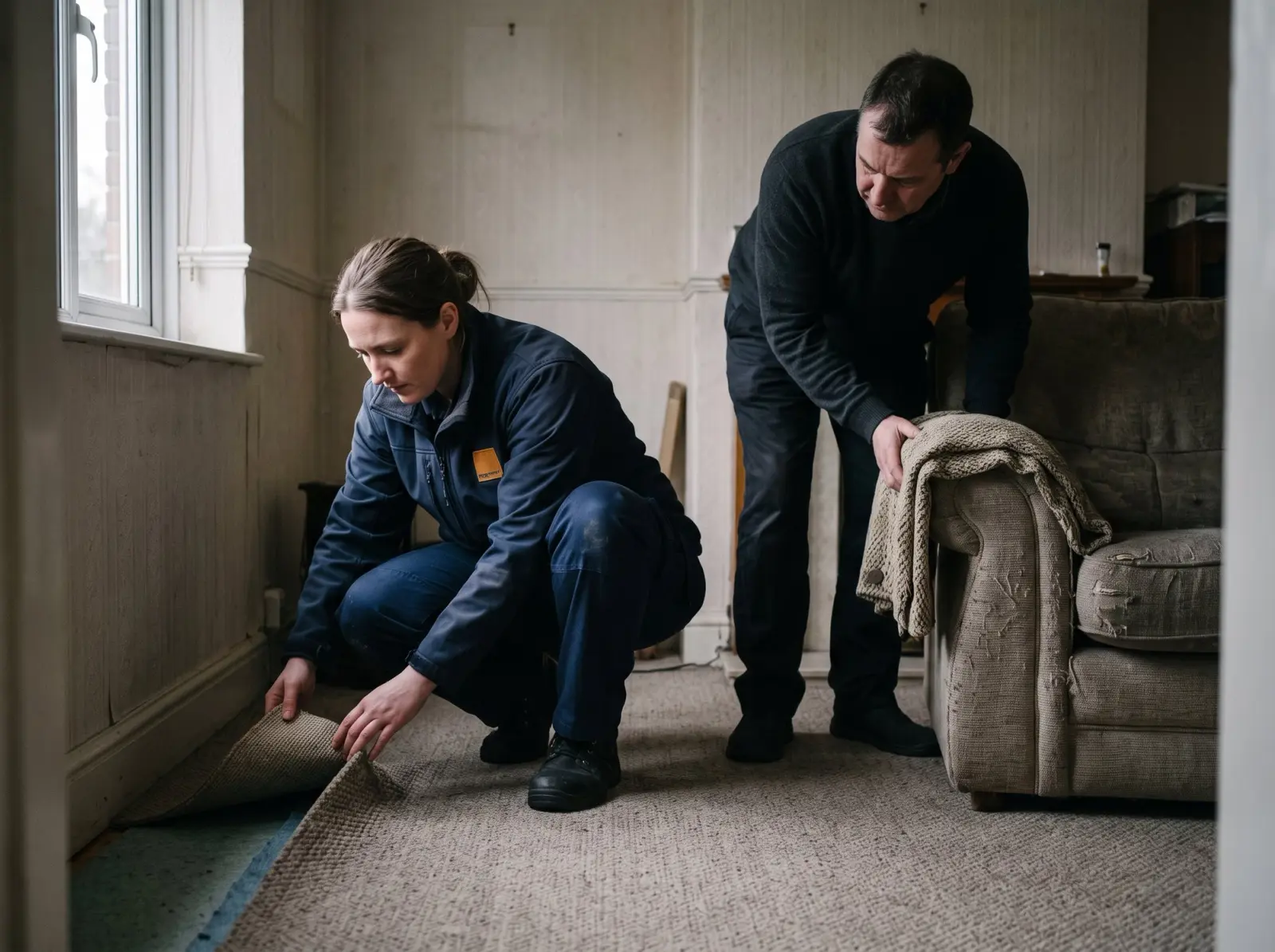
Bare or thin pile in wool carpets, often around the edges of a room and under beds and sofas, is the sign to look for.
Read the carpet moths guideLook for bare or thinning patches in wool carpet along the skirting boards, under furniture and behind doors, fibres that come away when you touch them, fine silk webbing in the pile and small cream larvae. Adult moths are small and golden or grey-brown, and they run across the carpet rather than fly up. Move the sofa or bed to check where damage starts.
No. Clothes moth larvae damage natural fibres such as woollen clothing, upholstery, carpets and furs (Natural History Museum). If you have damage to the carpet, check wardrobes, drawers and stored textiles in the same room and nearby.
No. Carpet moths do not bite or sting and are not known to spread disease. The harm is to your carpets, rugs and other natural fabrics. The treatment needs care, though: keep children and pets off the carpet until it is dry, and tell us about any pet birds, fish or reptiles before the visit.
Both feed on natural fibres such as wool, silk, cotton and fur, and in both cases the larvae do the damage. Clothes moths tend to stay in wardrobes and drawers, feeding on stored clothing. Carpet moths go for carpets, rugs and soft furnishings, often in dark spots under furniture and along the edges of rooms. Both leave holes, webbing and larvae behind.
Wool and other natural-fibre carpets and rugs are most at risk, because clothes moth larvae feed on keratin, a protein in natural fibres. Those holding pet hair, dust or leftover food and drink residue suit moths best. Low light also helps them, so the pile under furniture and beside skirting boards needs the most attention.
Larvae feed on keratin, which wool and other natural fibres contain and entirely synthetic fibre lacks. Moths still go for carpets and rugs carrying pet fur, dust or food spills, so keeping any carpet clean and vacuumed removes what they look for.
They hide where light and foot traffic are low: under sofas and sideboards, along skirting boards and in the carpet edges. Larvae spin silk tunnels from nearby material that camouflage them by day, and they come out at night to feed. Piles of clothes or laundry left on the floor create extra dark spaces.
Keep carpets and rugs clean, dry and well vacuumed. Carpeted areas need vacuuming at least twice a week, including under furniture and along skirting boards with the crevice tool. Clear clutter from the floor, and use a dehumidifier in damp rooms, since humid air suits clothes moths.
Adult beetles on a window sill in spring are usually the first thing people find, while the larvae do their damage out of sight.
Read the carpet beetles guideLook for tiny round beetles with a white, orange and black pattern on window sills in spring and summer, and small hairy brown larvae, called woolly bears, in carpets, wardrobes and airing cupboards. Empty skins that look like brown husks and small clean holes in wool, without silk webbing, are the other signs. Check under furniture and along skirting boards.
Bed bugs are flat, oval, reddish brown and live in and around the bed, where they bite people at night and leave blood spots. Carpet beetle larvae are hairy, slow and live in carpets, wardrobes and fluff, and they do not feed on blood. Adult carpet beetles are round and patterned and turn up at windows. If you find bites with blood spots on the sheets, see our bed bug page.
The Natural History Museum says adult carpet beetles feed on pollen and nectar and the larvae on materials such as wool, fur, feathers and silk, and Oldham Council says carpet beetles are not particularly dangerous to humans. Some people get an itchy rash after touching the larvae, which is caused by the fine hairs on their bodies rather than a bite. If you have an itchy rash and cannot find a cause, look for larvae and shed skins in the bed and bedroom.
Adult carpet beetles fly in through windows in spring and summer, often after feeding on flowers outside, and lay their eggs on wool, fur, feathers or fluff indoors. Old birds’ nests in lofts and eaves are a common source, because the larvae feed on the feathers. They can also arrive in second-hand furniture, rugs and stored textiles.
Start by finding the source, such as an old bird’s nest or dead bird in the loft or eaves, and vacuum fluff and debris from cupboards, shelves, floorboards, carpets and upholstery. If you keep finding larvae or new damage after a few weeks, a professional treatment of the rooms and loft is the next step.
No. Carpet beetles are beetles and carpet moths are clothes moths, but their larvae eat the same natural fibres. Moth larvae are cream caterpillars that leave silk webbing. Beetle larvae are brown and hairy and leave shed skins and clean holes. The treatment is similar, but finding the source, such as a bird’s nest, matters more with beetles.
Adult carpet beetles are small, oval beetles about 2 to 5mm long. The varied carpet beetle has a mottled pattern of white, brown and yellow scales on its wing covers. The larvae look different: they are brown, hairy and covered in bristles, which is why people call them woolly bears.
Look for thin, bare areas or holes in wool carpets, rugs and upholstery. You may also find woolly bear larvae, which are covered in hairs, light brown empty skin cases and tiny droppings about the size of a grain of salt (Oldham Council). Check dark, undisturbed places such as wardrobes, air vents and the floor beneath heavy furniture.
Wash infested items at a high temperature, or freeze delicate fabrics, to kill larvae and eggs. Vacuum the carpets, including the edges and the floor under furniture, and empty the vacuum bag straight away. You can treat affected areas with a product made for carpet beetles, following the label. If the infestation keeps coming back, call A1 Pest Control on 0800 059 0135.
Vacuum often, paying attention to carpet edges, skirting boards and the floor under heavy furniture, where larvae feed on dust, pet hair and fibres. Store wool, silk and other natural fibres in airtight containers. Seal gaps around windows, doors and vents, clear old birds’ nests and debris from the loft, and check second-hand furniture before you bring it inside.
The adult varied carpet beetle is round, 1.5 to 3.5 mm long and patterned with white, orange and black scales, with black legs. The museum beetle is mostly black, with a few orange spots and rust-coloured legs. Their larvae differ too: the museum beetle's is evenly dark brown with a dark head, while the varied carpet beetle's has lighter middle plates and a light brown to orange head.
Carpet beetle larvae are called woolly bears because hairs cover their bodies. A varied carpet beetle larva measures 4 to 4.5 mm and has thick tufts of backward-pointing hairs on its last three abdominal segments. Two-spot larvae reach 6.5 mm and brown carpet beetle larvae 8 mm; both are torpedo-shaped and banded, with tail tufts, and look a little like a very dark silverfish.
The larvae do the damage, and the adults do not. The immature stages feed on skins, feathers, fur, silk and wool, while adults visit flowers for pollen and nectar. Adult two-spot beetles can fly, however, so they can carry an infestation into new households.
The varied carpet beetle is more common in the London area and the southern counties. The varied carpet beetle, a long-established pest, is more common in the London area and the southern counties, and the two-spot carpet beetle is regarded as a pest mainly in the southern half of England and Wales. The brown carpet beetle arrived in Britain in the 1970s and has grown more frequent across England since.
It depends on the species and conditions. Indoors, the varied carpet beetle can complete its cycle in a year, while outside it takes two summers, and its adults live two to six weeks. The two-spot carpet beetle takes anywhere from half a year to three years, depending on food and temperature. Brown carpet beetles can develop in about three months in ideal conditions.
Not entirely synthetic ones. The larvae will not feed on fabrics made wholly from synthetic fibre. They want animal-derived material: wool, fur, feathers, leather, silk and dried insects. Check wool, fur, feather and silk items first, and clear dusty corners where dead insects collect.
Carpet beetle damage shows as small, clean holes with no silk webbing. Powdery, dust-like droppings and the see-through skins the larvae shed point to beetles too. Two-spot carpet beetle larvae can damage large clothing stores, boring holes in fabric from the seams. Clothes moth infestations usually come with strands of silk.
Yes, where the item fits in a freezer. Bag the affected item and put it in the deep freeze, at -18°C, for a day or two to destroy the beetles. Freezing sits alongside vacuuming and proprietary insecticides as a way to deal with an infestation.
Birds' nests in roofs can be an important source of infestation and are best removed and destroyed, with cavities that attract nesting birds blocked by wire netting. GOV.UK says it is against the law to intentionally damage or destroy a nest that a wild bird is using or building, so check that no bird is using it first.
Their larvae live naturally in birds' nests, feeding on feathers, droppings and dead flies and wasps, and from there they often move into homes. Adults fly readily and feed on flowers between March and September. Older houses with nests nearby are a typical setting.
In northern Europe they largely do. The brown carpet beetle is a warmth-loving species that depends on central heating to survive there. Its best development comes at 24°C and 70 to 80 per cent humidity with plenty of food. In the wild it uses bird nests and bat roosts, but it now prefers life in and around human homes.
Yes. The two-spot carpet beetle ranks among the pests museums fear most, because its larvae can ruin specimen collections holding birds, mammals or insects. The varied carpet beetle is also a common museum pest, and the brown species is a growing one.
Start at the edges of woollen carpets and behind skirting boards, then check dusty gaps between floorboards and spots near cobwebs, where dead insects gather. Roof spaces with birds' nests are another source. Cast larval skins and powdery droppings show where larvae have fed.
Look for signs of larvae before worrying. Adult varied carpet beetles often end up on windowsills indoors, trying to reach the outside, so a single adult may be a visitor. Check wool and other natural items for small clean holes, powdery droppings and cast skins, then vacuum, paying attention to carpet edges.
A small problem is often manageable. Regular vacuuming can usually prevent infestations, and where an item fits in a freezer, bagging it for a day or two at -18°C can destroy the beetles inside. Larvae thrive out of sight, so a large infestation has often caused damage by the time it shows, and in that case a professional pest controller is the sensible next call.
Adult varied carpet beetles usually emerge in the warmer months, when pollen is available, and adult two-spot beetles are on the wing from March to September. Larvae at assorted stages are present throughout the year, and indoors the cycle can finish within a year. Varied carpet beetle larvae need 15 to 25°C to develop and rest in winter.
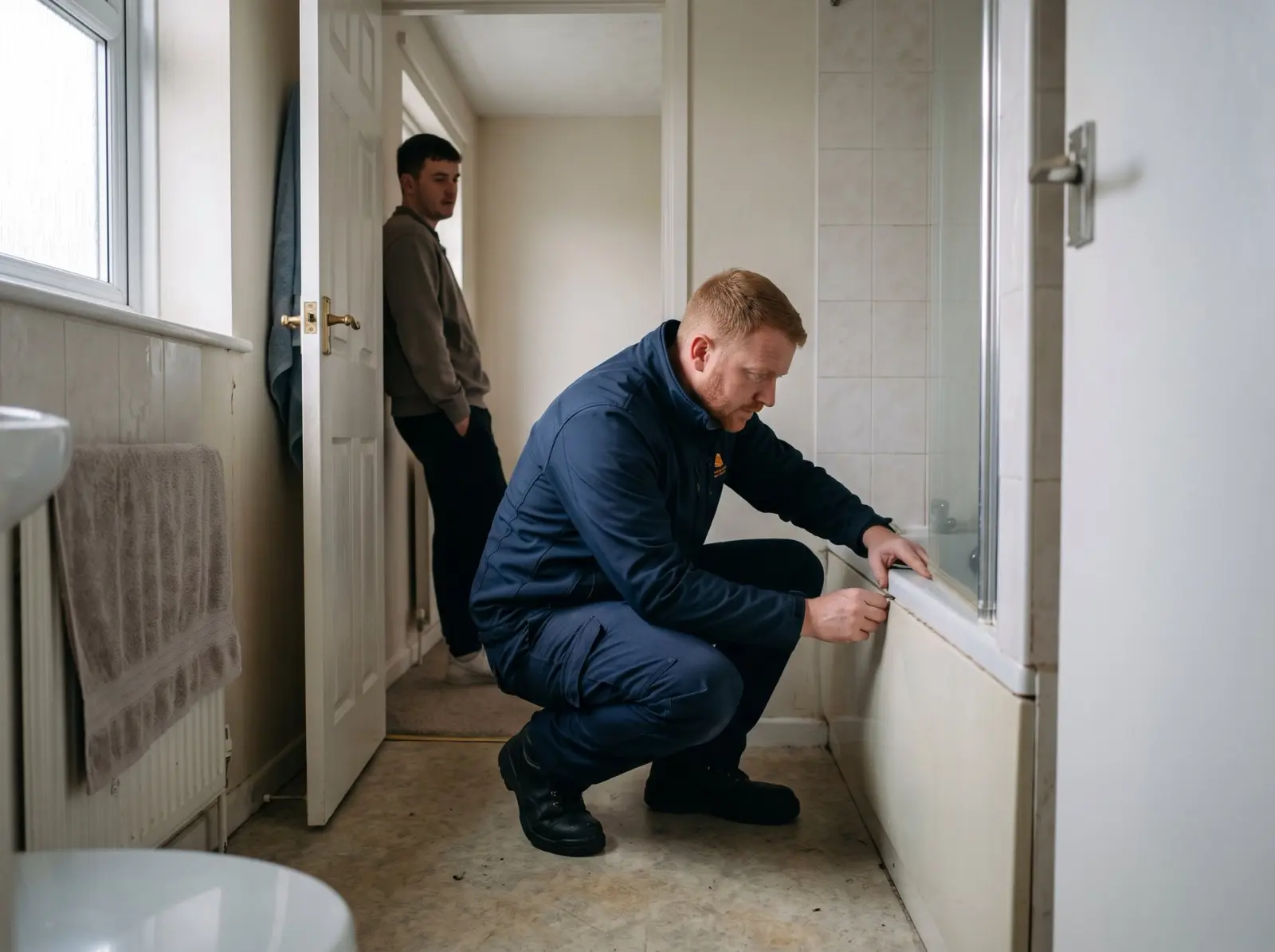
Silverfish come out at night in damp rooms like bathrooms and kitchens, so many people only see one stuck in the bath or sink.
Read the silverfish guideSilverfish do not bite, sting or spread disease, and they are not dangerous to people or pets. The harm they do is to paper, wallpaper, books, photographs and starchy food. The bigger concern is what they tell you about the room: a steady population often points to damp or poor ventilation that needs fixing.
Bathrooms are warm and humid, and silverfish need moisture. Steam from showers and baths, condensation on cold walls and small leaks around the bath give them the damp they need, and gaps behind the bath panel and skirting give them places to hide. They often get trapped in the bath or basin overnight, which is why people find them there.
Not always, but often. The common silverfish needs high humidity, so regular sightings point to a damp area: condensation, a leak or poor ventilation. A few after a cold spell may only be condensation. The long-tailed silverfish can live in drier rooms, so if you have that species, damp is less likely to be the cause.
Damp is the first thing to put right, because silverfish prefer moist areas such as kitchens, bathrooms and basements. Fix leaks, run the extractor fan and use a dehumidifier. If you still see silverfish after a few weeks, or they are damaging books or papers, a professional treatment of their hiding places is the next step.
The long-tailed or grey silverfish is a larger relative of the common silverfish, first confirmed in Britain in 2016. It has longer antennae and tail bristles and can live and breed in drier rooms. It is spreading across Europe and is now found in the UK, and it can damage paper, books and archives. Treatment is similar, with more emphasis on monitoring.
The number of visits depends on the size of the infestation. The monitors show how numbers change over the following weeks. Adults can live for years, so numbers fall over weeks rather than days, and fixing the damp at the same time is what stops them coming back.
Silverfish are insects about 12 mm long with a slim, wingless body that shines silver. They have long antennae and three tail-like bristles, and they move fast when disturbed. Rochdale Council describes them as scaly and glistening, and notes that firebrats grow a little larger.
Firebrats are slightly larger, about 14 mm against 12 mm, with longer antennae. Silverfish look silvery and glistening, while firebrats are greyish with dark, uneven markings. Firebrats need much more heat, ideally 32 to 48 degrees Celsius, so look for them in bakeries, beside ovens and along pipes.
In damp, out-of-the-way spots: cupboards, behind skirting boards and wallpaper, and among damp books and paper. Oxford City Council also lists kitchens, bathrooms and basements as favourite areas, and Rochdale Council names larders too. Silverfish are nocturnal, so they stay out of sight by day.
These rooms are moist, and silverfish prefer moist places. Oxford and Rochdale councils both list kitchens, bathrooms and basements, and Rochdale adds larders. Cupboards and gaps behind skirting boards give them somewhere to hide, and a source of water nearby suits them.
Yes. Silverfish are nocturnal and come out at night to look for food. They move quickly when disturbed, which is why most people see one after dark, if at all. They are often found in damp cupboards and behind skirting boards, according to Oxford and Rochdale councils.
Crumbs and tiny food particles, wallpaper paste, the glue in book bindings, dead insects, and cotton or linen fabric. Rochdale Council adds that they feed mainly on carbohydrates with a little protein. Silverfish are general scavengers, so starchy scraps in a cupboard count as a meal.
They can feed on all three. Oxford City Council says they are often found in damp books, paper and behind wallpaper. Oxford City Council records these habits, and Rochdale Council also lists the paste behind wallpaper.
Check for damp. Oxford City Council advises looking for damp stains, making sure water pipes and gutters are intact, and managing indoor condensation. Rochdale Council suggests checking floors, walls and ceilings for staining that could point to damp. Silverfish rely on damp, so finding the source is the key step.
Yes, because they rely on damp. Oxford City Council names indoor condensation as a source of that damp, possibly from a tumble dryer without ventilation or from cooking, and advises managing it. Opening windows and extractor fans in steamy rooms are everyday ways to do that.
Often, yes. Oxford City Council says silverfish indicate damp conditions, and Rochdale Council says finding them can point to damp. Look at where you see them, since kitchens, bathrooms and basements are moist areas. Repeat sightings in one spot are a good reason for a damp check.
Each female lays about 100 eggs, usually tucked into cracks and crevices. Fresh eggs are white, then turn brown, and they are hard to spot. Because they sit out of sight in cracks, searching for eggs is rarely practical. Oxford City Council gives these details.
Eggs hatch in 2 to 8 weeks, and the young then take from several months to a year to mature, depending on the environment. Oxford City Council gives those ranges. Hatching and maturing times depend on the environment.
Remove the damp they depend on. Oxford City Council says silverfish indicate damp conditions that might need repairs, and Rochdale Council says keeping the home clean and free from damp will help prevent an infestation. A professional treatment of cracks and crevices deals with the silverfish already there.
For a small number, check for dampness first, as Oxford City Council advises, and keep the home clean and dry. Rochdale Council says large infestations may need a residual insecticide sprayed into cracks and crevices and along heating pipes. If numbers stay high after the damp is fixed, a pest controller can treat those areas.
For a large infestation, councils describe spraying a residual insecticide into cracks and crevices, near boilers and along hot pipes. They pair that with a check for damp, since silverfish indicate damp conditions. For a large infestation, Rochdale Council describes spraying a residual insecticide into cracks, crevices and around heating and hot water pipes. (Replace the first sentence of the answer the same way: drop "near boilers".)
Not for your health. Rochdale Council does not rate silverfish or firebrats as a significant public health risk, though they can be a nuisance at home. A sighting is a prompt to check for damp, and for paper, books and fabrics stored in damp rooms.

Listen for running and thumping overhead, early in the morning and again late in the afternoon.
Read the squirrels guideListen for running, thumping and scratching above the ceiling during the day, in the early morning and late afternoon. Rats and mice are noisier at night. Look outside for squirrels running along gutters and disappearing under the eaves, and for chewed gaps at the roofline. In the loft you may find a nest of shredded insulation and chewed timber.
No. Grey squirrels are a listed invasive species, and under the rules for England and Wales you must not release them into the wild, keep them or move them. A grey squirrel caught as part of pest control must not be released and should be killed humanely. We explain the process before any work starts.
Yes, if it is done humanely and by legal methods. Grey squirrels are an invasive species, and government guidance says a squirrel trapped as part of wildlife management should be humanely killed if possible. The methods used must follow animal welfare law. Red squirrels are protected and must not be harmed. We use only methods that meet these rules.
If squirrels are still inside, blocking the hole traps them. They will chew a new way out through the roof or ceiling, or die in the loft, which causes smells and flies. Grey squirrels breed from mid-winter to summer, and the kits are weaned at about 10 weeks (Mammal Society).
Yes. In a loft, squirrels chew rafters, joists, electrical cables and plastic water pipes, tear up insulation for nests and can contaminate the water tank. Chewed wiring is a fire risk and a chewed pipe can leak through the ceiling. The longer they stay, the more damage there is to repair, so it pays to act once you hear them.
As soon as you know they are in the roof, because the damage grows over time. Grey squirrels breed from mid-winter to summer, and the kits are weaned at about 10 weeks (Mammal Society).
Leave the nest alone until the young are ready to go. The RSPCA says baby squirrels leave the nest at 10 to 12 weeks, and young seen feeding outdoors over two or three weeks suggest the move is done. Grey squirrels usually breed twice a year, in February to March and in June to July. The RSPCA also suggests telling your local council's Environmental Health team.
Keep the roofline in good repair, trim branches that hang over the house, and close access points with strong wire mesh once the squirrels have gone. The RSPCA specifies weldmesh or 16 gauge hexagonal mesh with openings of no more than 25 millimetres. Bolton Council calls physical proofing the most effective control, and advises moving bird tables and feeders away or fitting squirrel-proof ones.
You can, once the squirrels are out. Chesterfield Borough Council says exclusion work should only happen when the squirrels are known to be outdoors, and that local builders may take the job on if it is beyond DIY. Which? notes that squirrels tend to find a way through netting meant for lofts, so mesh alone will not shift a squirrel that is already inside.
Yes. Trained pest controllers trap grey squirrels, and A1 Pest Control uses live traps. The RSPCA suggests a reputable contractor trained to carry out lethal control legally and humanely, says relocating grey squirrels is illegal, and notes that the Animal Welfare Act 2006 bars unnecessary suffering to wild animals under human control, such as in a trap. Mesh over the entry points afterwards helps stop new squirrels moving in.
A1's technicians use live traps for squirrels. Chesterfield Borough Council describes cage traps baited with whole maize or acorns, put down baited but unset for a few days, which it says gives the best results. The RSPCA says a live-catch trap needs a check several times daily, and the law bars moving a caught grey squirrel elsewhere. Blocking the entry points comes after the roof space is empty.
Find out whether there is a nest with young, wait for them to leave, then have the adults removed by legal means and block the way in. The RSPCA points to a reputable pest controller for any trapping and to your council's Environmental Health team. Killing alone rarely settles it, since other squirrels may move into the empty territory within about a month.
The same rules apply to a business as to a home. Releasing a trapped grey squirrel is banned, trapping has to avoid unnecessary suffering under animal welfare law, and for lethal control the RSPCA suggests a trained contractor. For squirrels, A1 relies on live traps. Once the roof void is clear, repairing roof damage, cutting back overhanging branches and fitting strong mesh over access points helps keep it clear.
The law allows it, but it takes care. Chesterfield Borough Council says occupiers may shoot or trap grey squirrels, while poison is limited to professional users. According to the RSPCA, live-catch traps need checking more than once a day, and needless suffering to a caged animal is an offence under the Animal Welfare Act. Where lethal control is needed, it suggests a contractor trained to do it legally and humanely.
A1's squirrel work relies on live traps, which hold the animal in a cage instead of using poison. The RSPCA warns that wild animals may scratch or bite if scared, so a caged squirrel is best left to the technician. Chesterfield Borough Council notes that poison for squirrels is restricted to professional users and to areas without red squirrels.
No, a trap has to suit the animal. A grey squirrel weighs about 440 to 650 grams, against 12 to 22 grams for a house mouse, so the traps are not interchangeable. A cage too small for the target species can break the law, and the RSPCA says live-catch cage traps and approved spring traps are among the lawful methods for grey squirrels.
No. Releasing a grey squirrel is illegal. The RSPCA says relocation is banned under the 2019 Invasive Alien Species Order and the 1981 Wildlife and Countryside Act, because the species is non-native. The Mammal Society confirms that letting them go in the wild is illegal. A caught squirrel has to be dealt with humanely rather than moved to another site.
Check size, ear tufts and tail. The RSPCA says red squirrels are much smaller and have ear tufts, which they moult in summer, while grey squirrel tail hairs carry bands with white tips. The Woodland Trust gives a typical weight of 550 grams for a grey and 300 grams for a red. Coat colour alone can mislead, because both species vary.
Usually twice a year. The RSPCA says litters arrive between February and March and again between June and July. The Mammal Society gives three or four young per litter, born blind and hairless and weaned at around 10 weeks. Young squirrels leave the nest and start eating solid food at about two months old, according to the Woodland Trust.
Female grey squirrels live up to about five years in the wild, and males usually live two to three years, according to the Mammal Society. Females can start breeding at 10 to 12 months old. The Mammal Society says grey squirrels are active all year.
None of the smells Which? tried kept squirrels away for long. Which? trialled a clove-scented repellent spray and coffee grounds, and the squirrels still ate its spring bulbs once the scent faded. Dog hair blew away. Chilli powder did deter them, but rain washed it off and magpies ate it. The RSPCA puts more weight on removing food and shelter, and on wire mesh over bulbs.
They can be, mainly near parks and woods. Which? says greys strip bark, eat bulbs and fruit, raid bird feeders and can move into lofts, where they chew cables, timbers and pipes. The Mammal Society calls them serious pests of forestry, because bark stripping can kill the top of a tree or distort its growth.
Use a feeder that squirrels cannot get into. Which? suggests a nut feeder enclosed in a cage with mesh smaller than 50 millimetres, and the RSPCA also recommends squirrel-resistant bird feeders over loose food. If squirrels bury nuts in your lawn, the RSPCA advises avoiding nuts and hard food for birds or squirrels.
Make the garden less appealing, because moving squirrels elsewhere is illegal. The RSPCA suggests removing easy food, using squirrel-resistant feeders and putting wire mesh over bulbs. Which? adds that damage is usually worst where gardens sit near parks or woods, and that wire guards protect tree stems from bark gnawing.
Wire netting works better than plastic. Which? recommends 25 millimetre square or hexagonal mesh, with the edges buried at least 15 centimetres deep, fitted before the fruit ripens. Greys take strawberries, raspberries, walnuts and cobnuts, so a wire fruit cage suits soft fruit. For tree stems, wire or spiral tree guards protect the bark.
No. The Mammal Society says that neither the red nor the grey squirrel hibernates. They store food in autumn and live off it through winter. The Woodland Trust adds that they are less active when food is scarce and curl up with their tail over them in cold weather, and Which? says they keep warm and dry inside their nests.
Usually nuts and seeds, stored for winter. The Mammal Society says squirrels cache food underground in autumn, and the RSPCA says they find it again mainly by smell, with some memory of where it went. Many caches are never dug up, which helps new plants grow. If buried food is spoiling your lawn, the RSPCA advises cutting out nuts and hard food from the garden.
Mostly in broadleaf woodland, especially hazel, oak, beech and sweet chestnut, though they also use parks, gardens and urban areas with suitable trees. The RSPCA says they build a spherical drey from twigs and leaves, typically in a fork at least 6 metres up, and will use tree cavities and occasionally roof cavities. The Mammal Society records them across most of Great Britain.
Mainly tree seeds and nuts, plus buds, shoots, fungi and flowers. The RSPCA says insects and eggs from birds' nests also feature, and that they take food from garden bird feeders. The Mammal Society names seeds from oak, beech, hazel, chestnut and walnut trees as main foods, with peanuts from feeders, and says they bury food in autumn to see them through winter.
Rarely for long, according to the RSPCA, which says other squirrels may replace the ones removed inside a month and that tackling food and shelter may work better. The Mammal Society notes that population control relies mainly on shooting, with some trapping, and that fertility control and other methods are being researched.
Yes, if it is unused. The RSPCA says an empty nest can be taken down along with the tree, but you should first check there are no baby squirrels inside before removing a tree or branch. If the nest is in use and the tree or limb poses a hazard, the RSPCA advises carefully removing the young and following its advice on reuniting them with their mother.

These slow, dark grey flies settle in the loft, upper rooms and window corners from autumn to see out the winter.
Read the cluster flies guideCluster flies look for a dry, sheltered place to spend the winter, and lofts, upper rooms and window frames suit them. They gather on sunny south and west walls on autumn afternoons and move inside as it cools. They often return to the same building every year, which is why one house can be affected while its neighbours are not.
Cluster flies hibernate in the loft and in gaps around windows. When the heating comes on, or on a sunny winter day, the warmth tricks some of them into waking early, and they come out slowly into upper rooms and onto windows. In spring the survivors look for a way out to breed outdoors.
For a few flies, vacuum them up and seal the bag before you bin it, or use a household fly spray. For a loft full of them, call us.
A cluster fly is about 8 mm long, a little larger and darker than a house fly, with fine golden hairs behind the head. At rest it folds one wing over the other. It flies slowly and is easy to catch, and it turns up in groups in autumn and winter.
Expect them to, particularly in a building that has hosted them before. Rochdale Borough Council says a new batch usually follows the next year, and it is believed that flies leave a pheromone in the roof to attract the next group. Oxford City Council notes that one building in a row is often chosen again and again.
Complete prevention is hard. Oxford City Council says keeping the flies out is often impossible, but sealing gaps helps: mastic around outside window and door frames, mortar in loose brickwork, mesh and filler at the join between roof tiles and soffit boards, and fine zinc gauze over air vents. Coventry City Council also calls entry very difficult to prevent.
Sometimes. Oxford City Council says a nozzle-type vacuum cleaner can work as the only control where the flies cluster within reach, with the collected flies put in a sealed bag for disposal. The council adds that once flies are inside a loft or attic, control is relatively simple, while keeping them out is the harder job.
Yes, they can. Rochdale Borough Council says dead cluster flies on a loft floor can lead to infestations of carpet beetles and similar insects, which may then move into the home and feed on fabrics. The council advises clearing up the dead flies where practical.
Yes. Coventry City Council says cluster flies warmed by artificial heat emerge prematurely. Oxford City Council adds that flies warmed during hibernation may crawl out sluggishly, an event that church halls and bedrooms have both seen. Large clusters can also give off a slightly sickly smell.
Cluster flies breed outdoors, in fields through the summer. Oxford City Council says the female lays eggs on or near damp soil under rotting leaves, and larvae hatch roughly seven days later and burrow into earthworms, developing inside them. Two generations a year are common in Britain, and hot summers may allow up to four.
Cluster flies look like house flies, apart from golden hairs behind the head, though Rochdale Borough Council says those hairs rub off easily. Coventry City Council describes them as more sluggish, often flying very slowly. Oxford City Council adds that they are darker and larger than a housefly and rest with one wing tucked across the other.
Usually in autumn, and sometimes in spring. Rochdale Borough Council says thousands can appear suddenly in a roof or around windows in autumn. Coventry City Council notes they are usually spotted on the first warm spring days, gathering on the inside of windows.
In roof spaces, lofts, cellars and other dark voids. Coventry City Council reports them in window frames too, including sash windows. Rochdale Borough Council says they stay in the roof void through winter and come out only on sunny early-spring days, often to sun themselves on the roof tiles.
They are looking for winter shelter. Rochdale Borough Council says cluster flies search for cover to hibernate, and on late autumn afternoons they may collect on south and west-facing walls. In the evening they may move into the roof space or around windows.
Not directly. Oxford City Council and Coventry City Council both describe cluster flies as of no particular harm, though their numbers can be alarming. Rochdale Borough Council adds an indirect risk: dead flies lying in a loft can bring carpet beetles, which may then feed on fabrics in the home.
No. Rochdale Borough Council says a fog treatment in the roof void generally reduces the problem a great deal, but it expects a new batch of flies the following year. The council also says to check for evidence of bats first, because insecticides must not be used where bats are present.
No. The Bat Conservation Trust says sticky traps of every kind, fly paper included, are never to be placed in a loft known or thought to house bats, because bats have become stuck to them. The trust notes such traps can work in the living areas of a dwelling, away from the roof space.
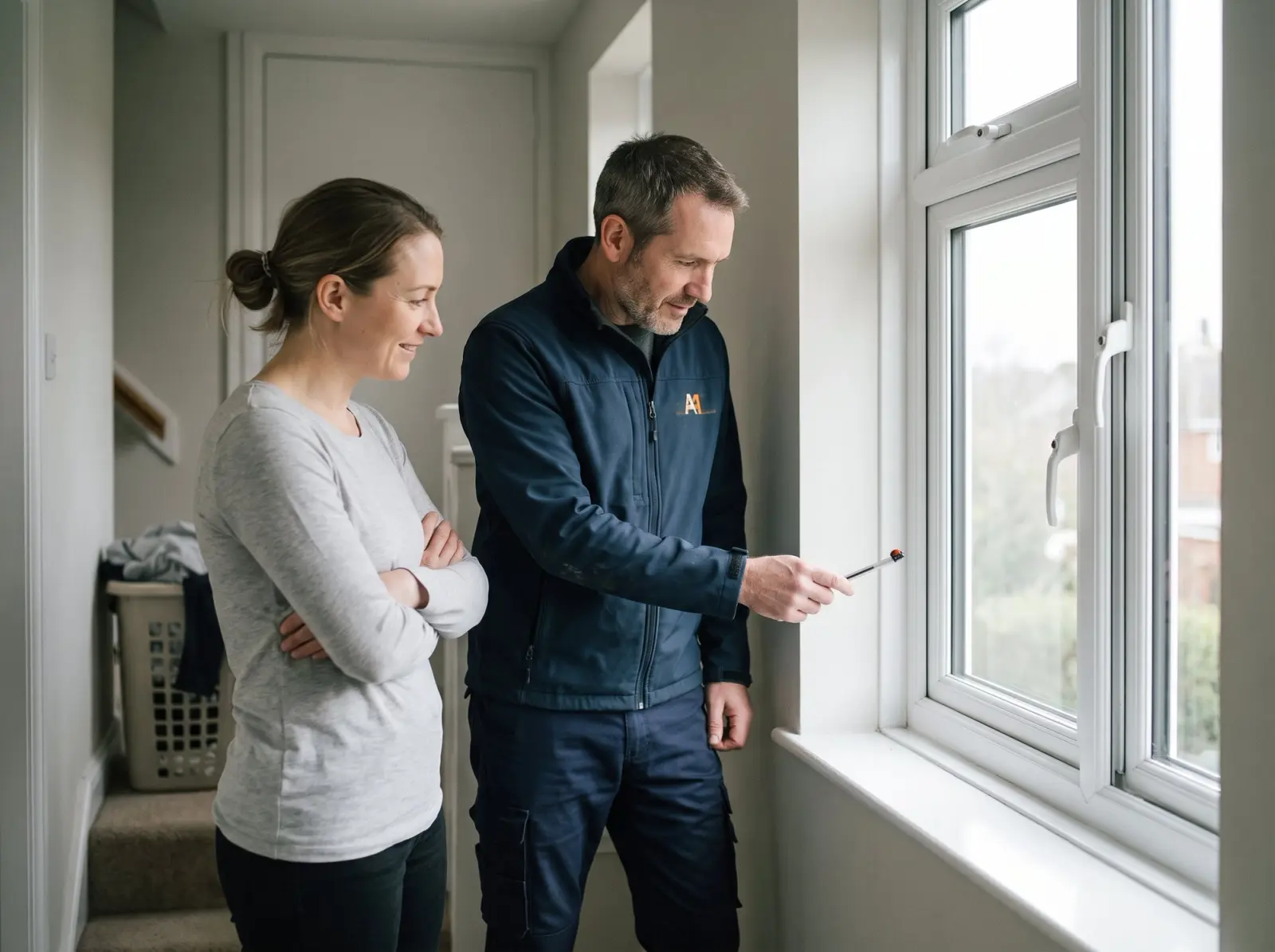
Ladybirds gather in windows and lofts as autumn cools, and many are harlequins, an introduced species.
Read the ladybirds guideAs the weather cools in autumn, ladybirds look for a dry crack to sleep through the winter. Window frames, door frames, sheds and lofts suit them, and they gather first on the sunny south side of buildings. In spring they leave to mate and lay their eggs on garden plants where there are aphids.
Many ladybirds, harlequins included, overwinter in groups inside buildings. A disturbed ladybird releases a smelly yellow fluid that can stain curtains and furnishings. Bites are rare and cause no more than a minor irritation.
Rarely. A ladybird may bite if provoked, but the bite is harmless and causes no more than a minor irritation. The RHS says there is no danger from having harlequins in the house.
No ladybird beetle is listed as a protected animal under the Wildlife and Countryside Act 1981. The only ladybird on the list is the ladybird spider, a rare spider. Native ladybirds are still worth keeping, and they often share winter sites with harlequins, so check what you have before using any insecticide.
Brush or vacuum small groups into a container and put them outside on a mild day. Seal gaps around loose windows and doors to stop more getting in. The RHS says ladybirds cannot be discouraged from entering buildings, so catching and removing them, or tolerating them, are the options.
Harlequins are around the same size as native ladybirds or slightly larger, and come in many patterns, most often black with two red spots or orange with many black spots. Native ladybirds are black underneath with black legs, while most harlequins are orange underneath with orange legs (Natural History Museum).
The harlequin ladybird is one of about 40 ladybird species found in Britain and Ireland, and it comes originally from Japan. It was not brought in on purpose but became established in 2004, and it is now widespread in England. Adults measure 8 to 10 mm and vary a lot in colour.
Harlequin ladybirds prefer aphids, but they also eat scale insects, the eggs and larvae of butterflies and moths, and other small insects, including other ladybirds. Their larvae feed on aphids and other insects too. The RHS describes the species as a predator, which is why gardeners often value it for aphid control.
Adult harlequins measure 8 to 10 mm, while the native two-spot and ten-spot ladybirds are smaller at 4 to 5 mm. Colour is a poor guide, because harlequins range from orange with many spots to black with two red ones. The Natural History Museum says orange legs and an orange underside usually mark a harlequin.
Harlequin larvae are charcoal grey with two orange stripes and a spiky body, and they grow to about 1 cm long. They hunt aphids and other prey, as the adults do. Most ladybird larvae share a similar long shape, so the stripes and spikes are the features to check.
Partly. The RHS considers the harlequin a useful addition to garden wildlife because it feeds mainly on aphids. Its diet also includes other insects, among them the young of butterflies, moths and other ladybirds, so it is not a pure garden helper. The RHS adds that research into its effect on native species is continuing.
It may affect them, because it feeds on native ladybird eggs and grubs and competes with them for aphids. The RHS reports mixed evidence in Britain: some native species show no decline, while others have become less common. The Natural History Museum expects harlequin numbers to settle as disease and native predators, including a parasitic wasp, start to keep them in check.
Yes, they can. A harlequin releases a clear yellow liquid when disturbed, which may mark furnishings. The Natural History Museum says the marks on walls usually come from squashed ladybirds, and the liquid can smell slightly. Collecting them and releasing them outdoors avoids the problem, and the RHS says they pose no danger to people.
The Natural History Museum advises sealing and insulating doors and windows, because harlequins mostly get in through small gaps along loose-fitting windows. The RHS is less hopeful, saying it is not possible to discourage them from entering buildings reliably. Either way, you can capture them and release them outdoors, or tolerate them until they leave.
Ladybirds look for winter shelter in autumn, and harlequins often gather in large groups on the south side of buildings before moving inside. Without a building they would use caves or hollow trees. The Natural History Museum says adults emerge in spring to mate and lay eggs, so you may see groups indoors in both seasons.
Harlequin ladybirds can produce several generations in a year. The RHS says development from one egg-laying adult to the next can take about a month in warm weather. Adults emerge in spring, mate and lay eggs on plants hosting aphids, and the larvae pupate after two to three weeks.
The RHS says there are no means of controlling harlequin ladybirds, because any action against them would also harm native ladybirds and other insects. They are also so widespread that removing a few makes no difference to overall numbers. Indoors, the RHS suggests tolerating them or capturing them and releasing them outdoors.
Yes. The RHS says ladybirds found in buildings can be captured and released outdoors, and the Natural History Museum calls them harmless. Occasionally one may bite if provoked, which causes no more than minor irritation. Avoid squashing them, because that can leave yellow marks and a slight smell on walls.
Yes. The RHS says harlequin ladybirds can be cannibalistic, and its photographs show larvae feeding on another larva. The Natural History Museum adds that they also eat the larvae and eggs of other ladybirds, and lists this among the reasons the species has attracted negative publicity.
Both are small, reddish brown beetles, 2 to 4 mm long, that breed in dried goods like flour, spices and pet food.
Read the biscuit and tobacco beetles guideThe problem is waste: anything the beetles or larvae have been in should be thrown away, and they can spread along a shelf by boring into other packets.
Most come from old dried food left at the back of a cupboard, such as flour, spices, cereals or pet food. Some come from old bird or wasp nests in the loft, which is likely if you find them near air vents or fireplaces.
No. Biscuit beetles belong to the same family as the woodworm beetle and leave similar small exit holes, but they do not eat wood. Woodworm beetles are slightly larger and darker, with antennae shorter than their legs. Holes in dried food, packets or books point to a stored food beetle.
Yes. The larvae and adults bore into packaging, and biscuit beetles have been reported going through foil and leather, and even through a shelf of books. Once you have had beetles, keep flour, cereals, spices and pet food in airtight containers and check new packets for small holes.
Both are small reddish brown beetles, 2 to 4 mm long, that live in dried food. The biscuit beetle has fine grooves along its wing cases and three flattened segments at the tip of each antenna. The tobacco beetle is rounder, with smooth wing cases and saw-toothed antennae, and it needs warmer conditions to thrive.
Check every packet of dried food, spices and pet food, and bin anything with beetles, larvae, dust or holes outside. Vacuum and clean the cupboards, then store food in airtight containers. If beetles keep appearing, or turn up away from the kitchen, a professional can find the source and treat the cracks where larvae hide.
Plant and animal products of many kinds, from bread and flour to spices and some drugs, according to the Natural History Museum, which calls the beetle one of the commonest pests of stored food. Seldom-used dried goods such as flour and spices are often the source, so check the back of the cupboard first.
Adults are small, 2 to 4 mm long and reddish brown, with fine lengthways grooves on the wing cases that show under magnification. The head sits mostly hidden under the thorax, and the eyes are large and dark. The antennae end in three flattened segments.
Biscuit beetle larvae are small grubs, similar to many other beetle grubs. A newly hatched larva is under 1 mm long, and it grows to at most about 5 mm before it pupates. The larva can bite into packaged or hidden food while it searches, which is why adults are usually the first stage you notice.
There are four stages: egg, larva, pupa and adult. Below 15°C there is one generation a year, at moderate temperatures two, and above 23°C five or more. The pupa spends at least nine days in an oval cell moulded from food material. Temperature, moisture and food supply set the speed.
The Natural History Museum says they probably came from a wasp or bird nest in the attic. Bread that birds have dropped down the chimney can also feed them. Keeping nest-builders out of the loft and keeping up good hygiene should clear the problem.
The closest look-alike is the furniture beetle, or woodworm. It is somewhat larger and darker, with antennae shorter than its legs, while a biscuit beetle’s antennae and legs are similar in length. The Natural History Museum also lists the Indian meal moth and the golden spider beetle among other insect pests of food.
Yes. Development speed depends on temperature, moisture and food, the Museum explains. Cool conditions allow a single generation a year, while warmth above 23°C can allow five or more. Larvae thrive in dark, warm, undisturbed places, such as a forgotten bag of flour at the back of a cupboard.
From bird mites to clover and flour mites: eight-legged, related to spiders, and so small they often go unseen.
Read the mites guideAdult bed bugs are around 5 mm long, and their bites are often in a line or grouped together, with spots of blood and small brown spots on the bedding (NHS). A bird mite problem is likely to come from birds nesting in the loft, eaves, window ledges or balconies.
In autumn they are often clover mites, tiny dark red mites that live outdoors on plants and trees and move into buildings in large numbers. They come in through cracks in window frames and air vents, and Oxford City Council says they are harmless to people and animals. Cutting back vegetation near windows and air bricks helps keep them out.
Not while it is in use. Under the Wildlife and Countryside Act 1981 it is an offence to intentionally take, damage or destroy the nest of any wild bird while it is in use or being built. Once the birds have gone, seal the hole first, then remove the old nest. If there is a fresh nest or a bird in the loft, call a professional.
No. Scabies is caused by a mite that lives in the skin, so it is not something pest control treats. The NHS says scabies is spread through close skin contact.
Bird mites frequently enter houses from old nests of birds such as sparrows, starlings and house martins, or from poultry. A nest tucked into a loft, under the eaves, on a ledge or on a balcony is the likely source of an indoor problem. Oxford City Council advises removing the nest, clearing the debris and proofing the spot so birds do not return.
Clover mites live outdoors on plants and trees, and their numbers climb through the summer breeding season. When autumn turns cool, many move into buildings to find winter shelter, entering through cracks in window frames and air vents. Oxford City Council describes them as tiny dark red mites that gather on furniture, window sills and walls.
Red spider mites are plant feeders that live outdoors, and they are the most conspicuous mite to enter houses. They enter in spring, seeking places to lay eggs, and once more in autumn, to overwinter. Oxford City Council says large numbers can appear after they slip through cracks around window frames and air vents.
No. Oxford City Council says clover mites pose no risk to people or animals and cannot damage textiles or foodstuffs. The nuisance comes from large numbers of tiny dark red mites settling indoors, which some people find hard to tolerate.
Start outside. Oxford City Council says to cut back vegetation growing near the places where mites gather or enter, such as windows and air bricks. Clover mites live on plants and trees outdoors before they move in. For anything beyond that, speak to a professional pest controller.
Flour mites usually arrive in contaminated food such as flour, rice, cereals, pet food and dried fruit. Oxford City Council also reports them on new damp plaster. Damp cereals and pasta are among the foods they infest. Finding and removing the affected item or damp area is the starting point.
Keep dry food in airtight containers. Oxford City Council advises moving cupboard food into airtight containers while a flour mite problem is dealt with, so the food never touches the cupboard surfaces. Flour mites infest damp cereals and pasta, which makes dry storage the sensible habit.
Oxford City Council lists five: flour mites, poultry mites, clover mites, red spider mites and house dust mites. Homes can also have furniture mites, found in damp upholstery, and harvest mites, which may bite people if they arrive on clothing or a dog coat. Each type has its own control advice, so identifying the mite comes first.
Throw it away. Oxford City Council says infested items should be identified and disposed of. Flour mites can hide in several dry foods, so check everything in the cupboard, pet food included, before you decide the problem is solved. Oxford City Council also suggests drying the area, because lower humidity helps.
Yes, drier conditions help. Oxford City Council advises reducing the humidity of the affected area by drying it out, and says a fan heater works where new damp plaster is the cause. Flour mites infest damp cereals and pasta, so keep dry food dry.
Not usually. Oxford City Council treats house dust mites as a medical matter rather than a pest control one, because the main problem is an allergic reaction, and it suggests asking your doctor for advice. Most houses have them, living on mattresses and eating minute flakes of skin that people shed.
Most mites are tiny, under 1 mm according to the RHS, so they are almost too small to see unaided. They are arachnids, related to spiders, with a round body and eight legs. Oxford City Council notes clover mites are dark red and tiny, and may show up on walls and sills.
Red spider mites suck sap from plants, which gives leaves a mottled look and can bring early leaf fall. Heavy attacks can strip leaves and kill the plant, according to the RHS. The glasshouse red spider mite, also called the two-spotted spider mite, is a common problem on houseplants and greenhouse plants.
According to the RHS, glasshouse red spider mite attacks a huge variety of greenhouse plants and houseplants, including tomatoes, cucumbers, peppers, vines, orchids, fuchsias and pelargoniums. Few plants are completely immune. It can also attack garden plants in summer, and the RHS counts houseplants as well as greenhouse crops among those affected.
Warm, dry conditions. The RHS says the mite thrives in warmth and dryness, so it is usually a nuisance between March and October, or outside those months if the greenhouse is heated. Outdoors it causes trouble mainly in hot, dry summer weather.
Questions that apply to every pest, from working out what you have to keeping it from returning. If you are unsure, describe what you noticed.
See every pest guideWeil’s disease, also called leptospirosis, is an infection spread in the urine of infected animals, most often rats. You can catch it when contaminated soil or water gets into a cut, your eyes or your mouth. Most people get mild flu-like symptoms or none at all.
As temperatures drop, pests look for warmth, moisture and a steady supply of food, and homes offer all three. Mice and rats get in through gaps around windows, doors and vents, while cluster flies and wasps gather in lofts and wall cavities to shelter through the winter. Clutter in garages, sheds and lofts gives them places to hide.
Look for droppings, gnaw marks on wood, wires or packaging, and scratching sounds in the walls or loft, especially at night. Live pests and chewed food packaging are other signs. If you notice any of these in autumn, act early, because an infestation is easier to deal with before pests settle in for the winter.
Over-the-counter sprays and traps can give temporary relief, but they rarely solve the problem on their own. They deal with the pests you can see and leave the nest, or the gap they use to get in, untouched. If you have a rodent infestation, or pests keep coming back, call a professional who can find the source and seal it.
We identify the species, find where the pests are coming from, treat the problem and give you advice to keep them out. We work with homeowners and businesses. If you have noticed droppings, gnaw marks or scratching sounds, call A1 Pest Control on 0800 059 0135 or send us a message describing what you’ve seen.
Mice are nocturnal, so scratching or scurrying at night often means they are moving through wall cavities, under floorboards, in the loft or behind kitchen units. Note where and when you hear it, then look nearby for droppings, gnaw marks and nesting material. A pet staring at one wall or cupboard can be another clue.
No. Pests look for food, water and shelter, and a clean home can offer all three. Rodents often come inside for warmth in the colder months, and an uncovered plate or a few crumbs is enough to draw ants or mice. Good hygiene lowers the risk. Sealing gaps around doors, pipes and vents matters as much as cleaning.
Yes. Rats tend to avoid people, and bed bugs hide in cracks in furniture and behind wallpaper during the day and feed at night. By the time you see a rat in the kitchen, the infestation may be well established. Look for droppings, gnaw marks, damaged food packaging and bites, and check walls, lofts and the space under furniture.
They often deal with the pests you can see and leave the cause in place. Spraying a line of ants does not reach the colony, and a few traps may catch some rats without finding the nest or the gap they use to get in. If the problem keeps coming back, book a professional inspection.
Yes, food businesses most of all. Cockroaches can be found in premises where food is stored or handled (Adur and Worthing Councils). The business operator has to keep pests out, and an infestation can damage a reputation fast. Rats and mice can also carry diseases that affect people.
They can, unless you deal with what let them in. Seal cracks and gaps in walls, doors and pipework, keep food in sealed containers and keep bins closed. Rodents and insects often return by the same route they first used. Regular checks after treatment help you spot new activity before it turns into another infestation.
Queen wasps emerge from hibernation in April or May as temperatures rise and start building nests (Oxford City Council), and ants are most active from April to October (RHS).
Start in late winter or early spring, before pests become active. Many spring pests breed early in the season, so a small problem in March can be a large one by summer. Use the colder weeks to seal gaps, clear clutter from storage areas and fix leaks, then check again for wasp activity around eaves and sheds as the weather warms up.
Check for gaps around windows, doors and vents and seal them with caulk or weather stripping. Fit door sweeps to external doors, repair damaged window screens and cover vents with fine mesh. Indoors, keep food in airtight containers, use bins with tight lids, and avoid storing things in cardboard boxes. Outside, trim plants back from the walls and clear the gutters.
Many pests need water as well as food, and damp areas give them moisture and shelter in one place. Leaking taps and pipes, blocked gutters and poorly ventilated bathrooms, lofts and cellars all help pests settle in. Fix leaks, improve ventilation and use a dehumidifier in damp rooms, and you remove one of the main reasons pests choose your home.
An inspection makes sense if you have had pests before or have noticed early signs such as droppings, ant trails or wasps around the eaves. A technician can spot risk areas you may miss and set up a routine treatment plan if you need one. Call A1 Pest Control on 0800 059 0135 to book an inspection.
Leave out cooked food, meat, fish, bones, dairy, grease, oil and seasoned food. These break down slowly, smell strong and attract rats, mice and flies from a distance. Vegetable peelings, coffee grounds, eggshells and garden waste are fine to add, mixed with plenty of brown material such as leaves, shredded paper and cardboard.
A well-run compost bin does not produce swarms of flies, says the RHS. If they appear, cover new food scraps with dry leaves or shredded paper straight away, mix in more dry material, and turn the heap to let air in, since wet material leaves too little air. A fine mesh lid keeps flies out and still lets the compost breathe. A bowl of apple cider vinegar with a drop of washing-up liquid traps gnats near the bin.
Worms, woodlice, slugs and other invertebrates feed on the decaying material in a compost heap, and the RHS says they in turn feed birds, hedgehogs and toads, so leave them be. The visitors to watch for are rats and mice, and large numbers of flies or gnats. If rodents keep coming back to a secure bin, call A1 Pest Control on 0800 059 0135 for advice.
Vacuum your suitcase, paying attention to the seams and folds, and empty the vacuum straight away. Wash your clothes on a hot wash of 60C and tumble dry them on a hot setting for at least 30 minutes. Items you cannot wash can go in a sealed plastic bag in the freezer for two to three weeks.
The contractor inspects the property, decides whether treatment is needed, and may find the problem sits somewhere else, such as a nest at a neighbouring address. Rochford Council says a contractor will normally survey first. If treatment follows, you should be told where the bait went, then given safety guidance and a leaflet, plus hygiene tips to help prevent a return.
Call one when shop-bought products have not solved the problem, or when you cannot trace what is happening. Rochford Council advises a professional contractor at that stage, and HSE suggests anyone who is not a professional should weigh up hiring a pest controller. Thames Water says rodents already on your property are for your council or an approved contractor to deal with.
Sandwell Council names three groups in food businesses, so these are also the pests that food premises attract: rats and mice, insects such as cockroaches, beetles, ants and flies, and birds like pigeons. HSE says rodents are attracted to areas where food is grown, stored, prepared and sold.
Yes, non-chemical options exist, and HSE says to consider them before chemicals. They include barriers such as mesh over openings and metal kickboards on doors, clearing cover around buildings so rats avoid open ground, and traps. HSE calls the combined approach integrated pest management. A1 Pest Control also offers humane cage traps for rodents.
Because pests return while food, water and shelter stay available. Plymouth City Council says every pest tends to stay or return while its needs are met, and HSE advises making a site less hospitable to rodents as well as removing those already present. Sandwell Council adds that food businesses need adequate procedures to control pests.
Yes. A1 Pest Control handles both homes and business premises, and its pest guide offers support for your business, covering commercial premises with advice and treatment. Its squirrel guide mentions schools, offices, care homes and churches. Call 0800 059 0135 or send a home or commercial enquiry through the website.
A1 Pest Control covers the whole of the UK, for homes and businesses alike. Its pest guide lists the pests it gets called to most often, whether the job is a house or a business premises. To describe the problem and check that your address is covered, call 0800 059 0135.
Yes. Ring A1 Pest Control on 0800 059 0135 and describe what you have found. The rodent guide says that if you are unsure what you have, A1 will tell you which pest it is likely to be. It helps to say where you saw activity and what it looked like.
For food businesses, Sandwell Council calls a pest control contract good practice, while the law requires adequate procedures to control pests. Sandwell Council calls a pest control contract good practice, says the law requires adequate procedures, and that responsibility stays with the food business proprietor. Plymouth City Council recommends a standing treatment programme run by a well-regarded firm, with a written report from them.
Yes, if it acts early. Plymouth City Council says a food business can be closed when pest activity is an imminent health hazard that cannot be corrected at once, and that the decision depends on the severity and the action being taken. A business may also close voluntarily to fix the problem. Sandwell Council stresses spotting pests in the early stages.
Yes. Shelter says you can complain to your council's environmental health team, which can inspect your home. GOV.UK says that team must step in where it thinks conditions could damage your health or trouble others. Shelter's legal guidance advises telling your landlord in writing first, as quickly as you can.
Shelter advises ending a tenancy properly rather than simply leaving. Its legal guidance says a tenant may need to give valid notice, most private landlords need not provide alternative accommodation, and a council could treat someone who leaves a home that was still reasonable to occupy as intentionally homeless. It urges tenants to get advice before they leave.
Shelter's legal guidance defines it as a large presence of insects or animals counted as vermin, typically ants, wasps, cockroaches, rats, mice and pigeons. Signs include sightings, droppings, footprints, damage to belongings and odour. It adds that one or two sightings are unlikely to count as an infestation unless other signs show larger numbers are present.
Structural problems, built-up rubbish, or both. Shelter's legal guidance lists holes in walls, damaged windows, damaged vents or drains and cracks that stop surfaces being cleaned as structural causes, while uncollected refuse and badly stored food waste can also attract pests. Citizens Advice says a landlord's missing repairs or a tenant's poor rubbish disposal can each be the cause.
You can, if your habits encouraged the pests. Shelter says tenants are only responsible if their own actions encouraged pests, such as open bins or leftover food and rubbish outside. Citizens Advice gives the example of badly thrown-away rubbish attracting rats. Landlords usually deal with pests caused by repairs or already present when you moved in.
No. Shelter says you should not stop paying rent when repairs are not done, because a landlord may begin eviction even where conditions are poor. It suggests asking for a rent reduction instead, though the landlord need not agree. GOV.UK also says to carry on paying rent while you wait for repairs.
A tenant can, but Shelter says these claims can be complex, with a pre-action protocol to follow and expert reports that can be costly, so it advises getting legal advice first. Other options it lists are reporting the infestation to the council or paying for repairs and claiming the money back. Photographs and written reports to the landlord help as evidence.
Yes, for council and housing association tenants. Shelter says social tenants can complain to the Housing Ombudsman when the landlord fails to tackle an infestation. The Ombudsman says you must go through your landlord's complaints process first and need its stage 2 response before it can help. Private tenants go to their council's environmental health team instead.
It can be. GOV.UK includes insect infestations coming from trade, industrial or business premises among possible statutory nuisances, and says the problem must seriously and unreasonably disrupt the use of a property or injure health. Citizens Advice says an infestation harmful to your health may count, and the council may be able to compel your landlord to take action.
Shelter's legal guidance says a council should inspect accommodation under the Housing Health and Safety Rating System where appropriate, to decide whether a hazard exists. If it finds one, it can recommend repairs, make an improvement order or issue a prohibition order stopping anyone living there. It often writes to the landlord informally first.
Contact the environmental health team at your local council, ideally after telling your landlord in writing. Shelter says you can complain and ask for an inspection, and Citizens Advice says to tell your council about rats or mice. GOV.UK says the council's environmental health team must take action if it thinks the problems could harm you or cause a nuisance to others.
The sources read give no fixed time. Shelter's legal guidance says councils may be slower than private contractors, and that how fast a council acts can vary by pest. The same guidance says a landlord has no fixed deadline to act, since a reasonable time varies with severity.
Contact your local council's housing department. GOV.UK says it will run a housing health and safety assessment and must act if it finds serious hazards. If your landlord is a council or housing association, Citizens Advice says an emergency hazard under Awaab's Law must be made safe by that landlord. If your health is affected, ask your GP or pharmacist for advice.
It means combining several measures instead of relying on one treatment. HSE describes integrated pest management as discouraging infestations by making a site less able to sustain rodents, while also clearing out any already there. It puts non-chemical methods such as barriers and traps first, and advises using biocidal products only as a last resort.
It is the work of finding pests, treating an infestation and stopping it returning. HSE says rodent control aims both to discourage infestations and to remove existing ones, and Rochford Council says a contractor will usually survey a property first and decide whether treatment is needed. A1 Pest Control works on pests in both homes and business premises.
For bed bug, flea, mite and cockroach treatments, A1 Pest Control sends a preparation sheet before the visit. For rats and mice, Rochford Council expects a contractor to explain bait positions and leave safety guidance, so ask in advance what to move or secure. Questions can go to 0800 059 0135.
Mention your pets when booking and ask where bait or traps will sit. Rochford Council says a contractor should say where bait has been laid and offer safety guidance, and East Hampshire District Council wants rodent products kept clear of children, pets and wildlife. A1 Pest Control's humane option for rodents uses cage traps.
Ask your technician before treatment starts. Rochford Council says you should get safety guidance and a leaflet explaining emergency steps. If anyone in the home has health worries, such as a newborn or a medical condition, talk to your GP or pharmacist.
Describe it to A1 Pest Control and the team will identify it. The pest guide covers the pests A1 is most often called to, with what each looks like and the signs it leaves, and invites you to note where activity showed up and what you saw. Call 0800 059 0135 if you cannot match it.
Check regularly and look for evidence. Plymouth City Council lists droppings and urine, gnawed packaging, grease smears and carcasses, and suggests checking door frames for gaps or light coming through and looking behind equipment for holes in walls or floors. Sandwell Council says regular visual checks help you spot pests in the early stages.
Sandwell Council recommends closing until pests are cleared from every area where food is kept, prepared or served, bringing in a competent person to survey and treat, and contacting the council. Surfaces that pests may have contaminated need cleaning and disinfecting. Plymouth City Council notes that a business may also shut voluntarily.
Throw it away. Plymouth City Council says to bin affected food and keep the bin area clean, and Sandwell Council says anything mice, rats or cockroaches may have fouled should be discarded. Sandwell also says to wear gloves while cleaning up.
Sandwell Council advises screening any door or window that might be left open, and blocking gaps under doors. Plymouth City Council adds plastic or bristle strips along door and window edges, since even a tiny opening lets some pests in or gives them somewhere to hide.
Enter your town to open its page, with local questions and answers.
Call us on
0800 059 0135