Cluster fly control in Farnham
Hop kilns stand at Coxbridge Farm in Wrecclesham and Kiln Side Farm on Moor Park Lane, left from the days when Farnham hops sold in London. Cluster flies have no link to hops, but they favour the same sort of building: tall, sunlit and old, with a roof space to settle in. BPCA says the larvae live in earthworms in soil, and the adults come indoors in autumn to spend the winter. Detached homes make up 37.7 percent of households in the built-up area and semi-detached homes a further 23.8 percent, which means many roofs, upper walls and lofts to choose from. A1 Pest Control treats cluster flies in homes and businesses. A1 sends technicians across Farnham.
About Cluster flies
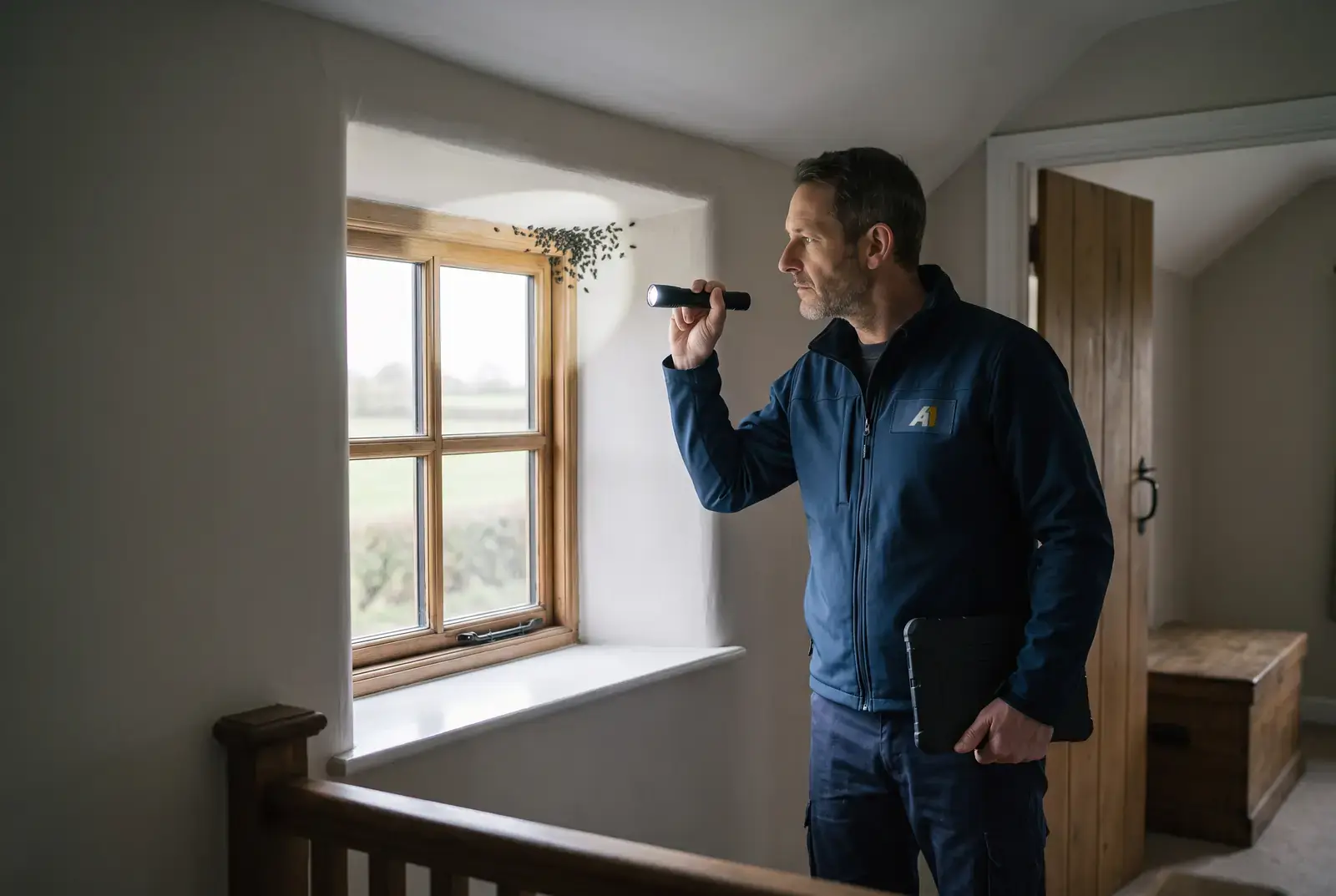
Cluster flies are slow, dark grey flies, a little larger than a house fly, that gather in lofts, upper rooms and window frames in autumn to spend the winter. They breed outdoors and are not known to cause illness, but thousands can build up in one roof space. A1 Pest Control treats cluster flies in homes and businesses.
Read the full Cluster flies guideLocal notes for Farnham
The Farnham Design Statement says hops thrive only on greensand, and that Farnham hop fields once reached Bear Lane. Grade II former hop kilns survive at Coxbridge Farm in Wrecclesham, built of red brick in the 19th century, and at Kiln Side Farm on Moor Park Lane. Hone's Yard has 17th century barns and a 19th century hop kiln.
Badshot Lea, towards Aldershot, has flint-fronted cottages and a village green, and the open gap between the village, Weybourne and Aldershot is protected as a Strategic Gap. Our overview of pest control in Farnham lists the other pests we treat in the area.
Local risk in Farnham
Houses with space above
Census 2021 puts 37.7 percent of Farnham households in detached homes and 23.8 percent in semi-detached ones. BPCA says cluster flies gather on sunny walls in the afternoon, then move into lofts and the corners of upper windows. A large roof space gives them room to build up in numbers. Our cluster fly page describes how to recognise them.
Open ground nearby
BPCA says females lay eggs on damp soil, and the larvae develop inside earthworms before the adults emerge. A house beside a garden, a field edge or the Badshot Lea gap has that soil close by. BPCA also notes that the flies may come back to the same building each year, and that proofing seldom stops them entirely.
What helps
- Vacuum clusters as they appear, then seal the bag.
- Clear dead flies from the loft floor, since they can feed carpet beetles.
- Caulk gaps around window frames and at the eaves.
Price and visit times
Starting from £200
Not sure what you have found? Send us a photo first. Evening and weekend visits are available on request, and a weekend visit costs £60 extra.
Request a callCustomer reviews in Farnham
Google rating: 5.0 from 6 reviews.