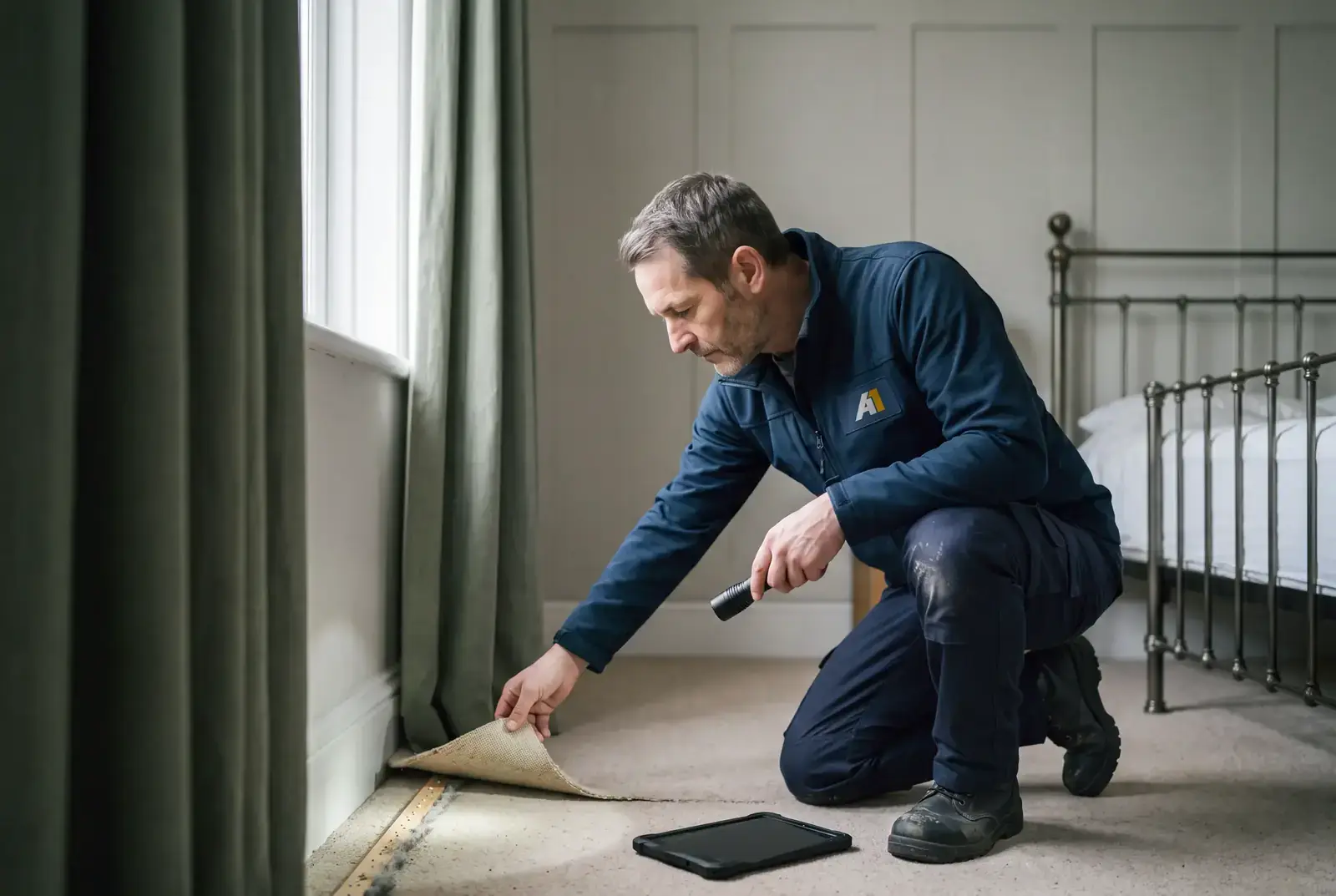
Carpet beetle removal in Southwater
The NBN Atlas, accessed 11 November 2026, lists a single recorded varied carpet beetle sighting within 5 km of Southwater, at Nuthurst in 2025. One sighting is a record of a beetle seen, not a measure of infestation. Adults are small, round beetles of 1.5 to 3.5 mm with white, orange and black patches, and they turn up on window sills. The larvae do the damage, eating wool, silk, fur and feathers. The Natural History Museum names birds’ nests in roofs as a major source of infestations, so a technician from A1 Pest Control looks in roof spaces and under the eaves for old nests before treating the rooms below. We cover the whole village of Southwater.
About Carpet beetles
Carpet beetles show up as small round beetles with a mottled pattern on window sills in spring, and as hairy brown larvae, called woolly bears, in carpets, wardrobes and airing cupboards. The larvae leave small clean holes in wool and natural fabrics. A1 Pest Control treats carpet beetles by finding the source, treating the affected areas and advising on prevention.
Read the full Carpet beetles guideLocal notes for Southwater
Council-tax records for 2026 put 5.4 per cent of Southwater’s 4,640 dwellings in homes built before 1919, about 250 houses. Historic England’s list holds 26 listed buildings within a 2.4 km square around the village. The NBN Atlas lists 516 swift and 735 feral pigeon sightings within 5 km, with 17 swifts and 32 pigeons in 2025. The swift records run from April to September, with 170 in May and 142 in June. The RSPB lists roof spaces among the places swifts nest. These are sightings of birds, not nests. See also our Southwater pest control page.
Local risk in Southwater
Old nests in roof spaces
The Natural History Museum says the larvae of the two-spot carpet beetle are often found in old houses with birds’ nests, where the larvae eat feathers, droppings and dead insect remains. The adults fly, so they can carry an infestation to a new household. The museum advises removing old nests and blocking cavities that nesting birds like. A nest in use is protected by the Wildlife and Countryside Act 1981, so it stays until the birds have finished.
Wool, silk and fur
The museum calls the varied carpet beetle the commonest Anthrenus beetle in homes, and says it is more frequent around London and the southern counties. Damage appears as small clean holes in woollens, rugs, silk and feathers, often under furniture or in a wardrobe.
- Vacuum skirting boards, under beds and the floor of wardrobes.
- Seal woollens in plastic bags before storing them.
- Freeze small items for a day or two at minus 18 degrees to kill larvae.
Photos of the larvae and their damage are on our carpet beetle page.
Price and visit times
No pest control service of any kind runs at Horsham District Council, carpet beetles included, and its page says owners and occupiers must keep their own land free of pests. It advises collecting three quotations and asking about a call-out fee. Tenants who find larvae in carpets or stored textiles speak to their landlord first. A1 takes carpet beetle bookings on 0800 059 0135.
Starting from £195
Not sure what you have found? Send us a photo first. Evening and weekend visits are available on request, and a weekend visit costs £60 extra.
Request a callCustomer reviews in Southwater
Google rating: 5.0 from 6 reviews.