Carpet beetle removal in Cranleigh
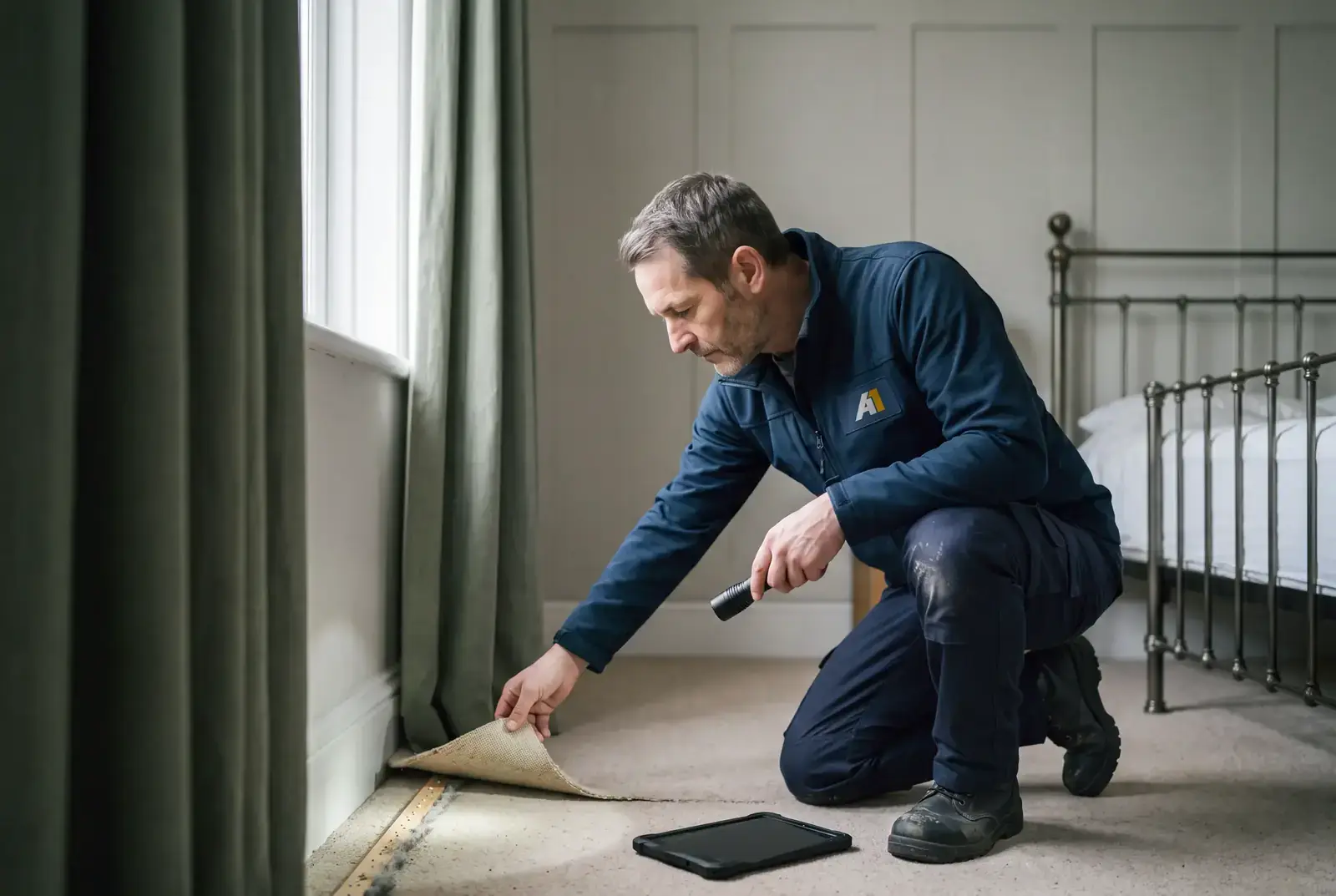
Three varied carpet beetle sightings sit on the NBN Atlas, accessed 11 November 2026, within 5 km of Cranleigh: one each in 2021, 2023 and 2024, all at Ewhurst. The beetle in a wardrobe is rarely the problem. Its larvae, covered in hairs, chew wool, fur, feathers and silk, and the Natural History Museum names old birds’ nests in roofs as a source that is easy to miss. Adults turn up on windowsills in spring on their way to flowers. Neat holes in woollens, shed skins and thin carpet along skirting boards give the larvae away. A1 Pest Control traces the feeding sites, treats them and lists what to clear or block. Our technicians visit homes across Cranleigh.
About Carpet beetles
Carpet beetles show up as small round beetles with a mottled pattern on window sills in spring, and as hairy brown larvae, called woolly bears, in carpets, wardrobes and airing cupboards. The larvae leave small clean holes in wool and natural fabrics. A1 Pest Control treats carpet beetles by finding the source, treating the affected areas and advising on prevention.
Read the full Carpet beetles guideLocal notes for Cranleigh
Older roofs come first in any search. About 600 of the 5,850 dwellings counted for council tax in the built-up area, 10.3 percent, went up before 1919, and the Museum links the two-spot carpet beetle with older houses that have birds’ nests in the roof. The NBN Atlas holds sightings of roof-level nesting birds in the same 5 km: 211 swift and 1,757 house sparrow, 49 of the sparrows in 2025. The RSPB places swifts inside roofs and house sparrows in roof spaces and eaves. Treat these as counts of birds, never of beetles. The other pests we treat are on the Cranleigh hub page.
Local risk in Cranleigh
Larval diet
Woolly bears, as the Museum calls the larvae, measure 4 to 4.5 mm and carry tufts of hair. They live on wool, silk, fur, feathers and skins, plus fluff, pet hair and dead insects, which lets them survive on little behind skirting boards. They stay in undisturbed corners such as wardrobe floors and airing cupboards, so harm builds for months unseen. Indoors the life cycle can take a year.
Roof nests
The Museum says to remove and destroy old nests in roofs and to net off cavities that birds like. Under the 1981 Wildlife and Countryside Act, a nest in use or being built is protected, so wait until the birds have left.
- Inspect roof spaces and eaves for abandoned nests after the season.
- Vacuum the skirting edges and beneath furniture.
- Keep any larvae or shed skins for us to identify.
The carpet beetle identification page lists the species found in homes.
Price and visit times
Waverley’s price list stops at six main pests, with cluster flies, carpet moths and Pharaoh ants as extras. Carpet beetles are not on it, so larvae in a home or business go to a private contractor, and A1 takes those calls on 0800 059 0135.
Starting from £195
Not sure what you have found? Send us a photo first. Evening and weekend visits are available on request, and a weekend visit costs £60 extra.
Request a callCustomer reviews in Cranleigh
Google rating: 5.0 from 6 reviews.