Pest guide
Wasp treatment: signs, treatment and prevention
Ongoing wasp management for businesses.
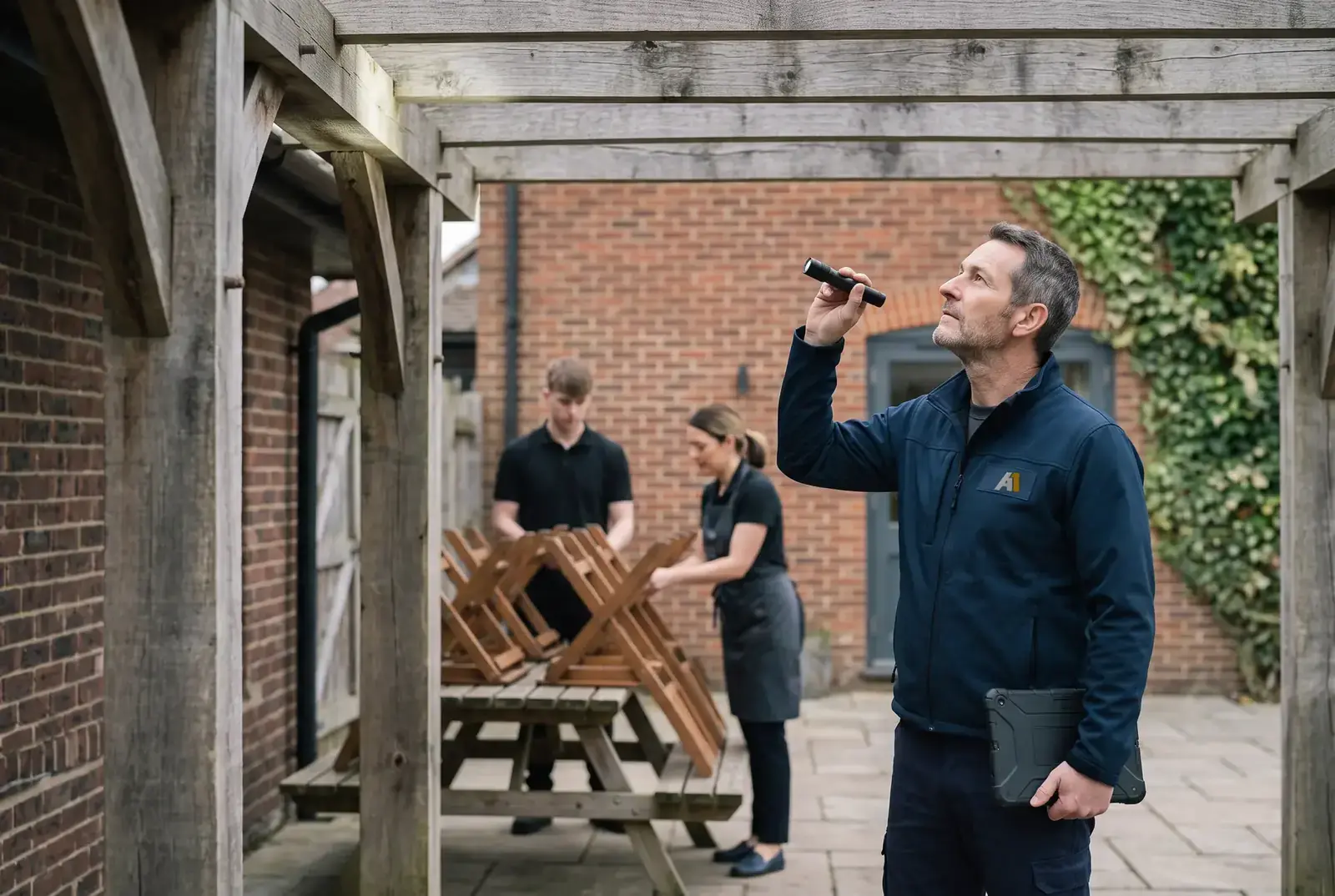
Wasp treatment for businesses is a seasonal programme: nest checks across your site from spring, treatment of each nest as soon as it is found, and advice on bins, food service and outdoor seating that keeps foraging wasps away from customers and staff in late summer. A1 Pest Control runs it for hospitality, schools, food sites and managed property.
What signs should I look for?
On a business site the question is less whether you have wasps and more where they are coming from. These are the signs that a site needs more than a one-off call-out:
- Nests found every year in the same roof voids, cladding, hedges, play equipment or outbuildings.
- Wasps around bins and outdoor seating from July onwards, landing on food and drinks.
- Stings reported by customers, pupils or staff, or entered in your accident book.
- Wasps in food areas such as kitchens, bakeries, serveries and loading bays.
- Complaints or reviews that mention wasps in a beer garden or terrace.
- Several buildings or sites where nests turn up at different times through the season.
Foraging wasps or a nest on site?
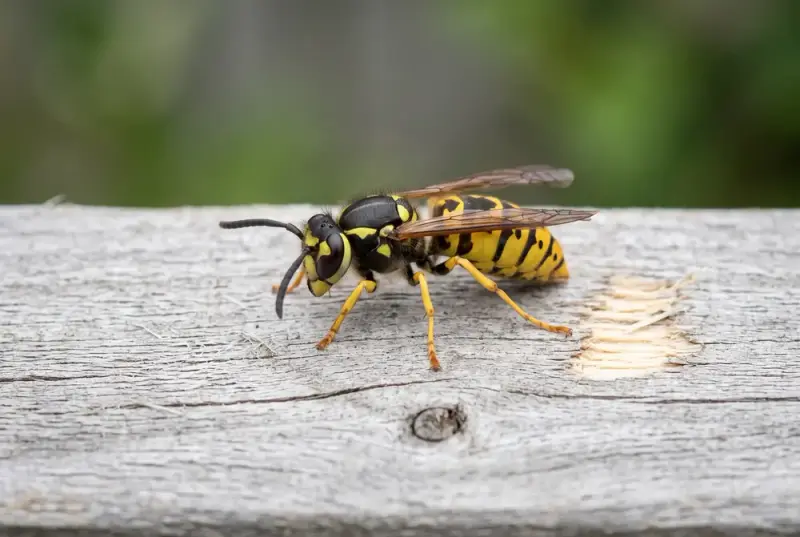
Wasps travel a few hundred metres from the nest to feed, and sometimes up to half a mile. Wasps at your tables may come from a nest on your site or from a neighbour’s garden. A survey tells you which, and that decides whether nest treatment or changes to how you handle food and waste will make the bigger difference. For single nests at home, see wasp nest removal.
Why are they a problem?
Wasps cost a business in three ways: stings, contaminated food and lost trade on the days customers want to sit outside.
Your duty of care
Employers must protect staff and anyone else affected by their work as far as reasonably practicable under the Health and Safety at Work etc. Act 1974, and under the Occupiers’ Liability Act 1957 occupiers owe visitors a duty of care for the state of their premises. A known nest beside a playground, entrance or terrace is a risk you are expected to manage. Some people have severe allergic reactions to stings, and the NHS treats anaphylaxis as a medical emergency.
Food safety
Wasps forage on bins, meat, fish and carrion, so they can carry harmful bacteria onto food and surfaces. Food businesses must have adequate procedures to control pests under food hygiene law, and wasps in a kitchen or servery count.
Trade and reputation
Late summer is when outdoor trade peaks and when wasps are at their most aggressive, because the colonies are declining and the foragers look for sugar. Customers who get stung, or find a wasp in their drink, tend to say so in reviews.
How do we get rid of them?
- Spring survey. Queens start new nests in April or May, so that is the time to check roofs, eaves, cladding, outbuildings, hedges and play areas for early nests, while they are small and easy to treat.
- Nest treatment. We treat each nest at the entrance with an insecticide spray, at a time that suits your opening hours, and mark the area until the colony has died, within 24 to 48 hours in most cases.
- Site advice. We look at bins, waste stores, food service and seating layout, and tell you what to change to draw fewer wasps to customers.
- Records. We write up every visit with what we found, what we treated and what we used, for your health and safety and food safety files.
Homes and business premises
For homes
If you have a single nest at home, you do not need a programme. Our wasp nest removal page explains how we find and treat one nest, and what to do about bees and hornets. You get a fixed price before any work starts.
For businesses
We run wasp programmes for pubs and restaurants with outdoor seating, schools and nurseries, food production sites, holiday parks, and managed estates where nests turn up in different blocks each year. One contact, one schedule and one set of records covers every site. See pest control for retail and hospitality, pest control for schools and commercial contracts.
How do I stop them coming back?
Nest treatment deals with the wasps living on your site. These steps reduce the wasps that fly in to feed:
- Use bins with tight lids, empty them often in late summer and keep them away from seating.
- Clear plates, glasses and bottles from outdoor tables as soon as customers leave.
- Serve drinks with lids or covers outside where you can, and keep sugary drinks behind the bar.
- Keep waste stores and recycling areas closed and rinse bins and containers.
- Fit fly screens to kitchen windows and keep external kitchen doors closed.
- Ask staff to report new nests early, and leave them alone until they are treated.
- Fill gaps in eaves, soffits and cladding over the winter, when nests have died off.
How much does treatment cost?
We price a wasp programme on the number of sites and buildings, the number of scheduled visits through the season, and how many nest treatments the programme includes. A one-off treatment of a single nest costs £170, and weekend visits cost £60 extra.
Your questions, answered.
What does a wasp treatment programme include?
A wasp programme follows the nest season. Queens start new nests in April or May and a colony is at its largest in August and September, so the work centres on a spring survey for early nests, checks through the summer, advice on bins and food service, and a written record of each visit. The aim is fewer stings and fewer wasps at your tables in late summer, with records that show you managed the risk.
When should a wasp programme start?
In spring. Queens start new nests in April and May, and a nest found then is small and easy to treat. By July and August the same nest can hold thousands of wasps and sit right next to your busiest outdoor space. Starting early also gives you time to fix bins, waste stores and gaps in the building before the season peaks.
What if we find bees on site?
Bees are not treated like wasps. A honey bee swarm can often be collected by a local beekeeper through the British Beekeepers Association. Bumblebee nests last a few months and the Bumblebee Conservation Trust advises leaving them in place, with a barrier around the entrance if it is near people. We can help you identify what you have.
Will treating nests stop wasps at our tables?
It stops the wasps from nests on your site. Wasps also forage a few hundred metres from their nest, sometimes up to half a mile, so some will come from gardens and trees nearby. That is why the programme pairs nest treatment with changes to bins, waste stores and how you serve food and drink outside.
Tell us what's happening.
Share your postcode and the signs you have noticed.