Squirrel removal in Southwater
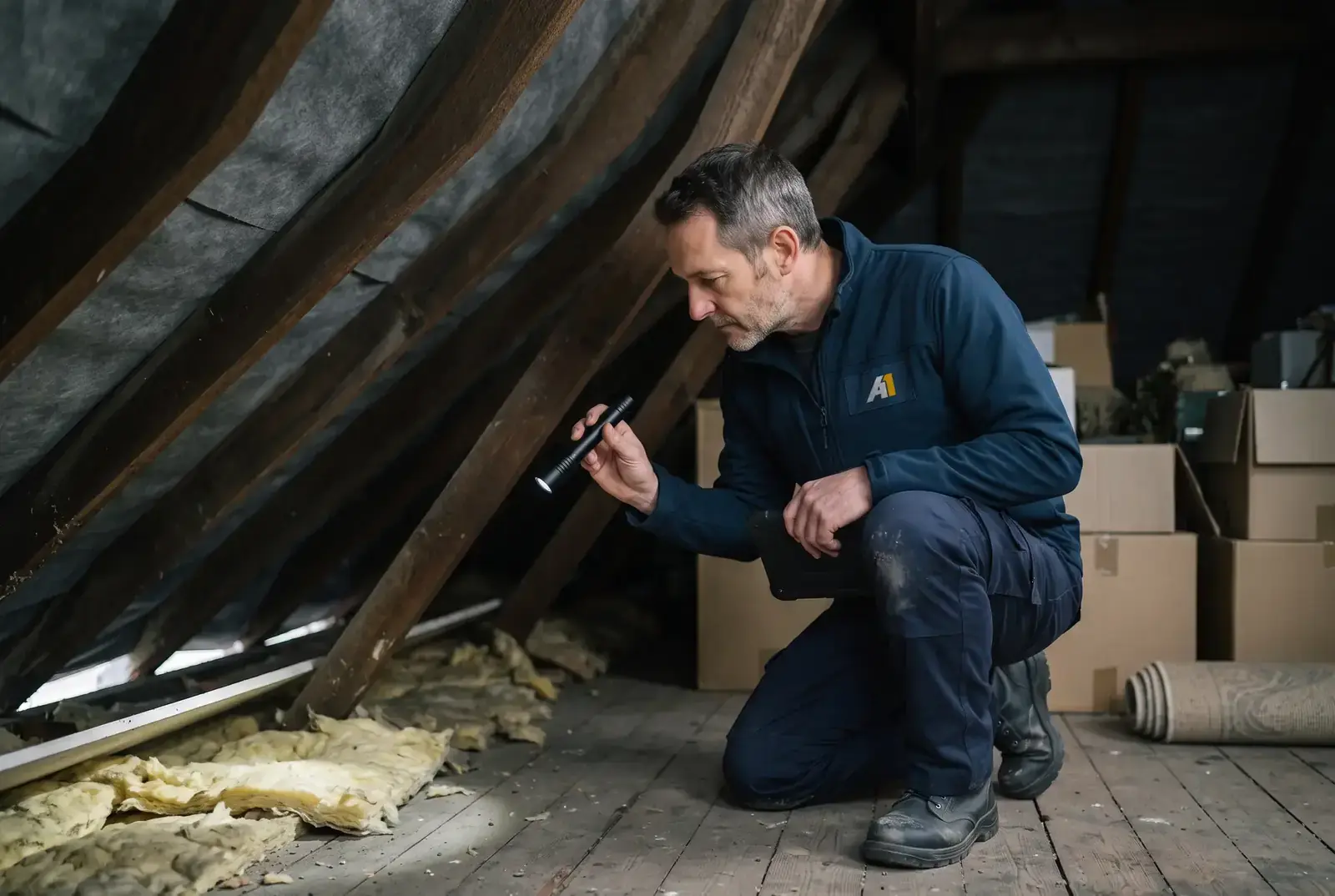
In Southwater, grey squirrels are removed with live traps by A1 Pest Control, whose technicians identify the animal and locate the entry points. Technicians cover loft jobs across the village of Southwater. Southwater’s 5 km circle holds 752 recorded grey squirrel sightings on the NBN Atlas, accessed 11 November 2026, with 2021 the highest year at 75 and 2025 at 24. A sighting records a squirrel seen, so none of these counts measures infestation. A drey of leaves and shredded material in a corner of the loft, chewed timber and torn insulation are all signs of squirrels, as are running, thumping and rolling sounds above the ceiling in the early morning and again before dusk, since squirrels are active by day. What we need to know is where they are heard and at what time of day.
About Squirrels
Grey squirrels in a loft show themselves through running, scratching and thumping overhead in the early morning and late afternoon, chewed timber and cables, and torn insulation. A1 Pest Control deals with squirrels by confirming they are squirrels, removing them by legal means, and proofing the entry points once the roof space is empty.
Read the full Squirrels guideLocal notes for Southwater
Natural England’s ancient woodland inventory lists 201 woods covering 547 ha within 5 km of the village centre, the two largest single blocks being 57 ha and 43 ha, and 20 ha of St Leonard’s Forest falls inside the same circle. Southwater Country Park adds 70 acres with three lakes. For 2003 to 2016 the records total 342, with a high of 64 in 2011. Since 2017 the yearly counts have been 29, 45, 31, 58, 75, 59, 48, 29 and 24, and 2026 has 5 so far. Anything else we offer here can be found on the pest control in Southwater page.
Local risk in Southwater
Month by month
Counts are highest in May, at 114, followed by 96 in June and 94 in April. January has 60, and February and December 57 each. The low is 33, in July. A loft can have squirrels in winter as well as spring.
Gnawing in the loft
A squirrel gnaws to keep its teeth short, and in a loft it chews timber, cables, plastic pipes and water tanks and pulls insulation apart for a nest. Where a pipe has been gnawed, water can come through the ceiling, and gnawed wiring can start a fire.
The legal position
Government guidance lists the grey squirrel among the widely spread invasive non-native animals in England and Wales. A trapped squirrel cannot be relocated to a different wood, since none may be released, kept or moved.
- Cut back any branch that overhangs the roof or reaches the eaves.
- Look along fascias, soffits and the join between roof and wall for chewed holes.
- Walls and roofs should have no bird feeders near them.
A list of the signs and a description of a visit are on our squirrel removal page.
Price and visit times
Removing squirrels is not something Horsham District Council does, and its pest control page leaves the work to private companies. Tenants are directed to take a loft problem to their landlord first, and owners and occupiers are asked to keep their land free of pests. A1 traps grey squirrels live and takes bookings on 0800 059 0135.
Starting from £240
We visit the next day as standard, and often the same day. Evening and weekend visits are available on request, and a weekend visit costs £60 extra.
Request a callCustomer reviews in Southwater
Google rating: 5.0 from 6 reviews.