Pest guide
Moths: signs, treatment and prevention
Clues around fabrics and stored items.

Moths in a home are a problem when they are clothes moths or pantry moths. Clothes moths leave holes in wool, silk and fur, with fine silk webbing in wardrobes and drawers. Pantry moths leave webbing in flour, cereal and nuts. A1 Pest Control identifies the moth, treats the affected storage and fabrics, and sets traps to check the result.
What signs should I look for?
Most moths you see indoors at night are garden moths drawn in by the lights, and they do no harm. The ones that damage your belongings are small, plain and seldom seen in flight.
- Holes in natural fibres: irregular holes in jumpers, suits, scarves, blankets and cushions made of wool, cashmere, silk or fur, often on the parts that are folded or hidden.
- Silk webbing and tubes: fine silky threads, small tunnels or flat cases stuck to fabric, in the seams and folds of clothes and in drawer corners.
- Larvae: small cream-coloured caterpillars, up to about 13 mm long, with a brown head, inside folds or under collars.
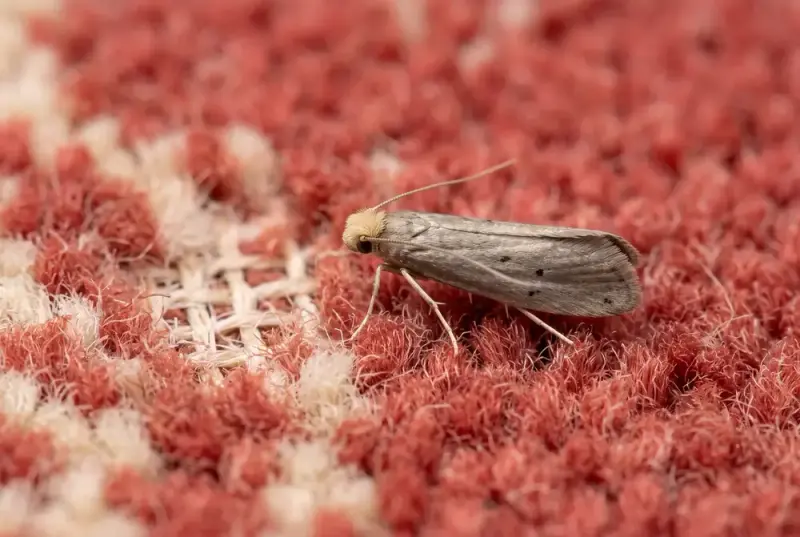
- Small golden or grey-brown moths: about 1 cm long, that run or flutter across fabric and away from light rather than flying to it.
- Webbing in food: clumped flour, cereals, nuts, dried fruit or pet food held together with silk, often the first sign of pantry moths.
- Larvae on walls and ceilings: pale caterpillars climbing kitchen walls or crossing the ceiling, looking for a place to pupate.
Clothes moth or pantry moth?
- Common clothes moth: golden wings, a wingspan of 12 to 17 mm and reddish hairs on the head. Its larvae spin silk tunnels on fabric.
- Case-bearing clothes moth: silver grey-brown wings with faint dark spots. Its larvae carry a small silk case made from the fibres they eat.
- Indian meal moth (pantry moth): forewings purplish brown with a pale buff base, found in kitchen cupboards and food stores rather than wardrobes.
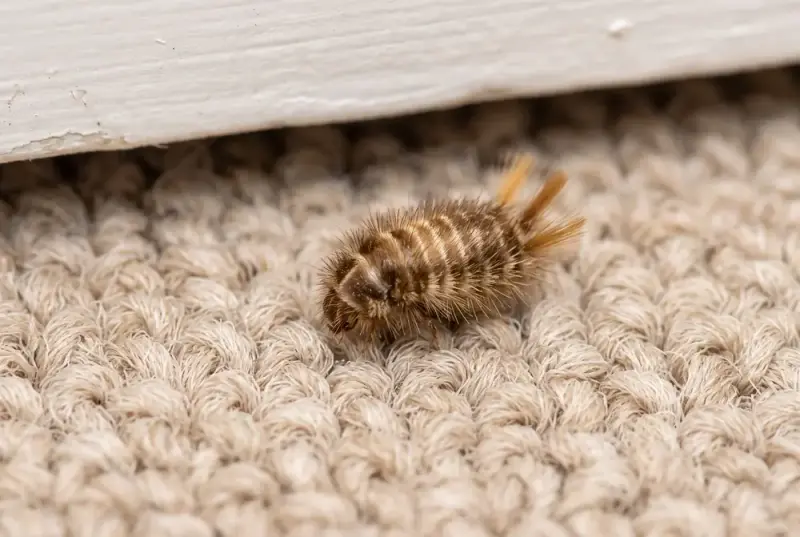
Holes in a carpet or rug? See carpet moth treatment. Small clean holes with no webbing, and hairy brown larvae? That points to carpet beetles.
Why are they a problem?
Adult moths do not eat anything. The damage comes from the larvae, which can feed for anything from a month to two years before they turn into moths, depending on the warmth of the room.
Clothes and stored textiles
Clothes moth larvae feed on keratin, the protein in wool, silk, fur and feathers. They prefer dark, undisturbed places and fabrics with traces of sweat or food, so a jumper put away unwashed, a box of old blankets or a wardrobe that stays shut all summer are typical targets. The Natural History Museum reports that clothes moth infestations have become more common in recent years.
Food stores
Pantry moth larvae bite through paper, card and thin plastic packaging, so one infested bag can spread to the rest of the cupboard. The Natural History Museum notes they breed all year in heated buildings. In food businesses they spoil stock and must be dealt with under food hygiene law.
Valuable items
Wedding dresses, uniforms, furs, tapestries, wool suits and family heirlooms are often stored for years without being checked. By the time you find the damage, the larvae may have been feeding for more than one season.
How do we get rid of them?
- Identify the moth. The technician confirms whether it is a clothes moth, case-bearing moth or pantry moth and finds where the larvae are feeding.
- Prepare the room. We ask you to empty wardrobes and drawers, wash or dry clean what can be cleaned, and bag anything that cannot, ready for freezing.
- Treat storage and fabrics. We spray wardrobes, drawers, shelves, the room’s carpet edges and any untreatable fabrics with an insecticide suited to textiles. For pantry moths we clear the cupboards and treat the cracks and corners where larvae pupate.
The Natural History Museum advises that freezing at minus 20°C for a week, or heating fabric above 49°C for 30 minutes, kills every life stage. A freezer and a hot wash do this for items that can take it.
Homes and business premises
For homes
Moths in a bedroom or a spare room are often missed until a favourite jumper has holes. We treat the wardrobes, drawers and stored fabrics, tell you what to wash, freeze or throw away, and give you a fixed price before any work starts.
For businesses
For clothing retailers, dry cleaners, hotels, theatres, museums, historic houses and food stores we survey the site, set up pheromone monitoring, treat stock rooms and storage, and report on catches over time. See pest control for retail and hospitality and food premises.
How do I stop them coming back?
- Wash or dry clean wool and silk before you store it. Moths go for clothes with sweat or food on them.
- Store out-of-season clothes in sealed bags or airtight boxes.
- Open wardrobes, shake out clothes and vacuum the floor of the wardrobe every few weeks.
- Check stored blankets, furs and heirlooms at least twice a year.
- Keep flour, cereals, nuts, dried fruit and pet food in sealed hard containers, and use older stock first.
- Hang pheromone traps in wardrobes and storage rooms to spot moths early.
How much does treatment cost?
Moth treatment, by the size of the property:
- 1 bedroom: £210
- 2 bedrooms: £265
- 3 bedrooms: £310
- 4 to 5 bedrooms: £410
A revisit costs £140. Weekend visits cost £60 extra. We price retail, heritage and food sites on a survey.
Your questions, answered.
How do I know if I have clothes moths?
Look for irregular holes in wool, cashmere, silk or fur, fine silk webbing or small cases on the fabric, and small cream larvae in folds and seams. The adult moths are small, golden or grey-brown, and tend to run across fabric or flutter into dark corners rather than fly to the light.
Do cedar and lavender keep moths away?
They do not kill the eggs or larvae already in your clothes, so they cannot clear an infestation. Clean clothes stored in sealed bags or boxes, checks every few weeks and pheromone traps do more to protect them. Once larvae are established in a wardrobe, the fabrics need cleaning or freezing and the storage needs treating.
How do I get rid of pantry moths?
Throw away any food with webbing or larvae, in a sealed bag outside. Empty the cupboard, vacuum the corners, shelf supports and hinges, and wipe it down. Store dry food in sealed hard containers from then on. If moths keep appearing after a few weeks, larvae may be pupating in cracks or another cupboard, and a professional treatment will reach them.
Can I save clothes that have moth damage?
You can stop the damage spreading. Freezing an item at minus 20°C for a week, or washing it above 49°C if the fabric can take it, kills eggs and larvae. Dry cleaning works too. Holes already made stay, but a tailor or invisible mender can often repair good pieces. Check the rest of the wardrobe, because larvae spread to the items next to them.
Why do I still see moths after treatment?
Moths can keep emerging for a few weeks from pupae that were already formed, and some come from another room, the loft or stored items we have not found yet. The pheromone traps tell us whether numbers are falling.
Is it moths or carpet beetles?
Moth larvae leave silk webbing, tunnels or cases on the fabric they eat. Carpet beetle larvae are hairy and brown, leave small clean holes with no webbing, and shed skins that look like tiny husks. Small round mottled beetles on a window sill in spring are adult carpet beetles. The treatment is similar, but the source is often different.
Tell us what's happening.
Share your postcode and the signs you have noticed.