Mite treatment in Southwater
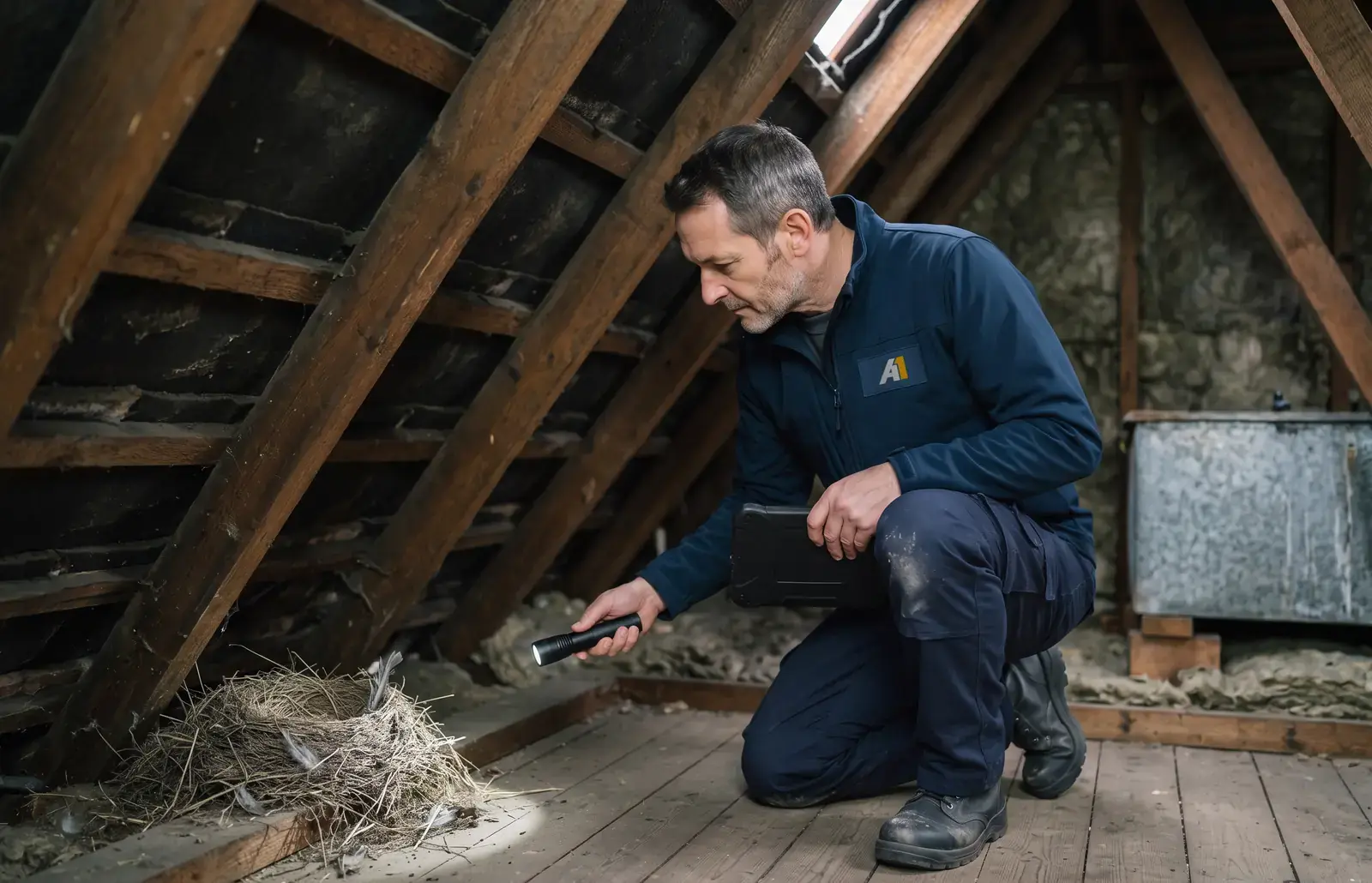
The British Pest Control Association names house sparrows, starlings and house martins among the birds involved in bird mites, and the NBN Atlas, accessed 11 November 2026, holds 4,071 sparrow, 3,421 starling and 336 house martin sightings within 5 km of Southwater. Those figures count birds seen, not mite cases. The mites become a problem for people when a nest goes empty: they leave it to look for a new meal, often in a room directly under the roof. Householders report very itchy bites and tiny specks that move, with an old nest in the roof space or on a ledge nearby. Customers get A1’s preparation sheet ahead of every mite treatment. A1’s technicians go to addresses across Southwater.
About Mites
Mites are tiny eight-legged relatives of spiders, often too small to see. The ones that need pest control are usually bird mites from old nests in the loft or eaves, red clover mites on walls and windows, and flour mites in damp food. A1 Pest Control treats mites in homes and businesses.
Read the full Mites guideLocal notes for Southwater
The house martin counts peak in summer: 68 sightings in June, 64 in May, 63 in September and 61 in July, against 5 in October and 2 in November, after the birds have left. By year they run 24 in 2017, 25 in 2018, 13 in 2019, 28 in 2020, 7 in 2021, 14 in 2022, 9 in 2023, 5 in 2024 and 15 in 2025. House sparrow sightings dropped from 202 in 2020 to 65 in 2024, then reached 78 in 2025, and starling sightings dropped from 150 in 2020 to 59 in 2024, then reached 81. For other pests in RH13, see our Southwater pest control hub.
Local risk in Southwater
Mites outlast the birds
The BPCA says mites can persist in a loft after the birds depart, and then turn to people and pets as hosts. Itching with no sign of a nest is a matter for a pharmacist or GP, and the NHS sends scabies, which a separate mite causes, to a pharmacist as well.
Leave active nests alone
A nest that is occupied or under construction is protected, and it is an offence under the Wildlife and Countryside Act 1981 to intentionally damage or destroy it. March to September is the RSPB’s main nesting season, and 329 of the 336 martin records here fall between April and September. Treatment waits until the birds have left.
- Check roof spaces and eaves for empty nests once autumn arrives.
- Put bedding and clothes from affected rooms through a hot wash.
- Vacuum the rooms under the roof and empty the cleaner outside.
Clover mites and flour mites have their own section on the mite treatment page.
Price and visit times
Horsham District Council treats no pest of any kind, mites included. Its page asks owners and occupiers to look after their own land. A1’s preparation sheet goes out ahead of each mite visit, and the number to book is 0800 059 0135.
Starting from £210
We send a preparation sheet first and visit once your home is ready, usually the day after next. Evening and weekend visits are available on request, and a weekend visit costs £60 extra.
Request a callCustomer reviews in Southwater
Google rating: 5.0 from 6 reviews.