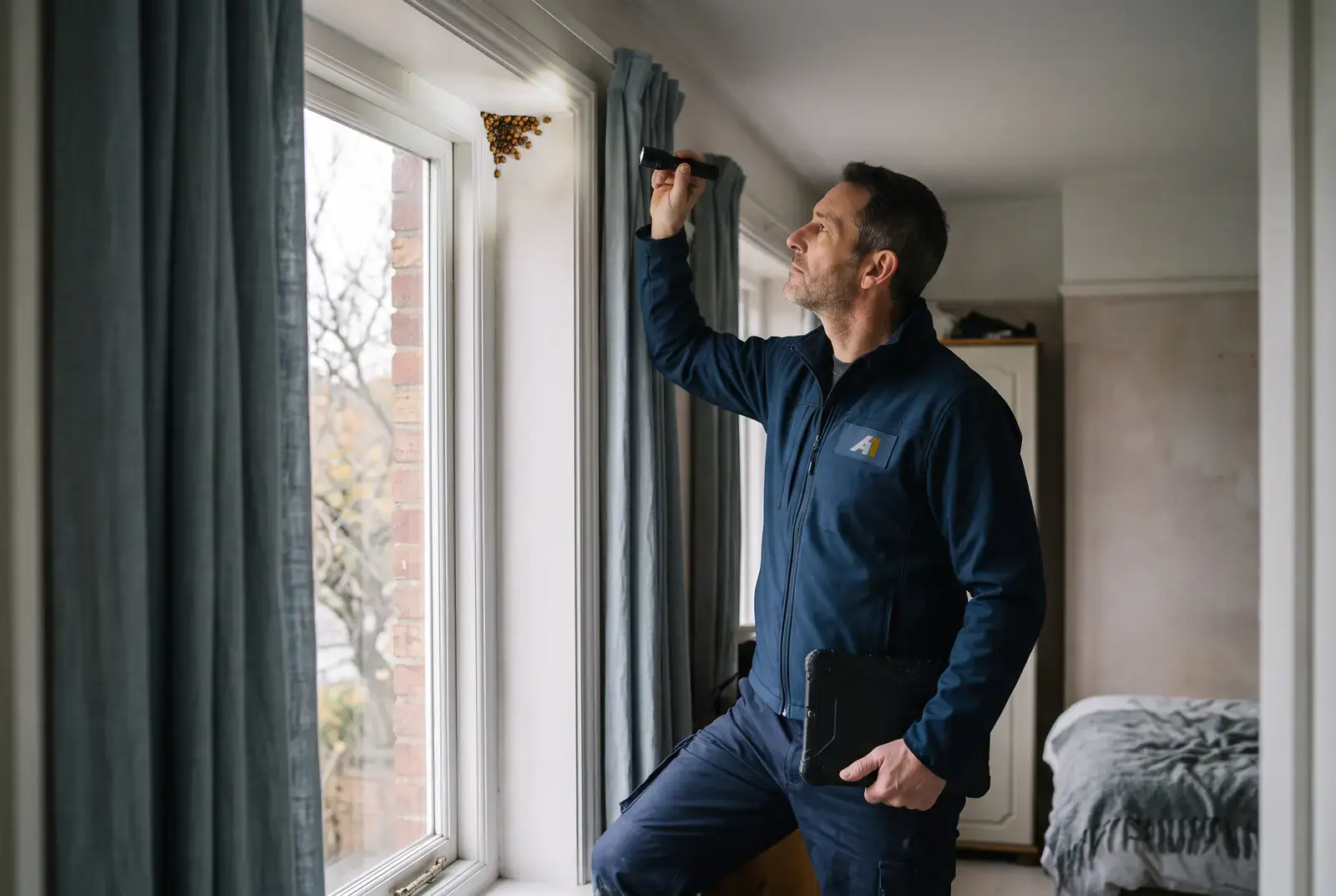
Ladybird removal in Eastbourne
The RHS says harlequin ladybirds became established in Britain in 2004, and the NBN Atlas, accessed 11 November 2026, holds 84 recorded harlequin sightings within 5 km of Eastbourne. October is the busiest month, with 33. Harlequins pack into window frames, loft corners and sunny walls in autumn, and a disturbed one exudes a yellow liquid that stains furnishings. A1 Pest Control deals with the groups, in flats, houses and shops, that come back to the same windows each year. Technicians cover the whole of Eastbourne. Tell us which rooms and windows they gather at, and on which side of the building. Weekend visits cost £60 extra, and you can book on 0800 059 0135.
About Ladybirds
Ladybirds that crowd into window frames and lofts in autumn are often harlequin ladybirds, a non-native species first recorded in Britain in 2004. They do not damage buildings, but they smell and can stain fabrics when disturbed. A1 Pest Control deals with large groups that come back to homes and businesses each year.
Read the full Ladybirds guideLocal notes for Eastbourne
The first Eastbourne harlequin record is from 2007, a year with 30 sightings. Counts were 16 in 2013, 6 in 2016, 5 in 2018, 9 in 2025 and 4 so far in 2026. The year 2007 carries 30 of the 84 sightings, over a third. These are ladybirds logged, not homes with a cluster. The RHS says the harlequin was not deliberately introduced to Britain and is now widespread in England. It describes the larvae as charcoal grey with two orange stripes, up to about 1 cm long, feeding on aphids and other insects on plants. Beyond ladybirds, the Eastbourne hub lists every pest we treat in the town.
Local risk in Eastbourne
Winter shelter
The RHS says many ladybird species overwinter in groups inside buildings, and the harlequin is no exception. A large group indoors can cause alarm.
Stains
The clear yellow liquid they exude can stain curtains, sills and other furnishings, so brush a cluster into a container instead of crushing it.
Telling them apart
Harlequins are 8 to 10 mm and very variable. The RHS names black with two red spots and orange with 18 black spots as the commonest forms. Native ladybirds can look similar, and the RHS says it is often hard to say which species you have.
- Seal gaps round window frames before autumn.
- Sweep a cluster into a tub with a soft brush.
- Wipe stains from fabric at once.
- Check loft hatches and eaves in early autumn.
- Clean sills and curtains once the group has gone.
Colour forms are laid out on the ladybird page.
Price and visit times
If you rent, mention a yearly gathering to the landlord, since gaps in frames are the way in. A1 Pest Control takes ladybird bookings for Eastbourne homes and shops on 0800 059 0135.
Starting from £190
Not sure what you have found? Send us a photo first. Evening and weekend visits are available on request, and a weekend visit costs £60 extra.
Request a callCustomer reviews in Eastbourne
Google rating: 5.0 from 6 reviews.