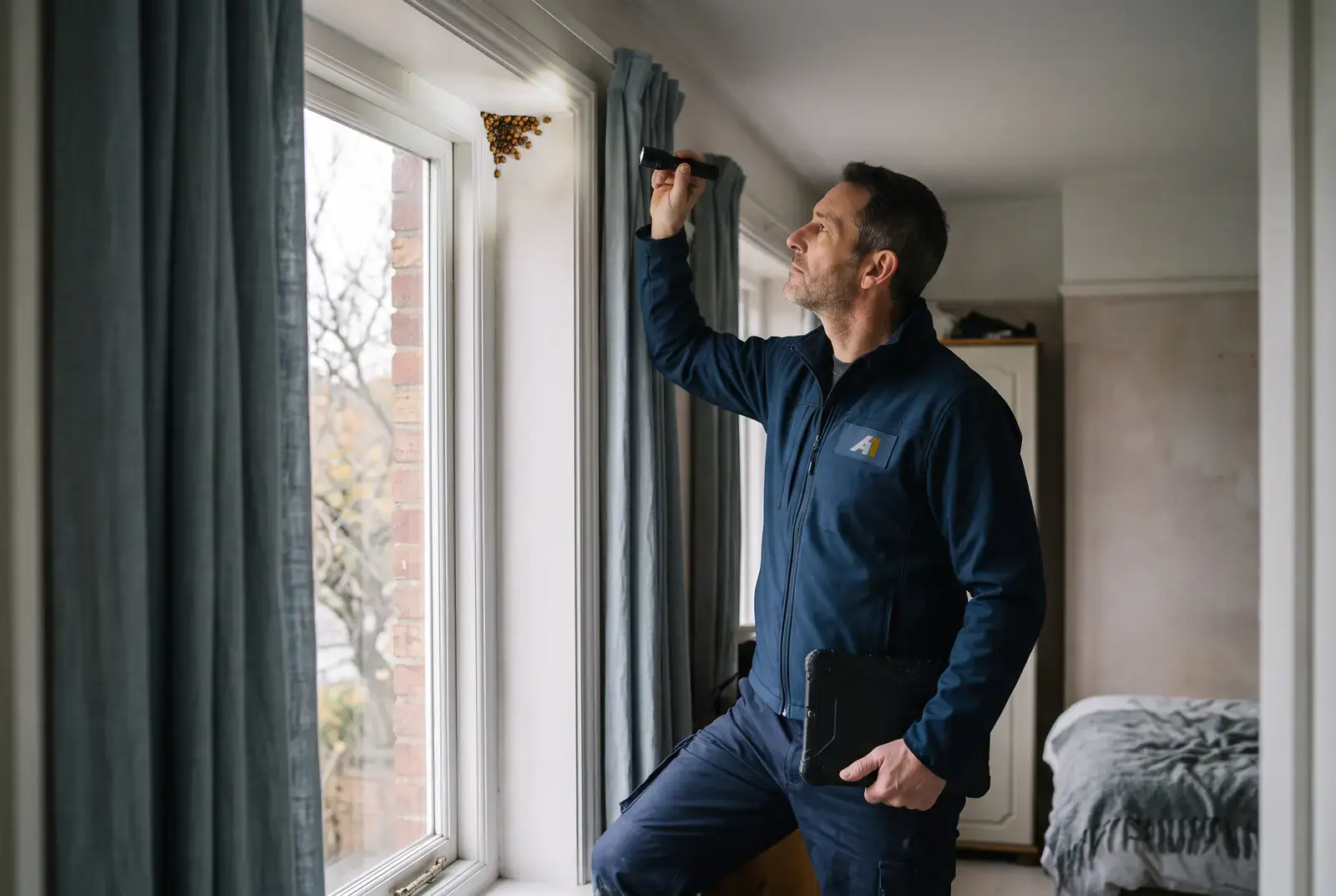
Ladybird removal in Dorking
The NBN Atlas holds 95 recorded harlequin ladybird sightings within 5 km of Dorking, and the first came in 2006, two years after the species was first recorded in Britain. The Royal Horticultural Society says that in autumn adults look for overwintering sites and form large groups, most visible on the south side of buildings. Ladybirds that crowd round window frames, sit in the corners of lofts and wander about rooms on mild winter days are often harlequins. They do no damage to the building, but they smell and stain pale fabrics when disturbed. A1 deals with groups that return every autumn. The company’s technicians visit homes and offices across Dorking. Tell us which windows they gather on.
About Ladybirds
Ladybirds that crowd into window frames and lofts in autumn are often harlequin ladybirds, a non-native species first recorded in Britain in 2004. They do not damage buildings, but they smell and can stain fabrics when disturbed. A1 Pest Control deals with large groups that come back to homes and businesses each year.
Read the full Ladybirds guideLocal notes for Dorking
By year the records read 9 in 2006, 12 in 2007, 8 in 2010, 8 in 2016, 4 in 2017, 9 in 2020, 6 in 2025 and 2 so far in 2026. June has 27 records, October 16, May 13 and November 11, so 27 of the 95 fall in October and November, the autumn weeks when the RHS says adults seek overwintering sites. Named places include Box Hill, with several records from the hill itself. The quietest years were 2011, 2018 and 2019 with one record each, and the 2025 count of 6 is the highest since 2020. Counts are from the NBN Atlas, accessed 11 November 2026. Browse the rest of our local pages from the Dorking hub.
Local risk in Dorking
Stains and smell
A disturbed ladybird releases a yellow fluid that smells and can stain curtains, carpets and pale furnishings.Harlequins are 5 to 10 mm and come in many patterns, from black with two red spots to orange with up to 19 black spots.
Native ladybirds shelter too
The RHS says there is no way to control harlequins without also harming native ladybirds and other insects. A technician checks what is in the group before any treatment, because native 2-spot and 7-spot ladybirds also winter in buildings.
Getting them out
Brush a group into a container and release it outdoors on a mild day, or vacuum it. Sealing gaps around loose windows and doors means fewer get in next autumn.
- Check the south-facing windows first.
- Do not crush a cluster on fabric.
- Photograph one for us to identify.
Our harlequin ladybird guide shows how to tell them apart.
Price and visit times
Mole Valley District Council does not provide a pest control service, and ladybirds are not part of any council offer. A large winter group in a house or office is a private job. A1 deals with ladybird groups on 0800 059 0135.
Starting from £190
Not sure what you have found? Send us a photo first. Evening and weekend visits are available on request, and a weekend visit costs £60 extra.
Request a callCustomer reviews in Dorking
Google rating: 5.0 from 6 reviews.