Flea treatment in Worthing
Worthing has a published map of where dogs go. Public Space Protection Order No 4, dated 18 December 2025, puts a lead on every dog on all streets, allotments, car parks and cemeteries, and on a list of named seafront and park sites. From 1 May to 30 September the beach between Splash Point and Heene Road is closed to dogs. A cat flea is 2 mm long and dark brown, and the female needs a blood meal from her natural host before she can lay viable eggs, the councils’ flea advice says. A1 Pest Control sends a preparation sheet ahead of every flea treatment. Technicians visit homes in BN11 to BN14 in Worthing. Tell us whether a dog, a cat or neither lives in the house.
About Fleas
Fleas show up as itchy bites around the ankles, a pet that keeps scratching, and tiny black specks in its coat or bedding that turn red on wet tissue. A1 Pest Control treats fleas with a residual spray of floors and soft furnishings once your pets have been treated, and tells you how to stop them returning.
Read the full Fleas guideLocal notes for Worthing
The lead list names 11 Worthing sites: the promenade from George V Avenue to Windsor Road, the Pier, Denton Gardens, Beach House Park, Field Place Grounds, Church House Grounds, Marine Gardens, Palatine Park, the Goring-by-Sea seashore footway, Manor Sports Ground and Heene Terrace Gardens. Dogs are barred from Highdown Gardens, Heene Road Cemetery and enclosed children’s play areas, and from the beach between the two Goring-by-Sea boat ramps during the same summer months. The order allows no more than six dogs per person. Worthing Beach runs 5 miles from Ferring to Lancing. These rules describe where dogs go, not where fleas are. The Worthing hub lists our other local pages.
Local risk in Worthing
Where the eggs go
The council’s flea page says a female lays 10 to 15 eggs a day. The eggs are oval, white and about 1 mm long, slightly sticky, and most drop from the pet into the surroundings and hatch within a few days.
The larvae
Larvae do not feed on blood. They eat organic debris, including the partly digested blood in adult flea droppings, moult about three times in a month, then spin a silken cocoon.
Waking up
Pupae resist hard conditions, and the adults emerge when they sense vibration and a rise in carbon dioxide. That is how footsteps in an empty room can start an outbreak.
Bites and tapeworms
Fleas can pass tapeworms to an animal that swallows them while grooming. Children often have bites in several places because they sit and play on the floor.
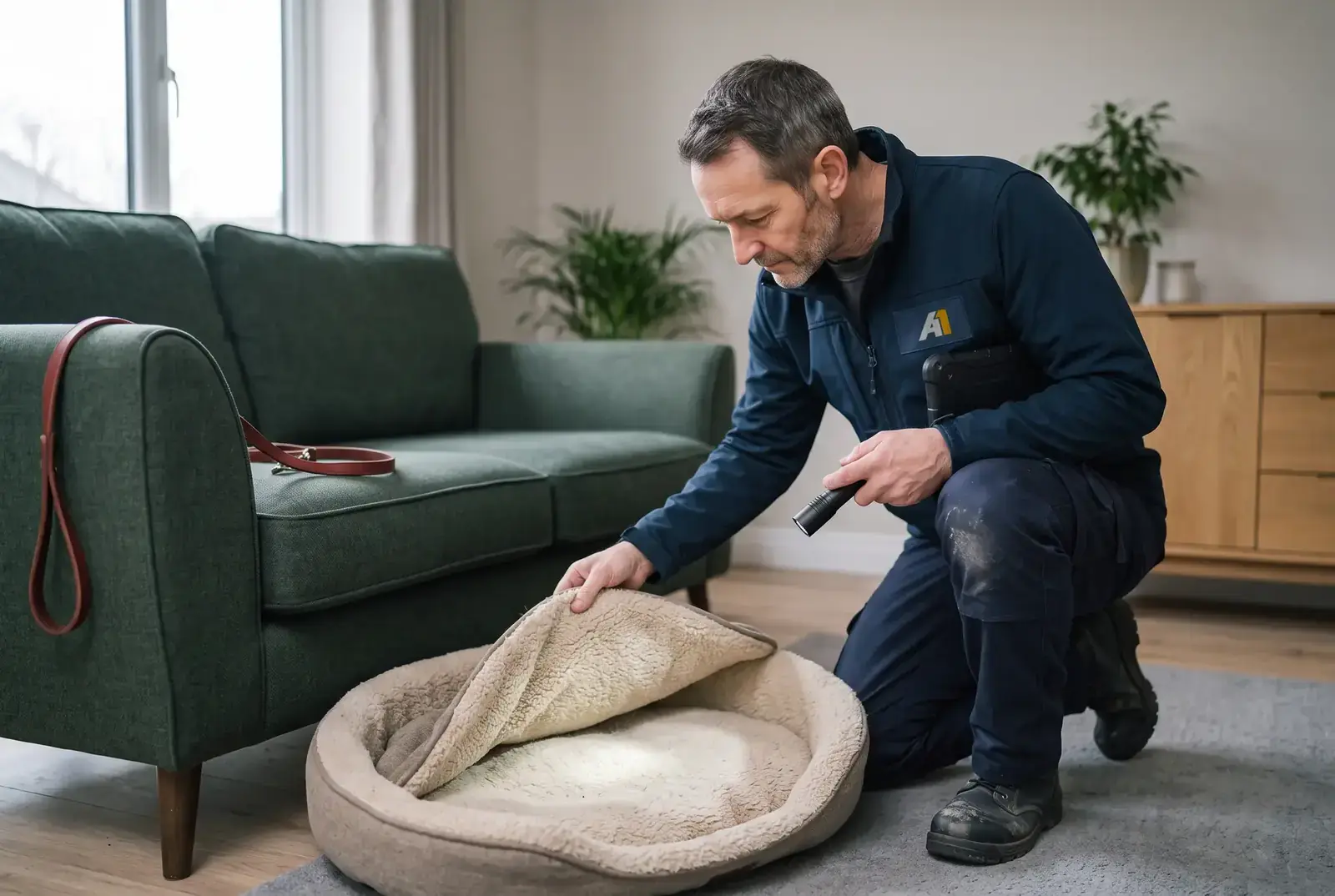
- Clear the floor round the pet’s bed before the visit.
- Read the preparation sheet when it arrives and ask about anything unclear.
- Keep the pet’s vet check-ups going alongside the treatment.
The flea treatment page shows each stage.
Price and visit times
Worthing Borough Council does not treat fleas. The shared Adur and Worthing website says the councils run no pest control service. A tenant should raise fleas with the landlord or agent first. To book a flea treatment in BN11 to BN14, ring A1 on 0800 059 0135.
Starting from £210
We send a preparation sheet first and visit once your home is ready, usually the day after next. Evening and weekend visits are available on request, and a weekend visit costs £60 extra.
Request a callCustomer reviews in Worthing
Google rating: 5.0 from 6 reviews.