Pest guide
Carpet moths: signs, treatment and prevention
Damage to carpets and rugs.
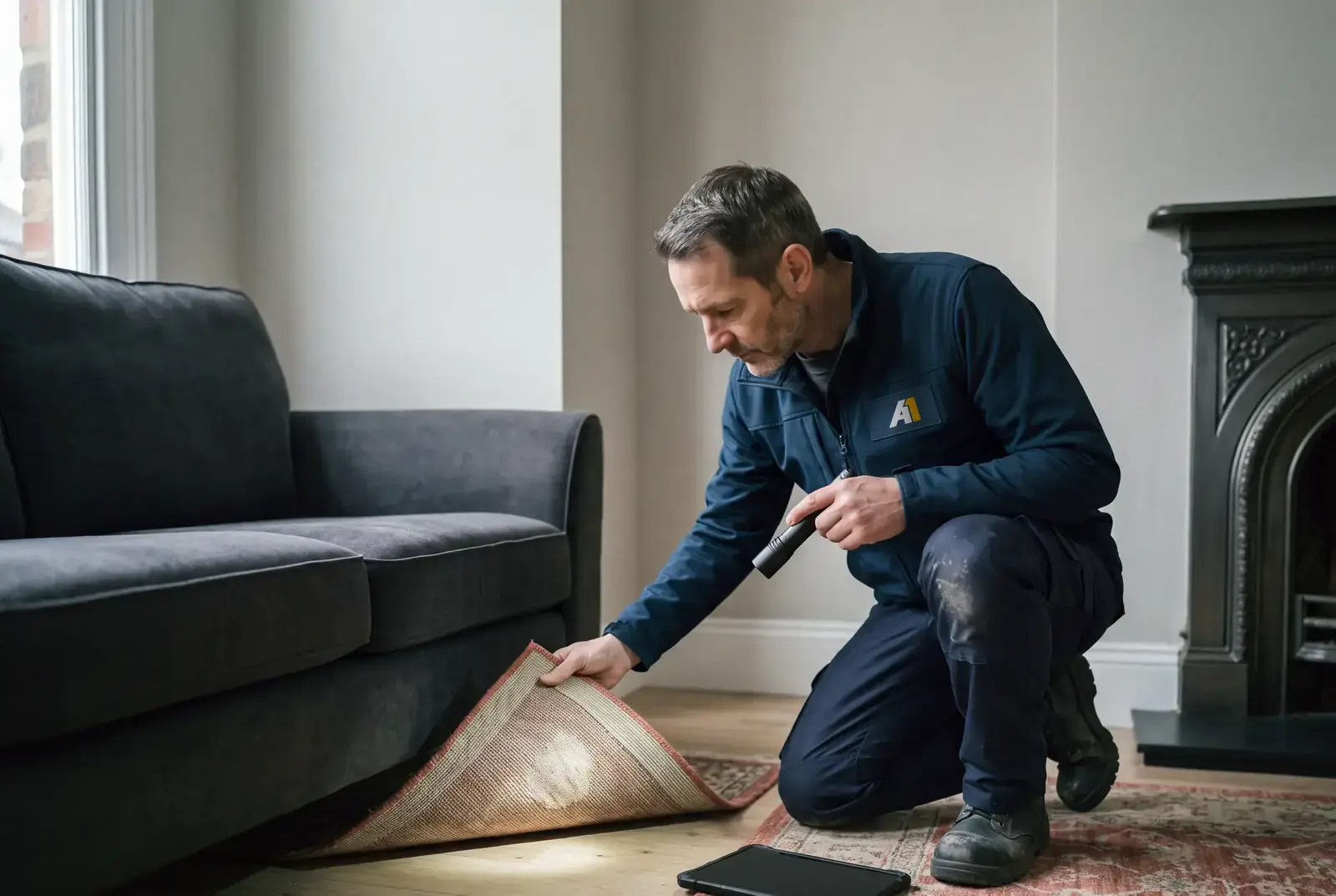
Carpet moths show up as bald or thinning patches in wool carpets and rugs, often along the edges, under beds and sofas and behind doors, with small cream larvae and fine silk webbing in the pile. A1 Pest Control treats carpet moths by clearing the room, spraying the carpet and edges with a residual insecticide, and monitoring with pheromone traps.
What signs should I look for?
Carpet damage starts where nobody walks or vacuums. Move the furniture and look at the edges of the room.
- Bare or thin patches: pile eaten down to the backing, along skirting boards, under beds, sofas and chests of drawers, behind doors and under rugs that are never moved.
- Loose tufts: fibres that come away in your hand or pile up in the vacuum.
- Silk webbing and tunnels: fine silk threads and tubes in the pile, often with crumbs of chewed fibre.
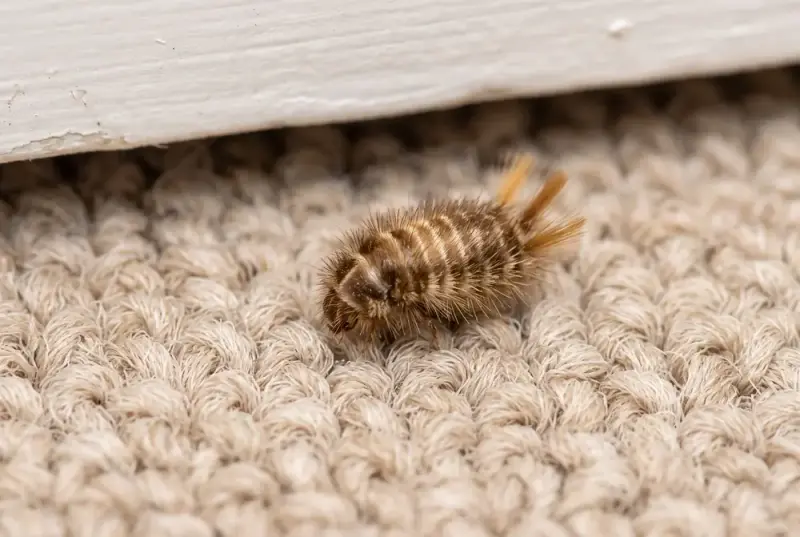
- Larvae: cream caterpillars with brown heads, up to about 13 mm long, in the pile or along the gripper rods.
- Small cases: tiny silk cases about the size of a grain of rice, the same colour as the carpet, made by case-bearing moth larvae from the fibres they eat.
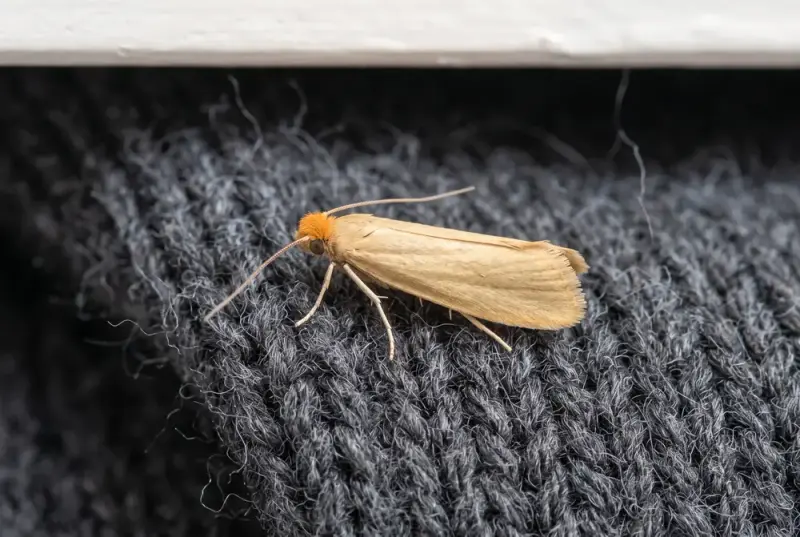
- Adult moths: small golden or grey-brown moths that run across the carpet or flutter low into dark corners.
Carpet moth or clothes moth?
They are the same insects. The moths that eat carpets are the common clothes moth and the case-bearing clothes moth, according to the Natural History Museum, and their larvae eat wool carpets, rugs and upholstery as well as clothes. The patterned moths called carpets in field guides, such as the garden carpet, feed on plants outdoors and do not touch your floor. If the moths are in your wardrobes too, see moth control. If the larvae are hairy and there is no webbing, see carpet beetles.
Why are they a problem?
A carpet moth problem is out of sight until the damage shows, and a wool carpet or a hand-knotted rug cannot be repaired without a trace once the pile is gone.
Which carpets are at risk
The larvae feed on keratin, the protein in wool and other animal fibres. Wool and wool-mix carpets, wool rugs, sheepskins and felt underlay are all at risk. They will not feed on 100% synthetic fibres, but they will eat the wool in a blend. They like dark, still places and fibres with a little dirt, sweat or food in them, which is why damage starts under furniture and along the edges.
They spread through the house
A female lays her eggs in the fibres, and the eggs hatch in four to ten days in summer. Larvae can feed for a month to two years before they pupate, so one infested rug can supply moths to every carpet and wardrobe in the house over time.
For landlords and businesses
In rented and managed properties, hotels, offices with wool carpet tiles, theatres and historic houses, carpet moth damage costs more to replace than to prevent. Damage often turns up at the end of a tenancy or during a refit, when furniture is moved for the first time in years.
How do we get rid of them?
- Inspection. The technician confirms it is carpet moth, finds every affected area, including under furniture and in other rooms, and checks for a source such as a stored rug or a wardrobe.
- Prepare the room. You clear small items off the floor. Vacuum the carpet edges and under furniture first and empty the vacuum outside.
- Spray treatment. We spray the whole carpet, paying most attention to the edges, the gripper rods and the areas under furniture, with a residual insecticide that keeps working for weeks. Rugs are treated on both sides.
- Keep off until dry. Stay off the treated carpet until it is dry, which takes a few hours, and keep pets out until then.
- Monitor and follow up. Pheromone traps show whether adult moths are still emerging.
Homes and business premises
For homes
Most home carpet moth problems are in bedrooms and living rooms with wool carpets or rugs, often in rooms that are used little. We treat every affected room, tell you how to prepare and how long to keep off the carpet, and give you a fixed price before any work starts.
For businesses
For hotels, offices, letting agents, theatres and heritage buildings we survey all floor coverings, treat affected areas, set up pheromone monitoring and report catches over time. See property management and commercial pest control.
How do I stop them coming back?
- Vacuum along the skirting boards and under beds, sofas and cabinets every week, not only the open floor.
- Move furniture and lift rugs a few times a year, and vacuum the floor and both sides of the rug.
- Have valuable wool rugs cleaned by a specialist, and roll them with the pile inwards in a sealed wrap if you store them.
- Do not store old carpet offcuts, rugs or wool underlay in the loft or garage, where moths breed unseen.
- Hang pheromone traps in rooms with wool carpets to catch an early problem.
- Check new and second-hand rugs for larvae or webbing before you lay them.
How much does treatment cost?
Carpet moth treatment, by the size of the property:
- 1 bedroom: £210
- 2 bedrooms: £265
- 3 bedrooms: £310
- 4 to 5 bedrooms: £410
A revisit costs £140. Weekend visits cost £60 extra.
Your questions, answered.
How do I know if I have carpet moths?
Look for bare or thinning patches in wool carpet along the skirting boards, under furniture and behind doors, fibres that come away when you touch them, fine silk webbing in the pile and small cream larvae. Adult moths are small and golden or grey-brown, and they run across the carpet rather than fly up. Move the sofa or bed to check where damage starts.
Can I get rid of carpet moths myself?
Larvae deep in the pile, under gripper rods and in other rooms often survive home treatment. If you see moths or new damage, a professional residual spray of the whole room is the next step.
Will the treatment damage my carpet?
The insecticides we use are made for treating carpets and textiles, and they dry within a few hours.
Can moth-damaged carpet be repaired?
Small bald patches in a fitted carpet can sometimes be patched with an offcut by a carpet fitter, and specialist restorers can reweave valuable rugs. Large areas mean replacing the carpet in most cases. Treat the moths first, because new carpet laid in a room with an active infestation will be eaten too.
Do carpet moths only eat carpets?
No. Carpet moths are clothes moths, so the same larvae eat woollen clothes, blankets, upholstery, felt and fur. If you have damage to the carpet, check wardrobes, drawers and stored textiles in the same room and nearby. We treat all the affected areas on the same visit so the moths cannot move from one to the other.
Are carpet moths harmful to people or pets?
No. Carpet moths do not bite or sting and are not known to spread disease. The harm is to your carpets, rugs and other natural fabrics. The treatment needs care, though: keep children and pets off the carpet until it is dry, and tell us about any pet birds, fish or reptiles before the visit.
Tell us what's happening.
Share your postcode and the signs you have noticed.