Carpet beetle removal in Southampton
The Natural History Museum lists birds’ nests in roofs among the important sources of carpet beetle infestations. The NBN Atlas, accessed 11 November 2026, holds 4,039 recorded feral pigeon sightings and 1,923 swift sightings within 5 km of Southampton, which count birds seen rather than nests found. The same circle holds 8 varied carpet beetle sightings. Adults are small and round, 1.5 to 3.5 mm across, with a mottled coat of white, orange and black scales. Larvae are the destructive stage: bristly, they bore small tidy holes through wool and leave fine powder and shed skins behind. A1 Pest Control deals with carpet beetles in homes, and technicians go to SO14 to SO19. Say where the damage turned up and whether birds nest near your roofline.
About Carpet beetles
Carpet beetles show up as small round beetles with a mottled pattern on window sills in spring, and as hairy brown larvae, called woolly bears, in carpets, wardrobes and airing cupboards. The larvae leave small clean holes in wool and natural fabrics. A1 Pest Control treats carpet beetles by finding the source, treating the affected areas and advising on prevention.
Read the full Carpet beetles guideLocal notes for Southampton
Four of the 8 beetle sightings date from 2026, and 2019, 2021, 2023 and 2025 have one each. Bitterne, Shirley and Bassett appear among the places named. Feral pigeon sightings peaked at 408 in 2021, swift sightings at 167 in 2020 and house martin sightings, 690 in all, at 77 in 2020. The Valuation Office Agency puts 19.0 per cent of the city’s council tax dwellings, about 21,200, in the pre-1919 band, and 20.4 per cent from 1945 to 1964, with 18.4 per cent more from 1919 to 1944. The Southampton pest control hub lists our other treatments in the city.
Local risk in Southampton
Wool, silk and feathers
The museum names wool, silk, fur, feathers and skins as the food, and the larvae eat them while the adults do not. Entirely synthetic cloth is left alone. Adults feed on flowers outdoors and end up at indoor windows trying to leave.
Hidden corners
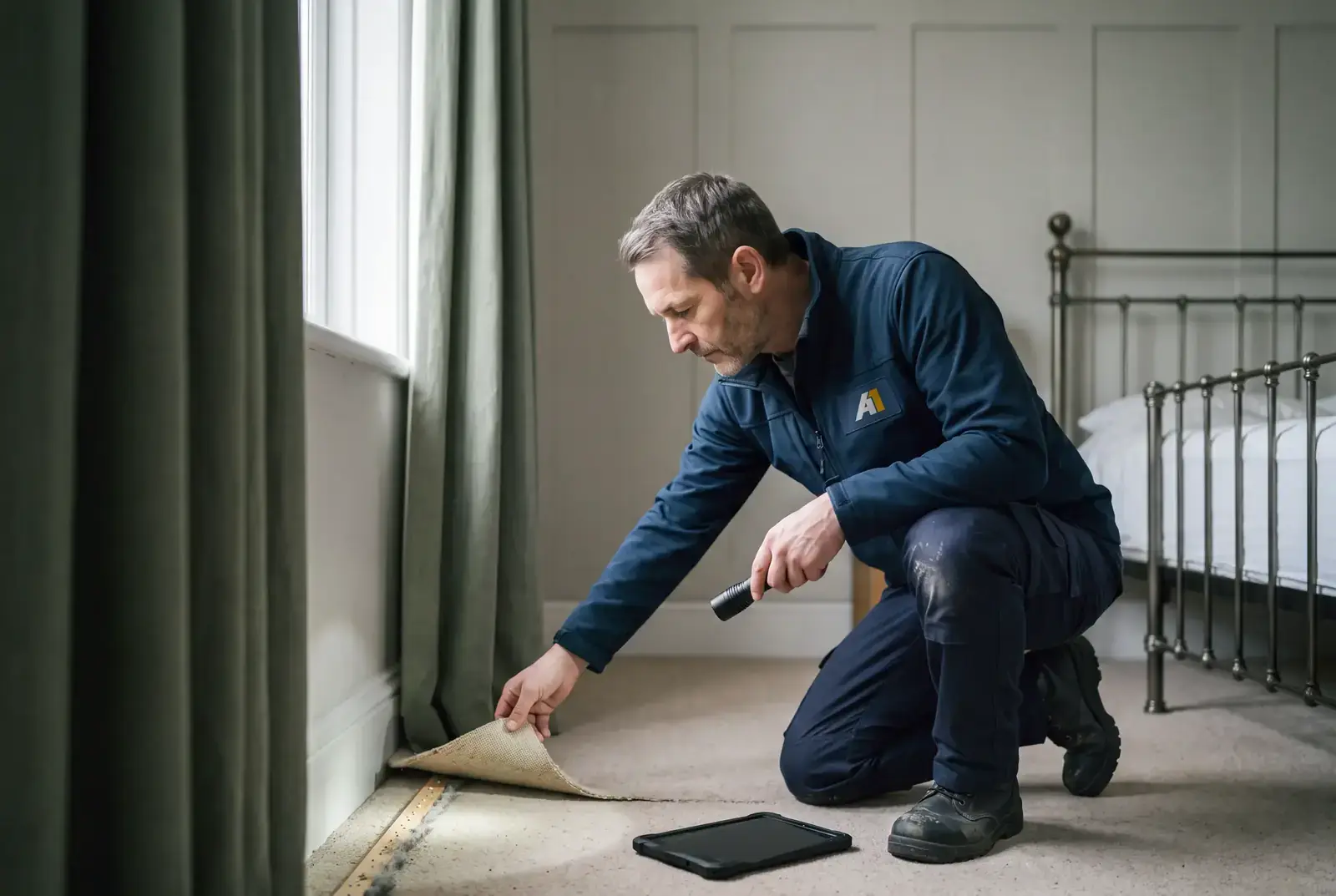
Larvae shelter behind skirting, along carpet edges, in floorboard dust and close to cobwebs, where dead insects provide food. The museum says regular vacuuming prevents most problems.
Nests overhead
Its advice is to clear old nests from roof spaces and block the cavities birds favour with wire mesh. A nest in use stays protected by the Wildlife and Countryside Act 1981, so clearing waits for the fledged young to leave.
- Inspect the base of wardrobes and the rear of drawers.
- Vacuum under and behind sofas and beds.
- Small woollens can go in a bag in a freezer at -18 °C for a day or two, then into sealed storage.
Each life stage is shown on the carpet beetle page.
Price and visit times
Starting from £195
Not sure what you have found? Send us a photo first. Evening and weekend visits are available on request, and a weekend visit costs £60 extra.
Request a callCustomer reviews in Southampton
Google rating: 5.0 from 6 reviews.