Carpet beetle removal in Redhill
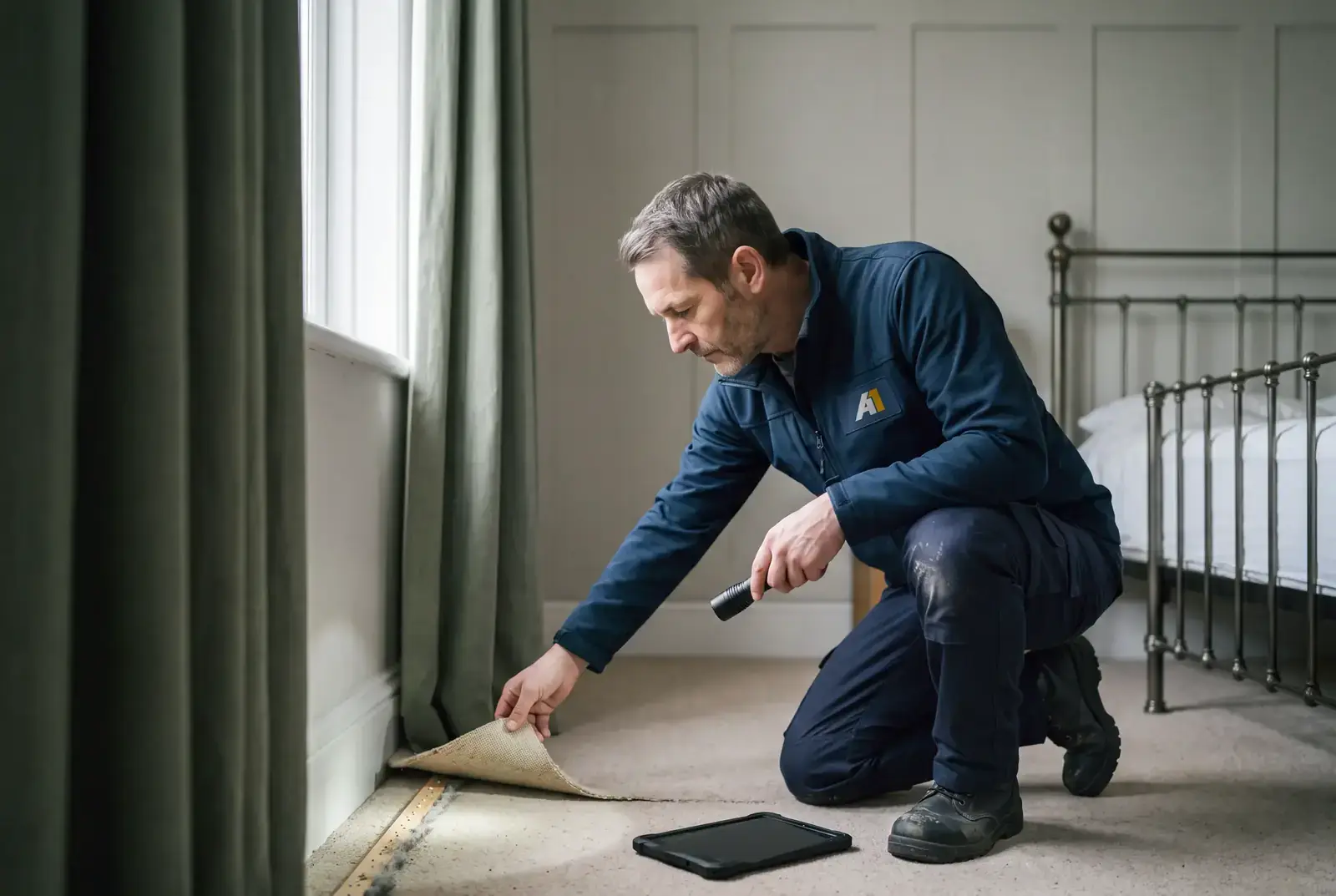
Four varied carpet beetle sightings sit in the NBN Atlas for the 5 km around Redhill, dated 2013, 2019, 2021 and 2025. The Natural History Museum says the larvae infest woollen goods and also live in the nests of birds and mammals, and that adults are often found on windowsills trying to get out. The larvae are small, hairy and slow, and they eat bare patches and neat holes into wool carpets, rugs and clothes. A1 Pest Control sends a technician to trace where they feed, in the carpet, the wardrobe or the loft, and treats the source. Technicians cover RH1 and RH2 in Redhill. Say where the beetles or holes turned up, and whether an old bird’s nest sits in the loft or the eaves.
About Carpet beetles
Carpet beetles show up as small round beetles with a mottled pattern on window sills in spring, and as hairy brown larvae, called woolly bears, in carpets, wardrobes and airing cupboards. The larvae leave small clean holes in wool and natural fabrics. A1 Pest Control treats carpet beetles by finding the source, treating the affected areas and advising on prevention.
Read the full Carpet beetles guideLocal notes for Redhill
Of the four beetle records, one falls in February, one in November and two in June, and one names Reigate as its place. Two bird species that nest around buildings have large totals within 5 km of the centre. Feral pigeon sightings add up to 3,037, with 205 in 2017, 119 in 2020 and 76 in 2025, and swift sightings add up to 873, with 54 in 2017, 73 in 2021 and 19 in 2025. These are sightings of birds, not nests, all from the NBN Atlas, accessed 11 November 2026. The museum guide calls birds’ nests in roofs important sources of infestation. For the rest of our local pest pages, start at the Redhill hub.
Local risk in Redhill
Start in the roof
The museum guide recommends removing and destroying nests in roofs and blocking cavities where birds nest, for instance with wire netting. A carpet treated downstairs picks up new larvae if the nest overhead stays.
Check the date first
Under section 1 of the Wildlife and Countryside Act 1981 it is an offence to damage or destroy a wild bird’s nest that is in use or being built. The RSPB places the main nesting season between March and September, so a nest is cleared once the birds have gone.
Wool, fur and feathers
Larvae feed on wool, fur, feathers, silk and animal skins, and on dead insects and pet hair. Fully synthetic fabric is not on the menu, but blends are at risk.
- Vacuum along floor edges and under wardrobes.
- Freeze small woollens in a bag at minus 18 degrees for a day or two, as the museum suggests.
- Check shelves for pale, hollow larval skins.
The carpet beetle guide to woolly bears and adults shows every stage.
Price and visit times
Reigate and Banstead Borough Council does not treat carpet beetles.
Starting from £195
Not sure what you have found? Send us a photo first. Evening and weekend visits are available on request, and a weekend visit costs £60 extra.
Request a callCustomer reviews in Redhill
Google rating: 5.0 from 6 reviews.