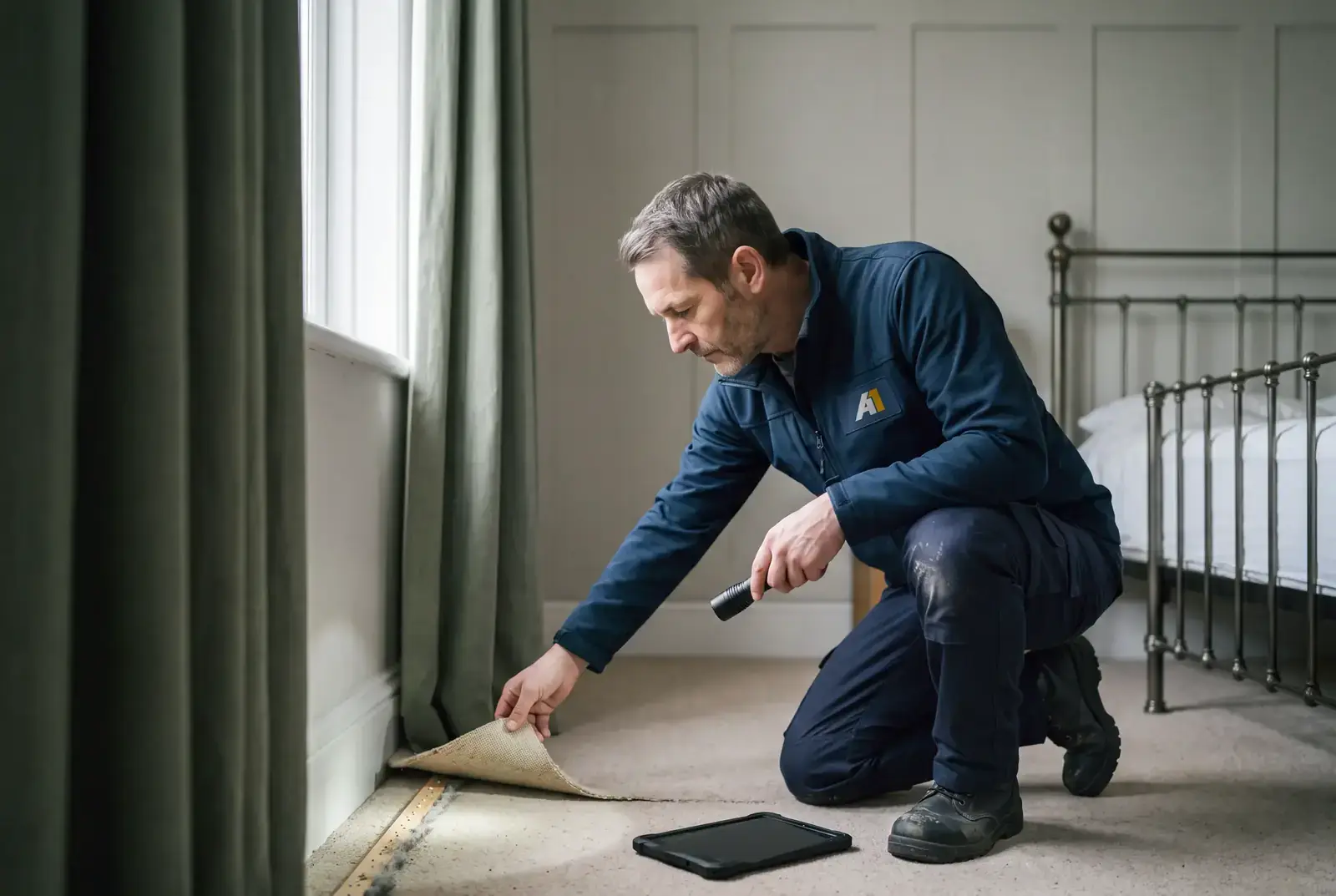
Carpet beetle removal in Hayling Island
The Natural History Museum says carpet beetle damage is done by the hairy larvae, known as woolly bears, which eat wool, silk, fur and feathers, and that birds’ nests in roofs are important sources of infestation. The NBN Atlas, accessed 11 November 2026, lists 713 swift sightings and 337 of house martins within 5 km of Hayling Island, two birds that nest under roofs, and swifts are logged most often in May, with 221. A1 Pest Control traces the larvae to what they feed on, whether that is a carpet, a wardrobe or the loft, and inspects the rooms and the roof space for the source. Technicians cover homes, caravans and businesses across Hayling Island. Tell us where you saw adults, shed skins or small holes.
About Carpet beetles
Carpet beetles show up as small round beetles with a mottled pattern on window sills in spring, and as hairy brown larvae, called woolly bears, in carpets, wardrobes and airing cupboards. The larvae leave small clean holes in wool and natural fabrics. A1 Pest Control treats carpet beetles by finding the source, treating the affected areas and advising on prevention.
Read the full Carpet beetles guideLocal notes for Hayling Island
Swifts and house martins nest under roofs within the RSPB’s March to September season, and the Wildlife and Countryside Act 1981 protects a wild bird’s nest while birds are building or using it, so roof work should wait until any nest in use is empty. Swift sightings were highest in 2020, at 71, and house martins in 2023, at 23. Each count is a bird reported, not a nest found under a roof. On the housing side, 13.3 per cent of dwellings in the island’s southern built-up area date from 1919 to 1944 and 7.2 per cent from before 1919. Our other local services are covered under pest control on Hayling Island.
Local risk in Hayling Island
Nests above the room
Nests in the roof are the first source to deal with, says the museum, which wants them removed and destroyed and any cavity that draws nesting birds blocked, with wire netting as one way. The larvae live naturally in nests, feeding on feathers, droppings and dead insects, and can move from there into the house, so cleaning a carpet does nothing while a nest above keeps supplying them.
Signs to look for
The museum says affected clothing and carpets show small, clean holes with no strands of silk webbing, and powdery droppings and transparent cast skins nearby. A cycle can last from six months to three years, depending on food and temperature.
- Vacuum skirting boards and the floor under furniture.
- Freeze small woollens in a sealed bag at minus 18 degrees for one or two days.
- Check the loft and eaves for old nests once the season ends.
The carpet beetle guide has pictures of both stages.
Price and visit times
Havant Borough Council does not treat carpet beetles. Woollens or a carpet eaten on the island are a private job.
Starting from £195
Not sure what you have found? Send us a photo first. Evening and weekend visits are available on request, and a weekend visit costs £60 extra.
Request a callCustomer reviews in Hayling Island
Google rating: 5.0 from 6 reviews.