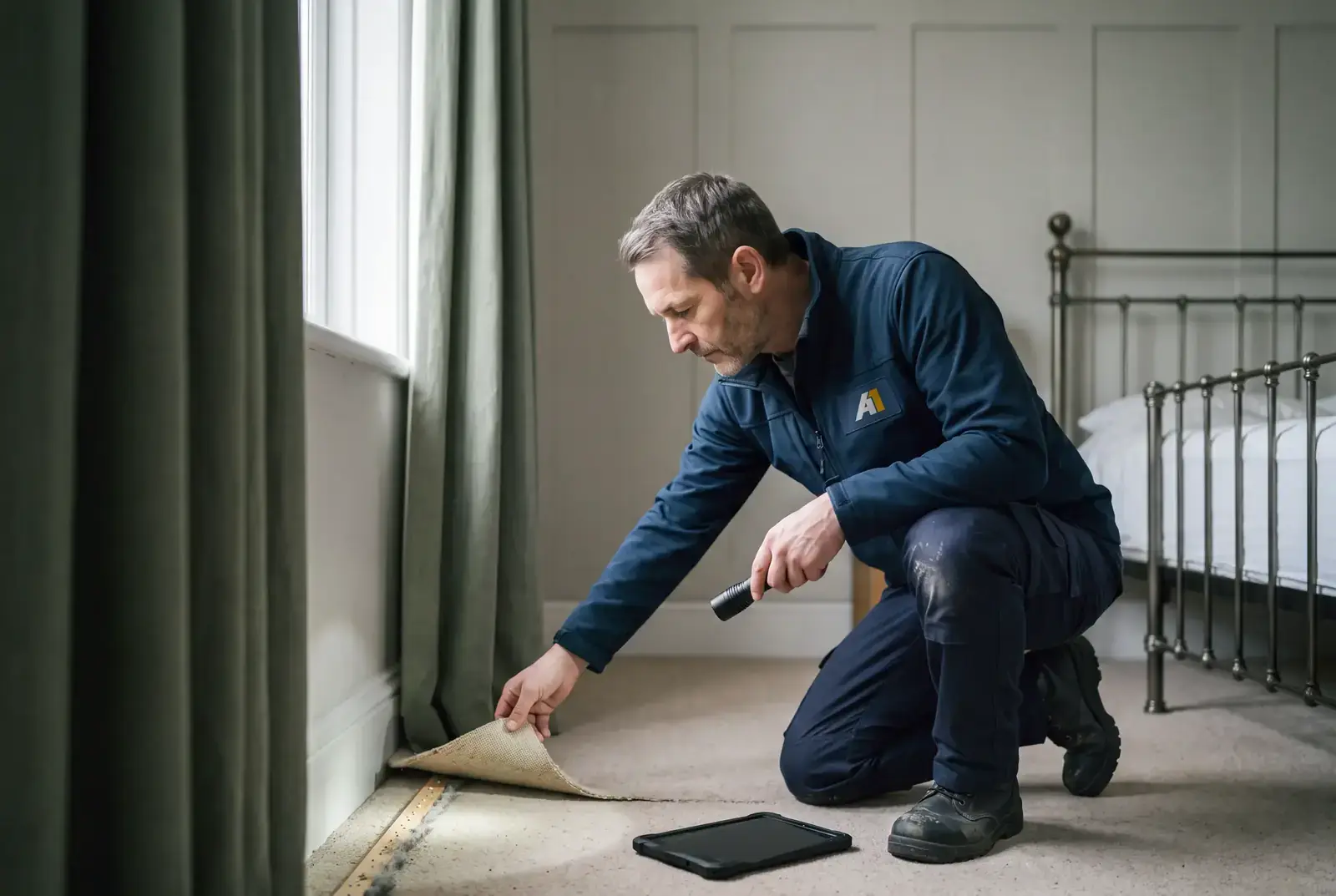
Carpet beetle removal in Aldershot
Within 5 km of Aldershot, NBN Atlas holds 8 recorded sightings of the varied carpet beetle, the latest dated 2025 (accessed 10 November 2026). Carpet beetle larvae are small, hairy, striped grubs that eat wool, fur, feathers, silk and dead insects. They live in lofts, under floorboards and in old birds’ nests, then spread to carpets, upholstery and stored clothes. Adults, tiny and round with a mottled back, often show first on windowsills in spring. One dwelling in three in the built-up area dates from before 1945, which gives the larvae older roofs and floors to hide in. A1 Pest Control is based in Aldershot and covers the whole town. Send a photo of the beetle or larva with your postcode.
About Carpet beetles
Carpet beetles show up as small round beetles with a mottled pattern on window sills in spring, and as hairy brown larvae, called woolly bears, in carpets, wardrobes and airing cupboards. The larvae leave small clean holes in wool and natural fabrics. A1 Pest Control treats carpet beetles by finding the source, treating the affected areas and advising on prevention.
Read the full Carpet beetles guideLocal notes for Aldershot
The sightings sit close to where people live. Records within the 5 km circle name a suburban house, inside and outside, as well as playing fields and a recreation ground in Farnborough.
Birds’ nests are a food source. The Hampshire Ornithological Society invited Aldershot homes in November 2025 to join a project fitting artificial house martin nest cups to houses, and the Farnham Herald reported in 2017 that Aldershot is a place where many swifts breed. Larvae feed on old nests in roofs. VOA 2026 figures put 20.0 percent of council tax dwellings before 1919 and 13.0 percent between 1919 and 1944. The Aldershot pest control hub lists our other services.
Local risk in Aldershot
Where the larvae start
Larvae feed on keratin, so a dead bird or mouse in a roof void, an old nest under the eaves and wool loft insulation can feed a colony. The larvae then travel to carpet edges, wardrobes and stored textiles. Old birds’ nests in lofts and eaves are a common source, according to the Natural History Museum’s guide.
Signs
Shed larval skins, bristly and pale, collect in drawers, along skirtings and on wool. Adults gather on windowsills. Irregular bare patches on wool carpet and holes in wool or silk clothing point to larvae. Our carpet beetle page shows adults and larvae.
What helps
Larvae need an undisturbed spot, so a regular vacuum of skirtings, carpet edges and the backs of wardrobes removes food and skins. Wash or freeze affected clothes. Clear old nests when you find them and check the loft.
- Check roof voids after birds have left.
- Store woollens sealed, in clean boxes.
- Photograph larvae and send the photo with your postcode.
Price and visit times
Starting from £195
Not sure what you have found? Send us a photo first. Evening and weekend visits are available on request, and a weekend visit costs £60 extra.
Request a callCustomer reviews in Aldershot
Google rating: 5.0 from 6 reviews.